
Politics
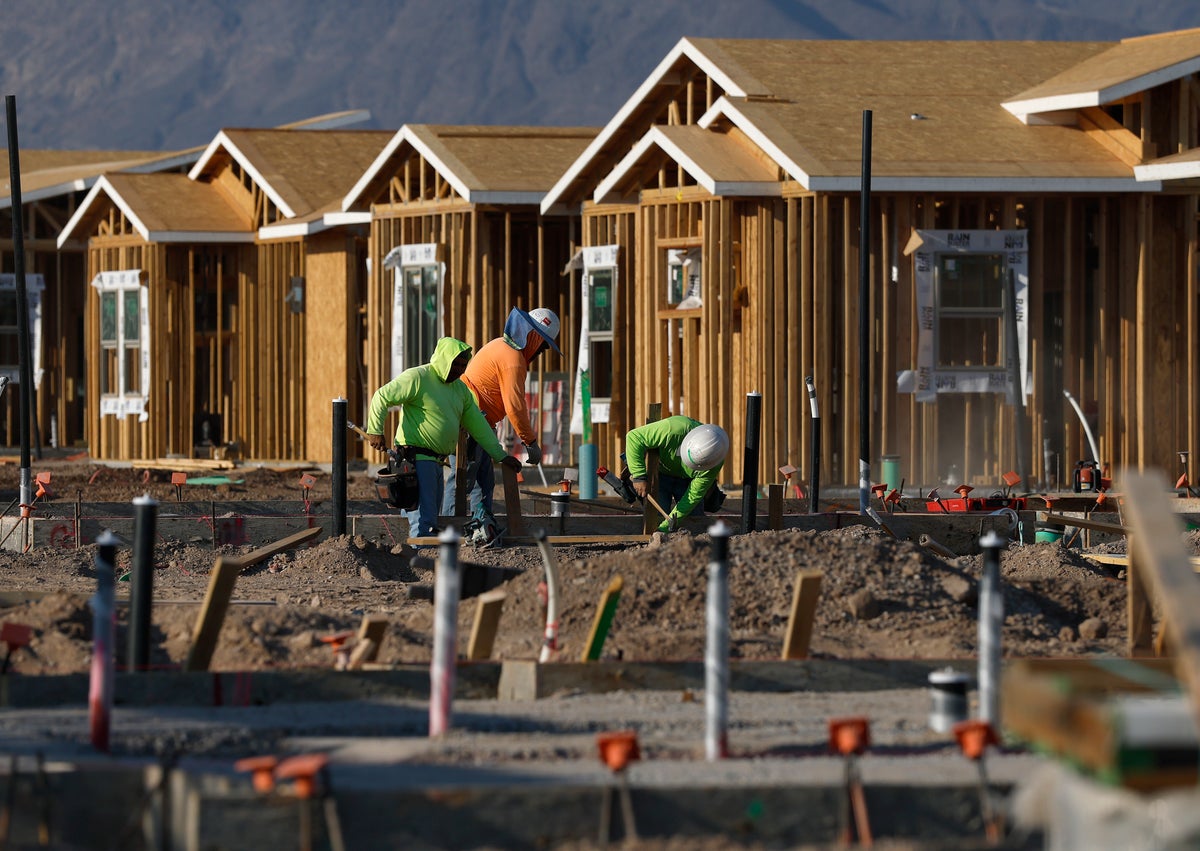
Rare bipartisanship is behind the first housing bill in decades. But it could take years to see the fruits, some experts warn
Key Points
Rare bipartisanship is behind the first housing bill in decades. But it could take years to see the fruits, some experts warn The landmark legislation still needs the signature of President Donald Trump who cancelled plans to sign the bill Wednesday - Bookmark - CommentsGo to comments Congress has finally responded to Americans' frustrations over the cost and availability of homes by passing a new housing bill — but experts are divided over whether it will ease the mounting crisis any time...
Rare bipartisanship is behind the first housing bill in decades. But it could take years to see the fruits, some experts warn
The landmark legislation still needs the signature of President Donald Trump who cancelled plans to sign the bill Wednesday
- Bookmark
- CommentsGo to comments
Congress has finally responded to Americans' frustrations over the cost and availability of homes by passing a new housing bill — but experts are divided over whether it will ease the mounting crisis any time soon.
The landmark legislation hurtled through the House Tuesday with broad bipartisan support, 358-32, after it sailed through the Senate, 85-5, Monday.
President Donald Trump was scheduled to sign it into law at noon Wednesday but abruptly cancelled with less than 90 minutes to go, saying Congress first needed to pass the voter ID regulations and restrictions on transgender rights in his proposed SAVE America Act.
The housing package includes more than 50 provisions that prohibit institutional investors from scooping up single-family homes and aims to make new construction cheaper and easier for developers.
“You can’t oversell the impact of the bill, but I think it is going to have a positive impact over time,” Dennis Shea, a housing policy expert at the Bipartisan Policy Center think tank, told The New York Times.
Ed Brady, president and CEO of the Home Builders Institute industry group, was less optimistic, citing the inability of federal lawmakers to influence the zoning and building rules that restrict development across the U.S.
“All of this has to be administered at the state and local levels,” Brady told The Wall Street Journal. “It’s going to take some time for this to actually filter down, if at all.”
John Letteri, a founder of the Economic Innovation Group think tank, said the bill's passage showed "demonstrable progress" toward addressing America's housing shortage but noted it wasn't the "magic fix-it-all button" that hopeful homebuyers "would love to see pushed."
“I think the American people are running low on patience broadly on this issue, and that has been true for years,” Letteri told The Times.
Last month, the median price for new houses sold in the U.S. was $424,900, according to the latest data compiled by the Federal Reserve Bank of St. Louis.
The Zillow real estate website pegs the typical home value at $370,320, up 0.7 percent over the past year, with an existing inventory of about 1.3 million.
The national average interest on a 30-year, fixed-rate mortgage last week was 6.47 percent, according to the government-sponsored Freddie Mac mortgage buyer, with counterpart Fannie Mae recently forecasting that it won't drop below 6.3 percent through 2027.
New residential construction is also lagging, with May housing starts down 15.4 percent from April, for a seasonally adjusted annual rate about 1.2 million, according to the Census Bureau.
The legislation passed by Congress — called the 21st Century ROAD to Housing Act — is the first to seriously address America's housing needs since 1968's Low-Income Housing Tax Credit, according to The Journal. It has helped finance about four million rental units and was expanded as part of the One Big Beautiful Bill Act that Trump signed on July 4 last year.
The new bill was co-sponsored in the Senate by Democratic Senator Elizabeth Warren, of Massachusetts, and South Carolina’s Republican Senator Tim Scott.
Warren told The Journal that many regulations that drive up the cost of housing cost nothing to reform, with the proposed elimination of metal-frame chassis from manufactured homes expected to shave up to $10,000 each in costs.
With the midterm elections looming, Warren also said: "Democrats have been talking about affordability for a long time now. And ROAD to Housing is a way to demonstrate that."
Scott posted on X: “Housing affordability expands access to the American Dream. The 21st Century ROAD to Housing Act provides the keys to opportunity. By unlocking supply, lowering costs, and prioritizing local control, what was once a long-term dream for many will become reality.”
Join our commenting forum
Join thought-provoking conversations, follow other Independent readers and see their replies
Comments
Donald Trump (PERSON)
Congress (ORG)
Americans (ORG)
House (ORG)
Senate (ORG)
Dennis Shea (PERSON)
the Bipartisan Policy Center (ORG)
The New York Times (ORG)
Ed Brady (PERSON)
the Home Builders Institute (ORG)
U.S. (LOCATION)
Brady (PERSON)
The Wall Street Journal (ORG)
John Letteri (PERSON)
the Economic Innovation Group (ORG)