
Sport
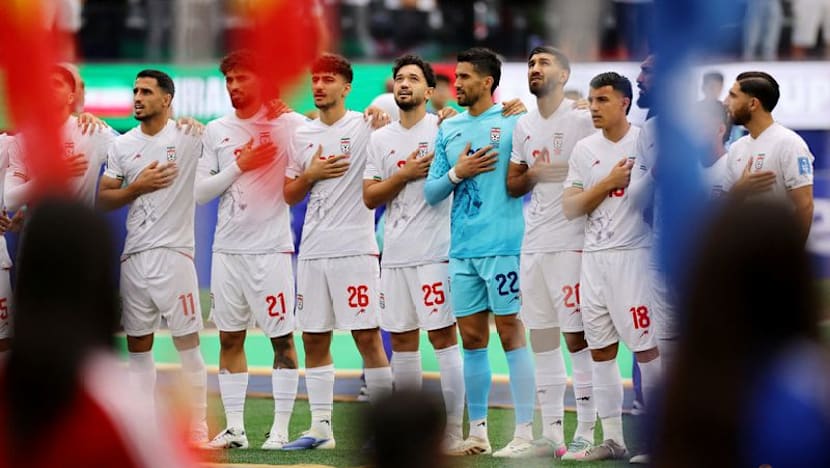
'Complicated' time for the Iranian diaspora in US with Team Melli at the World Cup
Key Points
'Complicated' time for the Iranian diaspora in US with Team Melli at the World Cup CNA's Matthew Mohan spoke to four members of the Iranian diaspora in the US before and during the World Cup. HOUSTON, Texas: For Reza, a young Iranian in Houston, watching his country do well at the World Cup fills his heart with pride. "I like sports, my favourite sport is soccer ...
'Complicated' time for the Iranian diaspora in US with Team Melli at the World Cup
CNA's Matthew Mohan spoke to four members of the Iranian diaspora in the US before and during the World Cup.
HOUSTON, Texas: For Reza, a young Iranian in Houston, watching his country do well at the World Cup fills his heart with pride.
"I like sports, my favourite sport is soccer ... It moves my blood (to watch them)," he told CNA during an Uber ride on Monday (Jun 22).
Iran remain in the running to progress out of the group stages for the first time in their history after draws with New Zealand (2-2) and European heavyweights Belgium (0-0). A win against Egypt will see them progress.
"If my team scores, if my team wins, I get motivated, I like it," said Reza.
But it has been a tumultuous tournament for Team Melli.
They arrived at the World Cup with their country at war with co-hosts the United States, and have been based in Mexico while playing all their games in the US.
That has required frequent cross-border travel, and US authorities have only permitted the team to remain in the country for a few hours after each game, with restrictions frequently shifting at the last minute.
US on Tuesday eased restrictions on the squad's travel arrangements, allowing them to enter the country two days before their next match, instead of a day before. The team has to leave the day the match ends.
A number of Iran's team staff and officials were also banned from entering the country.
There have been various protests prior to the games in Los Angeles, with fans defying a FIFA ban by bringing Iran’s pre-revolutionary Lion and Sun flag into the SoFi Stadium.
"I don't like the government, but players, that (football) is their only job," said Reza. "Keep it (sports and politics) separate."
COMPLICATED SENTIMENTS
In the US, attitudes towards the Iranian diaspora have changed over the years, said Ms Sheila Rossi, who arrived stateside in the early 1980s.
Ms Rossi, who is the mayor of South Pasadena, recalled how some people back then would not openly say they were Iranian and tried to change their names.
"You don't see a lot of people representing Iranian Americans in a good light in the media for decades and whatnot. There was a lot of shame or hiding of our identity," she added.
"I grew up in a time with extreme prejudice towards Iranian Americans."
But things have slowly changed over the years, with the Woman, Life, Freedom movement a huge turning point, said Ms Rossi.
The movement was a protest sparked by the death of young woman Mahsa Amini after her arrest for flouting Iran's strict Islamic dress code.
And despite the recent war, Ms Rossi said that she has not felt any hostility from the local community.
Speaking to CNA prior to Iran's opening match at the World Cup, she described their sentiments towards the team as "complicated".
"The diaspora is not monolithic. The diaspora is comprised of multiple ethnic, socio-economic, religious, political backgrounds, and you have people who have immigrated to the US at different points in time for different reasons," said Ms Rossi, who was born in Iran and lived in the country until she was five.
"Some hope to return one day, and others have deep roots in the US. There is no single Iranian-American view of this tournament."
Others like Mr Roozbeh Farahanipour, an Iranian-American activist who fled Iran in 2000, said he would not watch the team play and will not support them because he believes they represent the current government.
"In the community, the majority of them support the team. So, regardless of whether they like or dislike the regime, the majority of them like this team. I don't," he said.
"Half of them don't care about politics and may even carry the Islamic Republic flag. I'm not blaming them, they are normal people, they just want to enjoy the game and that's their right."
The match against New Zealand laid bare divisions among Iranian American fans, many of whom said they felt torn between pride at seeing Iran on the sport's biggest stage, anger over Tehran's crackdown on protesters and concern over Washington's bombing campaign.
Before kickoff, about 300 to 500 protesters gathered outside the stadium, waving anti-government signs and flags.
Some Iranian Americans said attending the match would imply support for Iran's government, while others said they wanted to set politics aside and support the players.
At Meymuni Cafe in Los Angeles, Mr Shaheen Ferdowsi regularly holds events where the Iranian diaspora can gather. It is no different during the World Cup, where he has been hosting watch parties.
"We're very happy to be a hub for the Iranian community," he said. "We're known for events, very unique, quirky, well-curated events.
"So this is just another one in our series of events, but we just couldn't pass up on the opportunity to do something for the World Cup."
Los Angeles is home to the world's largest Iranian diaspora, and Mr Ferdowsi said that it felt "special" when it was announced that World Cup games would be played there.
"CONFUSING, TOUGH"
Team Melli, meaning the national team in Persian, has long been a shared symbol linking that community to the country many fled after the 1979 Iranian revolution amid political upheaval and repression.
"One of the things I heard was that in the early 2000s, there was broad enthusiasm for the team, and the team represented national, cultural pride that was ... separate from the government," said Ms Rossi.
However, political developments in recent times mean that sentiments towards the team have changed. This has been further complicated by the Iran-US war and the difficulties faced by the team in the lead-up to the World Cup.
"I'm hearing everything from excitement to grief to anger, sometimes from the same person in the same conversation," said Ms Rossi.
"I feel that international sports represent the people, not the government. And athletes are a source of great pride for children in Iran and in Los Angeles that have nothing to do with politics."
"It's obviously a very confusing, tough and complicated time," added Mr Ferdowsi.
It is his hope that Meymuni Cafe will be a place where the Iranian diaspora can come together and where there is something joyful and positive.
He told CNA that based on what he has seen from the watch parties the team has “really brought people together”.
"In some weird ways, the American population is now much more open and accepting of Iranian Americans, but then now you've got this division in the Iranian diaspora," added Ms Rossi.
"I don't like to see our community in America divided, I don't like to see my own small community in my backyard divided. But it is what is," said Mr Farahanipour, who owns a Greek restaurant in Westwood, Los Angeles.
After their draw with Belgium, the Iranian team left a note in the stadium's dressing room.
"We came to Los Angeles with pride, competed with honour, and leave with dignity. Thank you Los Angeles for your hospitality," it said.
"And thank you to every Iranian who gave their heart, voice and soul for Iran throughout these 180 minutes.
"May peace, respect and friendship prevail among all nations."
Subscribe to the FIFA World Cup 2026™ and catch all 104 matches live on mewatch. Visit mewatch.sg/fifaworldcup for more details.