
World News
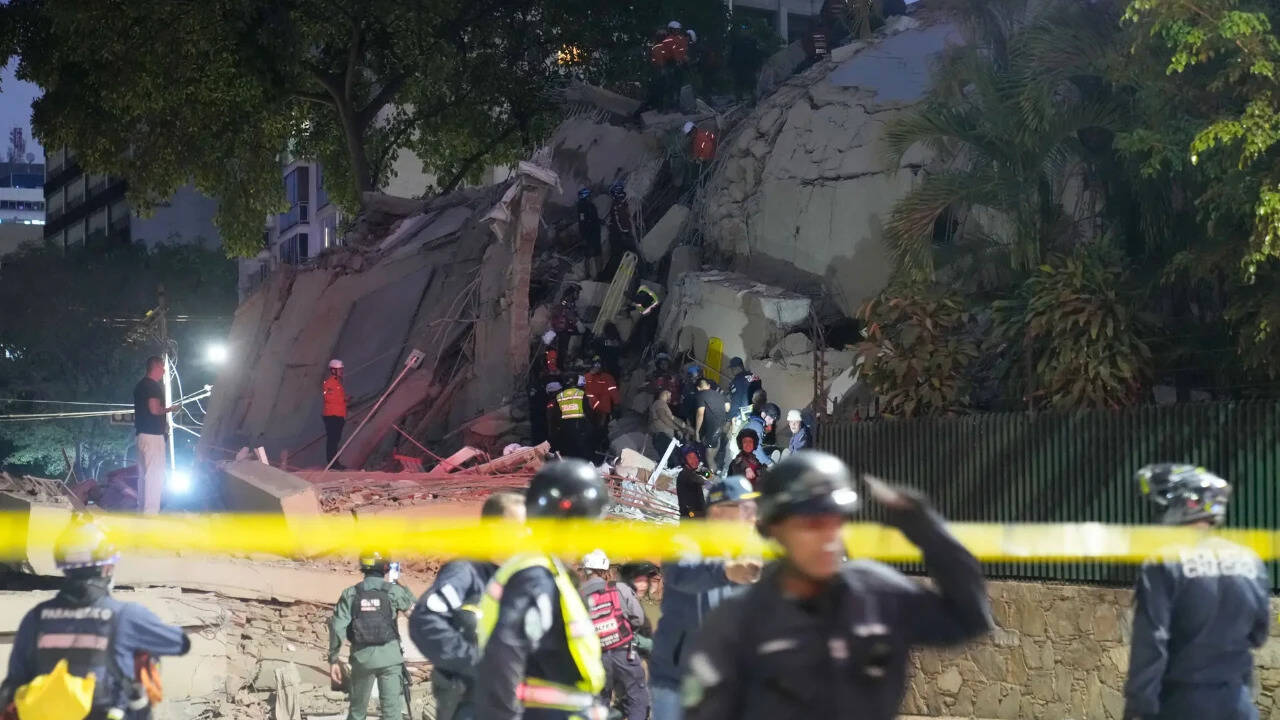
Watch: Roads split, buildings crumble as 39 seconds of two quakes jolt Venezuela
Key Points
Two powerful earthquakes struck Venezuela within 39 seconds of each other on Wednesday, triggering building collapses, road damage and panic in parts of the country, including the capital Caracas, according to the US Geological Survey (USGS) and Venezuelan authorities. According to the USGS, a magnitude 7.2 earthquake struck near San Felipe, about 284 kilometres west of Caracas, at 22:04 GMT. Just 39 seconds later, a stronger 7.5-magnitude earthquake hit near Yumare, around 293 kilometres...
Two powerful earthquakes struck Venezuela within 39 seconds of each other on Wednesday, triggering building collapses, road damage and panic in parts of the country, including the capital Caracas, according to the US Geological Survey (USGS) and Venezuelan authorities.
According to the USGS, a magnitude 7.2 earthquake struck near San Felipe, about 284 kilometres west of Caracas, at 22:04 GMT. Just 39 seconds later, a stronger 7.5-magnitude earthquake hit near Yumare, around 293 kilometres west of the capital.
The USGS said the earthquake's epicentre was west of the community of Moron on Venezuela's Caribbean coast, about 168 kilometres west of Caracas. The agency said the quake had a depth of 13 kilometres, while reports indicated the second tremor occurred at a depth of about 10 kilometres.
The USGS also warned that the twin quakes could result in widespread devastation. "High casualties and extensive damage are probable and the disaster is likely widespread," the agency said, initially estimating that the death toll could range between 10,000 and 100,000.
Videos shared on social media showed the impact of the twin quakes. Footage captured deep fissures running through roads, passengers rushing out of an airport terminal as the ground shook and water pouring from a rooftop swimming pool atop a high-rise building in Caracas.
Other videos showed damaged buildings with cracked walls and shattered facades, while residents were seen fleeing structures and gathering in open areas as aftershocks were feared.
The earthquakes were felt across several Venezuelan states. People evacuated swaying buildings in Caracas and remained outdoors as emergency teams assessed the damage. Following the earthquakes, tsunami alerts were issued across parts of the Caribbean. The US Tsunami Warning System warned of potential tsunami threats for Venezuela, Aruba and Bonaire, while advisories were issued for Puerto Rico and the British Virgin Islands. The US Pacific Tsunami Warning Center also issued alerts for Puerto Rico and the Virgin Islands.
Venezuelan interior minister Diosdado Cabello said the tremors had been felt in multiple regions and warned of potential aftershocks.
Cabello said the Altamira neighbourhood in Caracas had faced "alarming situations" involving collapsed homes and damaged buildings. He urged residents to remain outside, warning that aftershocks could cause further structural damage.
Images from the capital showed collapsed walls exposing furniture inside buildings, while dust clouds rose from at least two neighbourhoods where restaurants and businesses were operating at the time of the quake.
The twin earthquakes rank among the strongest to strike Venezuela in more than a century, according to available seismic records.
Venezuela (LOCATION)
Caracas (LOCATION)
the US Geological Survey (ORG)
USGS (ORG)
Venezuelan (ORG)
San Felipe (LOCATION)
Yumare (LOCATION)
Moron (LOCATION)
Caribbean (LOCATION)
Videos (ORG)
The US Tsunami Warning System (ORG)
Aruba (LOCATION)
Bonaire (LOCATION)
Puerto Rico (LOCATION)
the British Virgin Islands (LOCATION)