
Science
New mammal dubbed Australia’s ‘cutest and fiercest’ discovered in remote nature reserve
Key Points
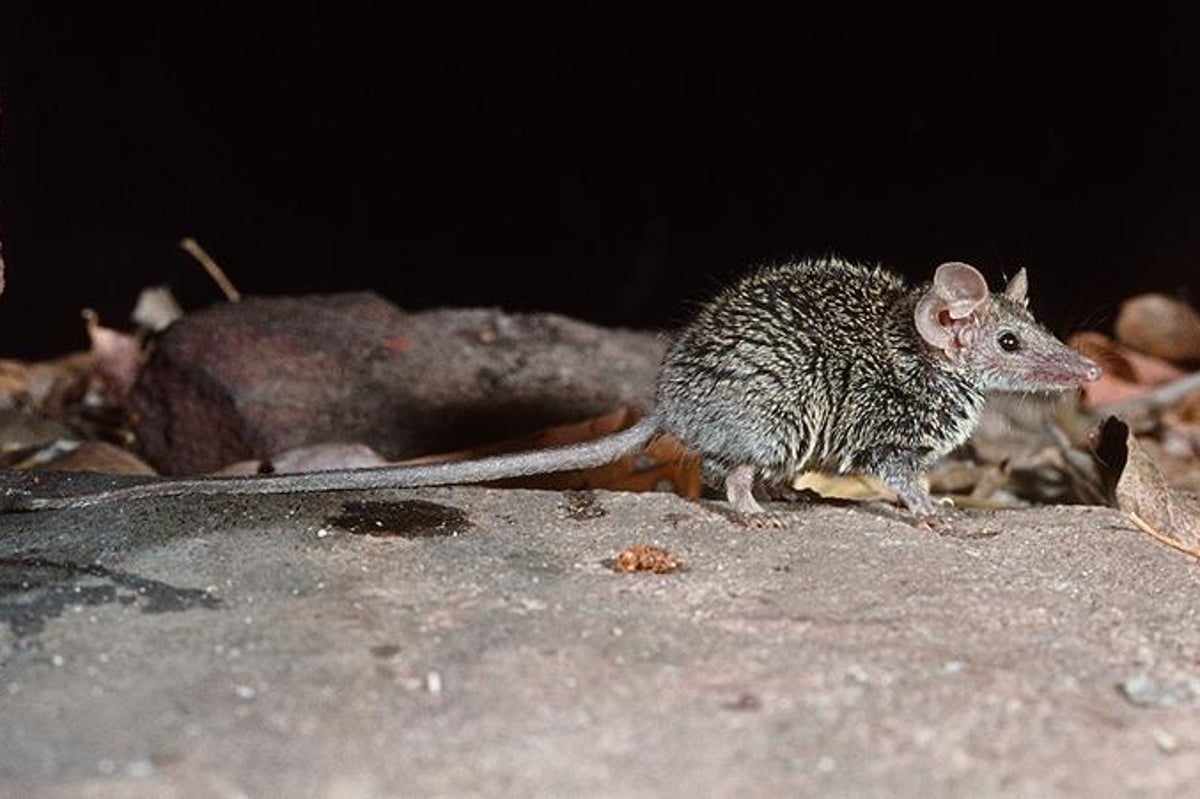
New mammal dubbed Australia’s ‘cutest and fiercest’ discovered in remote nature reserve Researchers say marsupial behaves like apex predator despite its tiny size - Bookmark - CommentsGo to comments A new marsupial species belonging to what scientists call the world’s “cutest and fiercest” mammal group has been discovered in Australia. Planigale petrophila is named after the rocky slopes of the Kakadu National Park, where it is found. The planigales are the world’s tiniest marsupials.
New mammal dubbed Australia’s ‘cutest and fiercest’ discovered in remote nature reserve
Researchers say marsupial behaves like apex predator despite its tiny size
- Bookmark
- CommentsGo to comments
A new marsupial species belonging to what scientists call the world’s “cutest and fiercest” mammal group has been discovered in Australia.
Planigale petrophila is named after the rocky slopes of the Kakadu National Park, where it is found.
The planigales are the world’s tiniest marsupials. Seven species were previously known in Australia and one in Papua New Guinea.
Researchers from the Queensland University of Technology announced the discovery on Wednesday in a study published in the Zoological Journal of the Linnean Society.
“Earlier genetic studies suggested samples of Planigale ingrami and Planigale maculata could have been wrongly classified because they are difficult to tell apart, but have different genetics,” Linette Umbrello, an author of the study, said. “In this study, we used samples from museums across Australia as an invaluable resource that allowed us to recognise species we would never detect in the wild today.”
The researchers analysed a number of planigale specimens to see if distinct species had previously been classified as one. They found three unique forms among the P ingrami specimens.
“We brought back the name P subtilissima for planigales found in the Kimberley in Western Australia, which had been lumped in with P ingrami but are actually a separate species,” Dr Umbrello said.
“We also found that the subspecies P ingrami brunnea was just part of P ingrami, so we merged it back into its former classification.”
They also found a completely new species named P petrophila.
“We’ve discovered a new species in one of Australia’s cutest and fiercest mammal groups, planigales,” Andrew Baker, another author of the study, wrote in The Conversation.
Unlike other small mammals that mostly eat seeds or fruits, researchers say the planigales are “fierce” for their size and behave like apex predators, actively stalking and hunting insects, spiders, centipedes, and other invertebrates.
They are small enough to fit in a human palm and weigh less than a couple of spoons of sugar. Yet, they often attack prey nearly as large as themselves, like lizards, large crickets and cockroaches.
“P petrophila is apparently rare among Australian planigales because, so far, only three specimens have been found, and it is known only from a small area of the sandstone plateau and rocky slopes in Kakadu National Park in western Arnhem Land,” Dr Umbrello explained. “P petrophila is unique in having a much longer tail than all other planigale species and is larger in all body and skull proportions to its closest genetic relatives.”
Scientists call for a full conservation assessment of the species in the region given the alarming decline in other mammal species spread across northern Australia.
“This species is known from only three specimens found within 12 km and it has not been encountered or re-collected since 2004,” Dr Baker said.
“Correct classification and taxonomy are critical in conservation to ensure that management decisions and actions are applied appropriately. This information is important when determining an appropriate conservation status for this new mammal species.”
Join our commenting forum
Join thought-provoking conversations, follow other Independent readers and see their replies
Comments
Australia (LOCATION)
the Kakadu National Park (LOCATION)
Papua New Guinea (LOCATION)
the Queensland University of Technology (ORG)
the Zoological Journal of (ORG)
the Linnean Society (ORG)
Planigale ingrami (ORG)
Planigale (PERSON)
Linette Umbrello (PERSON)
Kimberley (ORG)
Western Australia (LOCATION)
P ingrami (ORG)
Umbrello (PERSON)
Andrew Baker (PERSON)
Australian (ORG)