
World News
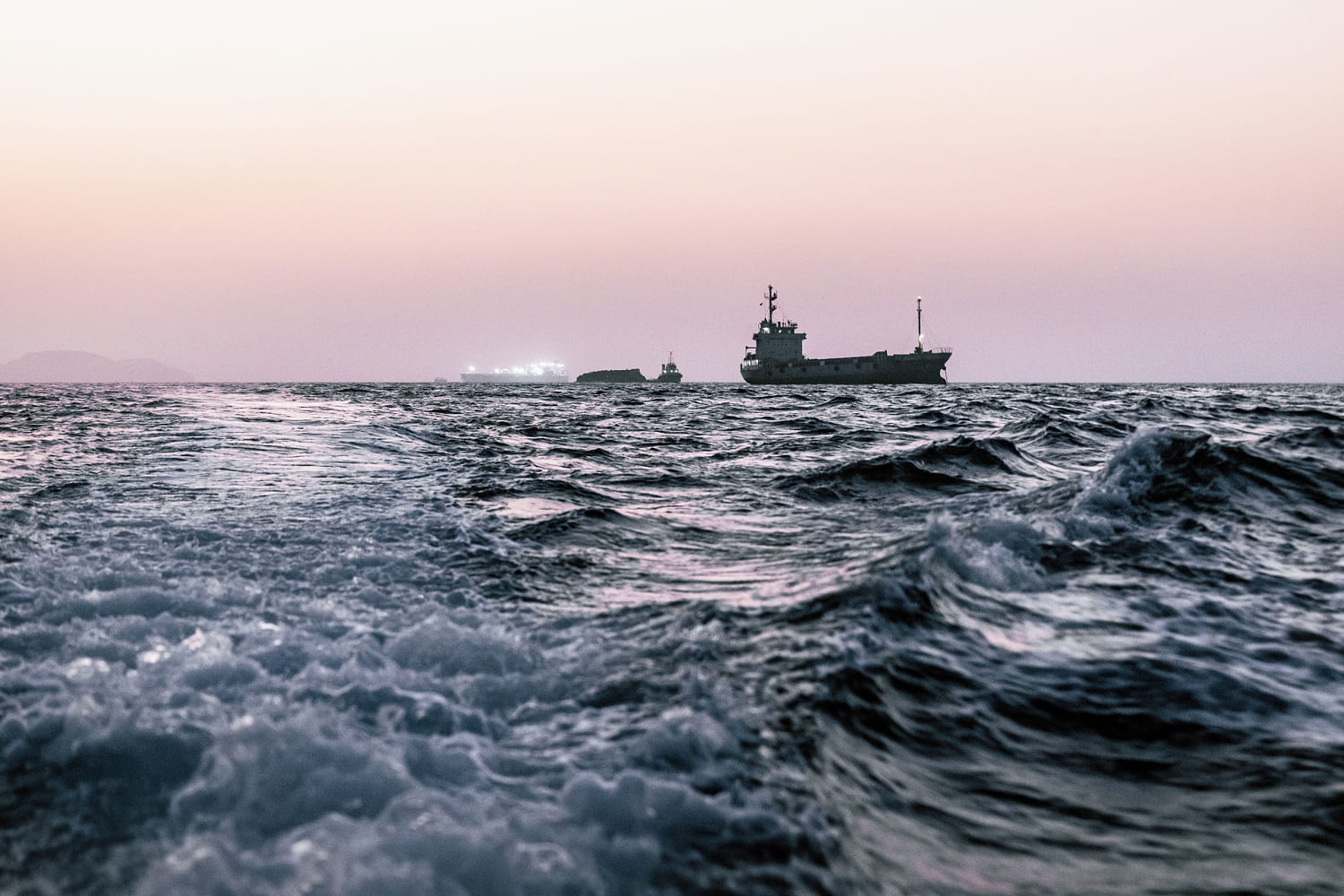
Oil tanker passes the Strait of Hormuz despite Iran threats, as traffic flows begin to recover
Key Points
An oil tanker has sailed out of the Strait of Hormuz along a U.N.-recommended route near Oman, defying threats by Iran that any ship not following the Tehran-approved route “will be dealt with accordingly.” The passage of the Liberian-flagged vessel — perhaps aptly named the Stoic Warrior — came amid continued uncertainty about the future of the crucial waterway. The initial U.S.-Iran agreement included reopening the key trade route, but the two sides have been engaged in public disputes...
An oil tanker has sailed out of the Strait of Hormuz along a U.N.-recommended route near Oman, defying threats by Iran that any ship not following the Tehran-approved route “will be dealt with accordingly.”
The passage of the Liberian-flagged vessel — perhaps aptly named the Stoic Warrior — came amid continued uncertainty about the future of the crucial waterway. The initial U.S.-Iran agreement included reopening the key trade route, but the two sides have been engaged in public disputes over the terms of that deal.
The initial 60-day agreement brought significant relief to energy markets, the shipping industry and the thousands of sailors stranded in the Persian Gulf. However, it left key questions unresolved, including how traffic would be managed and how mines purportedly laid by Iran would be cleared.
Traffic has also remained far below pre-war levels.
Secretary of State Marco Rubio, touring Gulf nations in an effort to reassure U.S. allies over the deal, said Thursday the waters of the Strait of Hormuz “do not belong to any station state.”
But Iran’s navy blasted the route laid out by the International Maritime Organization (IMO), a U.N. agency that oversees shipping at sea.
Vessels must use a route close to the Iranian coastline, the Revolutionary Guard Navy said, warning that transit otherwise is “highly dangerous and prohibited.”
“A few hours ago, without prior notice or coordination with the Islamic Republic of Iran, certain authorities announced a new route for vessel traffic in the Strait of Hormuz,” it said. It warned that “any violating vessels will be dealt with accordingly,” without elaborating.
Stoic Warrior attempted its exit early Thursday out of the Persian Gulf, moving westward along the coastline of United Arab Emirates. It then ventured close to Oman’s coast and continued to bend along the Oman’s Musandam Peninsula, avoiding Iranian waters.
Another vessel, the British-flagged World Prize, also appeared to be transiting through the Omani route on Thursday morning, an NBC News review of MarineTraffic data showed.
Like Stoic Warrior and World Prize, two dozen ships have taken the Omani route since 5 a.m. ET Thursday, with some still sailing along that route. But at least three ships exiting the Persian Gulf through that route turned back on Thursday.
A steady trickle of ships moving through the Strait of Hormuz is helping restore confidence in the waterway, with energy prices easing and several airlines reducing fuel surcharges.
About 35 million barrels of oil have exited the region through the strait since the agreement was signed, according to a new analysis from marine tracking firm Kpler. The international benchmark price, Brent crude, has now erased its wartime gains.
“Tankers appear to be racing to exploit a 60-day window to move Middle East Gulf crude before the Hormuz reopening expires,” Lloyd’s List Intelligence said in a briefing Thursday.
The IMO announced a plan earlier this week to evacuate around 11,000 seafarers from the region, saying it had secured “necessary safety guarantees.” As of Thursday morning date from the U.N. shipping agency showed some 57 ships carrying an estimated 1,100 seafarers had transited the strait under the plan.
Oman issued guidelines Wednesday for vessels sailing along its coastline, listing wait times and transit times through several sections of the route as part of its coordination with the IMO.
But the Iranian navy’s warning against using that route has further complicated matters.
Iran had been charging passage tolls for weeks along the route that it recommends through Iranian waters, despite U.S. insistence that passage must remain free. Trump said Tehran had told the U.S. in the wake of last week’s deal that no tolls were being sought. Rubio said Thursday, speaking in Bahrain, that “no country on earth has a right to charge for the use of international waterways.”
A senior United Arab Emirates diplomat, Anwar Gargash, warned Thursday that “new geopolitical realities cannot be imposed on the Gulf Arab states as a result of treacherous aggression.”
“Imposing a fait accompli born of aggression does not establish stability, but rather sows the seeds of future discord and conflict. This is precisely what applies to the Strait of Hormuz,” he said on X.
Nonetheless, traffic through the Strait of Hormuz had picked up, with more than 70 ships transiting the waterway since Thursday, according to Kpler, though far below the over 130 ships daily before the war.
If more ships like Stoic Warrior and World Prize safely and consistently navigate the Omani route, it would signal significant progress for vessels considering departure from the Gulf.
the Strait of Hormuz (LOCATION)
Iran (LOCATION)
Oman (LOCATION)
Tehran (LOCATION)
Liberian (ORG)
the Persian Gulf (LOCATION)
State (ORG)
Marco Rubio (PERSON)
Gulf (LOCATION)
U.S. (LOCATION)
navy (ORG)
the International Maritime Organization (ORG)
U.N. (ORG)
Iranian (ORG)
the Revolutionary Guard Navy (ORG)