
World News
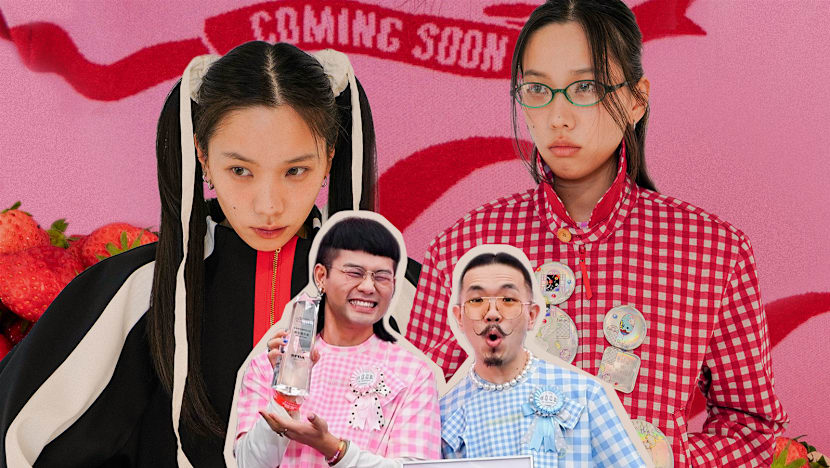
Why Malaysian fashion label Motoguo disappeared for two years – and what brought it back
Key Points
Why Malaysian fashion label Motoguo disappeared for two years – and what brought it back After a two-year hiatus, Motoguo is making a comeback. Founders Guo Moto and Kinder Eng reflect on burnout, rebuilding the business and finding fresh inspiration for a new chapter. Since the start of 2026, designers Guo Moto and Kinder Eng have been shuttling between Shanghai and their home city of Kuala Lumpur.
Why Malaysian fashion label Motoguo disappeared for two years – and what brought it back
After a two-year hiatus, Motoguo is making a comeback. Founders Guo Moto and Kinder Eng reflect on burnout, rebuilding the business and finding fresh inspiration for a new chapter.
Since the start of 2026, designers Guo Moto and Kinder Eng have been shuttling between Shanghai and their home city of Kuala Lumpur. Away for weeks at a time, there is a reason behind their whirlwind schedules: After a two-year hiatus, Motoguo – the fashion label Guo founded with Eng and a third business partner, Jay Perry Ang – is ready to bring its richly whimsical, maximalist world back into view.
“We were tired of the fashion routine. It became nonstop, season after season, always chasing the next thing. Mentally, it was exhausting,” Eng said of the decision to pause the label. The whole team, he recalled, was experiencing burnout. “Business-wise, we also realised there were many unstable fundamentals within the company that we had neglected over the years because we were constantly focused on producing collections,” Guo added.
WHERE FAIRYTALES MEET FASHION REBELLION
Launched in 2015, Motoguo carved out a niche with its blend of eccentricity, childlike nostalgia and subversive humour. Its signature aesthetic challenged conventional notions of gender, combining structured tailoring with romantic flourishes such as lace, ribbons and bows.
Motoguo’s deft mix of silhouettes, prints and textures also made it the first Southeast Asian label to be shortlisted for the prestigious LVMH Prize in 2016. Over the years, Motoguo has showcased its collections in some of the world’s leading fashion capitals, while its designs have appeared in popular shows such as Euphoria and Emily in Paris.
The label also gained a cult following in China, where its unabashed aesthetic resonated with a new generation of consumers who viewed fashion as a form of self-expression. However, the success it enjoyed there soon became a double-edged sword as demand began to outpace capacity.
“The pace in China was especially intense after COVID-19. China reopened earlier than many countries, and everything accelerated very quickly. There was a lot of ‘revenge buying’, and the industry became extremely fast-paced,” Guo said. “But then the world eventually opened up too, and things started slowing down in China. The moment we slowed down, we took turns falling sick.”
Between health issues and the pressures of running an independent label, they decided it was time to come up for air. Stepping away momentarily gave them the opportunity to reassess their priorities, both personally and professionally, as well as build a stronger foundation for Motoguo’s eventual return.
Eng, for example, began using technology to better manage his personal routines. This, in turn, helped him identify ways to build greater structure and efficiency into the label’s creative operations. “He now focuses on timelines, workflows and assignments, while I focus more on operations and pushing projects forward,” Guo said. “Previously, we would constantly shift deadlines because I wanted everything to be perfect. We kept editing collections until the very last minute.”
RETHINKING THE PLAYBOOK
Motoguo’s return also marks a new approach to consumer engagement. “We’re coming back to a different landscape. Some of the stores that we used to work with have closed down. We’re experimenting with different business models and platforms. We’re trying direct-to-consumer approaches, collecting and studying data, and testing new ways of engaging audiences,” Eng said.
The duo also took the label’s storytelling on social media in a new direction. To drum up anticipation for Motoguo’s new work, they produced a series of Instagram Reels featuring their closest collaborators, such as their trusted prototypist and the first retailers who believed in Motoguo’s vision.
“We actually filmed the series last July, but it took us some time to put everything together. It was an idea we came up with spontaneously while we were sourcing materials for our new collection,” Guo said. “During the pandemic, we handled production entirely remotely. We thought it’d be a nice way to catch up with them.”
From recounting sleepless nights spent meeting deadlines to charting Motoguo’s growth, the clips did more than highlight the unvarnished realities of running a label – they also gave Eng a space to speak up. “Previously, I was always hiding behind the brand. Now I want people to hear what’s actually inside my mind,” he said.
A NEW CHAPTER BEGINS
Motoguo’s comeback gathered momentum when it participated in Shanghai Fashion Week 2026 through the Shanghai Fashion Designers Association’s Creative Talent Programme. The label was named a finalist in the inaugural New Wave Fashion Awards, an initiative supported by industry powerhouses Dior and Moncler. “That event came at a very important moment for us. We were very hungry to show our work again,” Guo said.
As part of the competition, the designers created an entire universe around the brand – not just clothing, but a complete environment that communicated the philosophy behind their work. Titled We Eat Fear for Breakfast!, the showcase exemplified the irreverent, playful ethos that industry insiders have come to love and expect of Motoguo. It won them the Future Force Award.
In recent months, Guo and Eng have also been presenting their fall/winter 2026 comeback collection at pop-ups across Malaysia. “The new collection is about affirmation. Kinder wanted to create clothes that help people affirm themselves. That’s why there are affirmation quotes throughout the collection,” Guo explained.
Inspired by Little Miss Sunshine, the 2006 cult classic about a dysfunctional family’s road trip to a beauty pageant, the collection features zip-up jackets, mini skirts and frilled blouses rendered in vibrant stripes and gingham checks. Beneath its exuberant surface, the collection reflects on the importance of embracing the journey rather than chasing the destination, much like the film itself.
“It’s so true to life. It’s about the process, just like our current situation. To be honest, we don’t know what will happen in the next collection,” Eng explained. “But we want to have faith and believe in where the universe will take us.”
Guo added: “Our collections are always about our own stories and experiences. They speak most directly to our philosophy. That has never changed. There’s a Martin Scorsese quote we love: ‘The most personal is the most creative.’ We still believe the most honest inspiration comes from our own lives.”