
Business & Finance
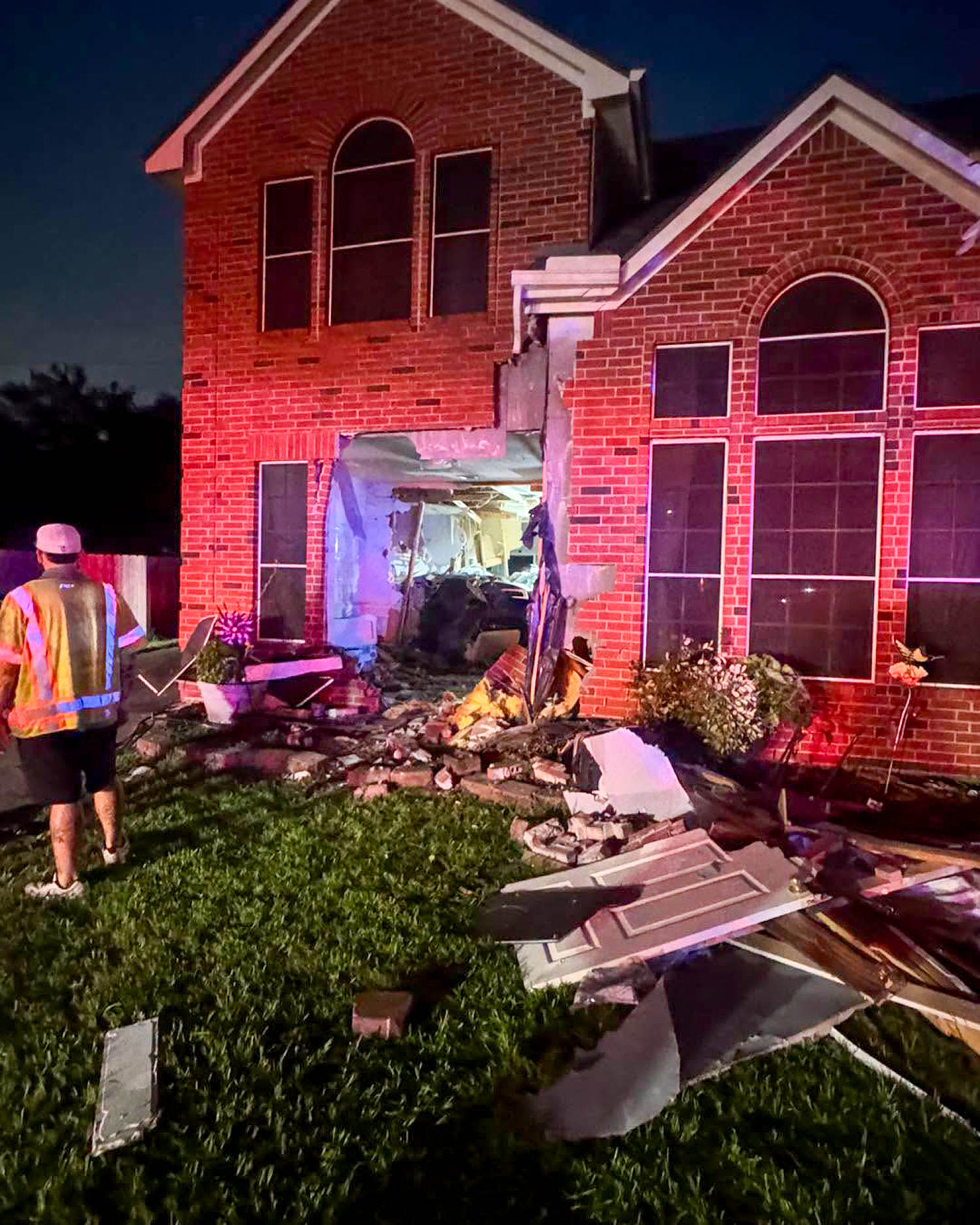
Senator Blumenthal demands Tesla be held accountable in alleged self-driving crash
Key Points
Sen. Richard Blumenthal, D-Conn., is calling for Tesla to be held accountable for its role in a fatal crash last week in Texas in which police say a driver was using his Model 3’s assisted driving system before it slammed into a brick house, killing 76-year-old Martha Avila. “Tesla must be held accountable and [the National Highway Traffic Safety Administration] should move much more quickly and effectively to investigate and hold it accountable,” Blumenthal said in an exclusive interview...
Sen. Richard Blumenthal, D-Conn., is calling for Tesla to be held accountable for its role in a fatal crash last week in Texas in which police say a driver was using his Model 3’s assisted driving system before it slammed into a brick house, killing 76-year-old Martha Avila.
“Tesla must be held accountable and [the National Highway Traffic Safety Administration] should move much more quickly and effectively to investigate and hold it accountable,” Blumenthal said in an exclusive interview with NBC News.
The crash in the Houston suburb of Katy gained immense attention after video from the incident showed the car careening into the side of the home. It has so far resulted in two federal investigations and renewed scrutiny of Tesla’s driver assistance technology.
Tesla CEO Elon Musk personally responded to a headline shared on X about the incident, writing, “this makes no sense. FSD drives slowly through neighborhood streets and this was a high speed crash,” referring to Tesla’s “Full-Self Driving” technology that enables some of its assisted driving capabilities. Ashok Elluswamy, Tesla’s vice president of AI, also posted on X, claiming that the driver overrode the self-driving mode. “The driver manually overrode self-driving by pressing the accelerator all the way to 100%,” he wrote.
Tesla and Musk did not immediately respond to a request for comment. Neither Musk, Elluswamy nor the driver has posted car data from the crash that could corroborate their claims.
“Elon Musk saying that, quote, ‘this makes no sense,’ is simply an effort to evade responsibility,” Blumenthal said. The senator’s call for an investigation and accountability is part of a yearslong push by Blumenthal and other watchdogs for more oversight of Tesla’s advanced assisted driving systems, which have been the subject of nearly 50 NHTSA special investigations, according to Blumenthal.
Just three days before the crash, Sens. Edward Markey, D-Mass., and Blumenthal sent a letter to the NHTSA demanding that it fully investigate Tesla’s FSD technology for safety risks.
The senators argued in the letter that Tesla’s safety claims, like saying its FSD cars are “10x safer” than a human-driven car, rely on “incomplete safety statistics.” They also demanded more data transparency from the company, which they said oftentimes redacts portions of incident reports it submits to NHTSA.
NHTSA is a federal agency that sets motor vehicle safety standards, dispatches vehicle recalls and “is committed to providing the most accurate and complete information available to the American traveling public,” according to its website.
In addition to expanding reporting requirements, the senators demanded that NHTSA evaluate and review the data behind Tesla’s public safety claims, and review if Tesla’s reliance on automated data collection for car crashes is legal in case of connectivity issues.
The senators’ letter also faulted the way Tesla counts crashes in its safety reports. Tesla considers a collision to have involved Full Self-Driving only if the system was engaged within five seconds before impact, according to the company’s published methodology — a narrower window than the 30 seconds NHTSA uses to decide which crashes manufacturers must report to the government under a standing order first issued in 2021. The senators argue Tesla’s narrower window is among the methodological choices that make its system appear safer than the data supports.
The two senators have consistently expressed skepticism of Tesla’s data analysis, stating it relies on incomplete studies and misleading data. They have kept their eye on Tesla’s FSD car developments since their August 2021 letter to the Federal Trade Commission imploring it to launch an investigation into Tesla’s marketing of its FSD cars as fully autonomous, instead of human-assisted.
“You know, bottom line here is Tesla’s owned by the richest man in the world. Elon Musk is a trillionaire, he could well afford to make this system safer, or at the very least provide the public with complete and accurate information about the potential dangers of FSD and make information fully transparent and accurate, but he’s failing to do so,” Blumenthal said. “In fact, he’s resisting efforts to require him to do so, and that’s why we’re telling NHTSA that it should require his company and others to disclose facts like the number of vehicle miles traveled, the number of deployed vehicles, crash severity, road type, operating conditions and so forth.”
Markey and Blumenthal have collaborated on six initiatives for improved vehicle safety, including two bills, over the past five years.
“Tesla and Elon Musk like to claim that its Full Self-Driving technology is much safer than a human driver. All I’m asking from them is to prove it,” Markey wrote in a comment to NBC News. “What are they hiding? That’s why I called on the National Highway Traffic Safety Administration to require Tesla and all autonomous vehicle companies to release comprehensive safety data on their self-driving vehicles.”
Markey and Blumenthal introduced the Stay in Your Lane Act in December 2025, which requires manufacturers to define the conditions the cars were designed to drive in and prohibit the cars from driving outside those conditions, such as in complex city streets with pedestrian traffic. The bill remains stalled in committee.
In addition to his criticisms of Tesla and Musk, Blumenthal criticized NHTSA’s response to Tesla, saying the agency showed a “lack of focus and aggressiveness, but also a scarcity of staff,” which he pinned on the Trump administration and Musk’s DOGE-led staff cuts.
NHTSA has said it’s opened an investigation into the crash. A NHTSA spokesperson declined to comment to NBC while the investigation is ongoing.
But Blumenthal appears to be convinced that Tesla’s systems played a role. “There’s no evidence that the driver here was failing to use the Full Self-Driving system improperly or carelessly. It evidently failed, the Full Self-Driving system failed,” Blumenthal said.
The family of the woman who was killed is suing Tesla and the driver, according to their attorneys. In March of last year, seven families of victims involved in Tesla crashes that were said to have involved assisted driving technology wrote to Transportation Secretary Sean Duffy, urging continued scrutiny on the company.
NHTSA advocates for driver assistance technology, writing on its website that it holds “the potential to reduce traffic crashes and save thousands of lives each year.” Driver-assisted technology includes features like blind-spot intervention during lane changes, rear automatic braking during reversals and lane keeping assistance.
Tesla’s website explains the capabilities of its Full Self-Driving supervised cars. The cars “intelligently and accurately complete driving maneuvers for you, including route navigation, steering, lane changes, parking and more under your active supervision. Use it for quick errands, daily commutes and road trips,” the website says.
The website also says that “currently enabled features require active driver supervision and do not make the vehicle autonomous.”
While people grapple between what side of the story rings true, Blumenthal advises people to tread cautiously about driving or riding in Tesla’s FSD mode.
“These companies are using the public as a kind of sandbox for testing their systems in real time with real people, and in Tesla’s case, failing to provide information that will adequately inform the public. I guess if I were to distill it down, it would be ‘caveat emptor,’ buyer beware,” Blumenthal said.