
Science
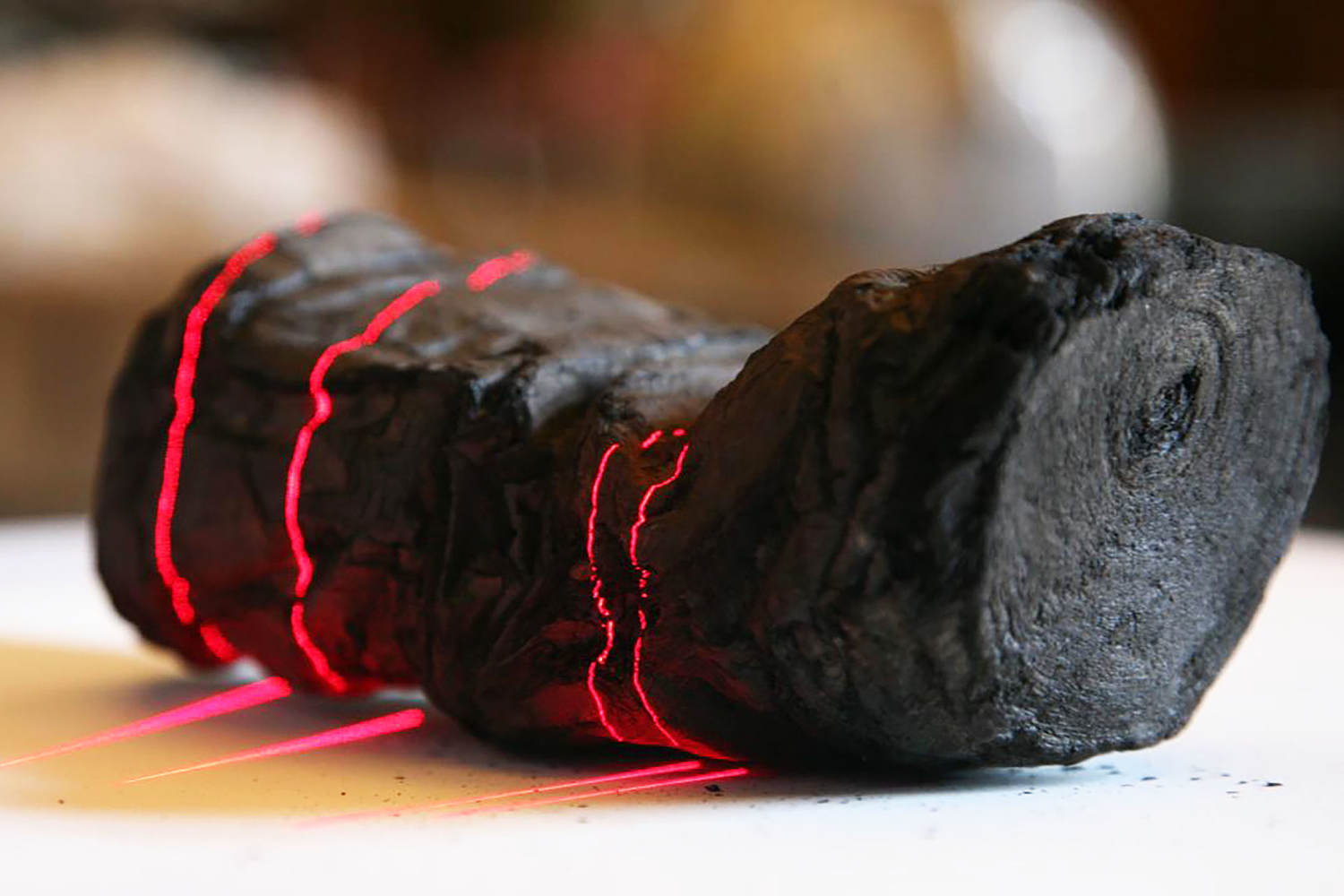
Scientists reveal secrets of ancient scrolls burned by Mount Vesuvius nearly 2,000 years ago
Key Points
NAPLES, Italy — Scientists have revealed insights from ancient scrolls buried by the eruption of Mount Vesuvius nearly 2,000 years ago, after an AI breakthrough helped uncover some of their secrets. The trove of hundreds of scrolls was buried in Herculaneum by the famous eruption in A.D. 79 that also destroyed nearby Pompeii. Uncovering the contents of the fragile carbonized papyrus is a puzzle that has fixated researchers since their rediscovery three centuries ago, but only in recent years...
NAPLES, Italy — Scientists have revealed insights from ancient scrolls buried by the eruption of Mount Vesuvius nearly 2,000 years ago, after an AI breakthrough helped uncover some of their secrets.
The trove of hundreds of scrolls was buried in Herculaneum by the famous eruption in A.D. 79 that also destroyed nearby Pompeii. Uncovering the contents of the fragile carbonized papyrus is a puzzle that has fixated researchers since their rediscovery three centuries ago, but only in recent years has AI-enabled “digital unwrapping” become possible.
Researchers from the University of Kentucky and Naples on Thursday revealed recovered texts from authors previously lost to history, including philosophical takes on ethics, the arts, human behavior and theology.
In one text, an unknown author appears to warn against excessive impulse. Another key concept, researchers say, is phronesis, ancient Greek for “practical wisdom.” In another passage, the ancient author writes: “We will inquire into something, but we will not grasp it, if in some way we depart from ourselves and from our own nature.”
“It’s been a long time since the classical period, and we feel a distance from that culture. And then you read the words, and then the distance shrinks immediately,” Brent Seals, a computer science professor at the University of Kentucky and one of the foremost experts in the digital restoration of cultural antiquities, told NBC News.
“They were worried about living a good life and understanding the world,” he added.
Previous attempts to unwrap the scrolls, discovered in the ruins of a Herculaneum villa thought to have belonged to Julius Caesar’s father-in-law, have produced mixed results.
In the 18th century, an Italian monk, Father Antonio Piaggio, invented a device to gently unroll the carbonized papyrus. It was painstaking work: It took four years to unravel the first scroll, revealing ancient Greek texts, and many more years to unfold 500 more. But most were so carbonized they crumbled apart.
Since then, papyrologists have patiently tried to put the pieces together, like parts of an ancient puzzle, revealing one letter and word at a time.
They also kept another 600 badly carbonized scrolls — impossible to open with mechanical methods without reducing them to ash — intact and carefully stored, most of them in the National Library in Naples.
While modern 3D X-ray technology has allowed some insight into the scrolls since, extracting text has proved especially challenging, given the partially destroyed papyrus is as black as the ink.
But a breakthrough came in 2023, when three students used machine-learning algorithms to extract ancient Greek letters from a “virtually unwrapped” scroll, claiming a $1 million prize for the discovery, which has led to rapid advancements since.
“In the past, it would take more than one month to decipher one phrase. Now we get full texts,” said Gianluca del Mastro, professor of papyrology at Naples’ University Campania Luigi Vanvitelli.
“It is an amazing feeling because I am the first with my colleagues to be able to read the ideas of philosophers from the third, second, and the first century B.C. It is a completely new world for us,” he said.
Some breakthroughs have been unexpected. One scroll “was marked in the catalog as having no visible ink,” Seals said, only for researchers to find that it did, and “may be one of the oldest Roman scrolls ever discovered.”
So far, researchers have managed to read only 10% of the scrolls. On Thursday, the University of Kentucky announced a new $1 million prize to anyone able to decipher a complete scroll, a feat the researchers once considered impossible, by June next year.
Mount Vesuvius (LOCATION)
NAPLES (LOCATION)
Italy (LOCATION)
AI (ORG)
Herculaneum (LOCATION)
Pompeii (LOCATION)
the University of Kentucky (ORG)
Greek (ORG)
Brent Seals (PERSON)
NBC News (ORG)
Julius Caesar’s (PERSON)
Italian (ORG)
Antonio Piaggio (PERSON)
the National Library (ORG)
Gianluca del Mastro (PERSON)