
Politics
Venezuela’s earthquakes happened on a fault similar to San Andreas and the risks aren’t over yet
Key Points
Venezuela’s earthquakes happened on a fault similar to San Andreas and the risks aren’t over yet A recent study suggested the stress along the southern San Andreas is stronger now than it has been in at least 1,000 years - Bookmark - CommentsGo to comments Venezuela and its capital, Caracas, were rocked by two massive earthquake pulses on June 24, 2026, just seconds apart. The shaking from the magnitude 7.2 and 7.5 events caused buildings to collapse in cities across the northern part of the...
Venezuela’s earthquakes happened on a fault similar to San Andreas and the risks aren’t over yet
A recent study suggested the stress along the southern San Andreas is stronger now than it has been in at least 1,000 years
- Bookmark
- CommentsGo to comments
Venezuela and its capital, Caracas, were rocked by two massive earthquake pulses on June 24, 2026, just seconds apart.
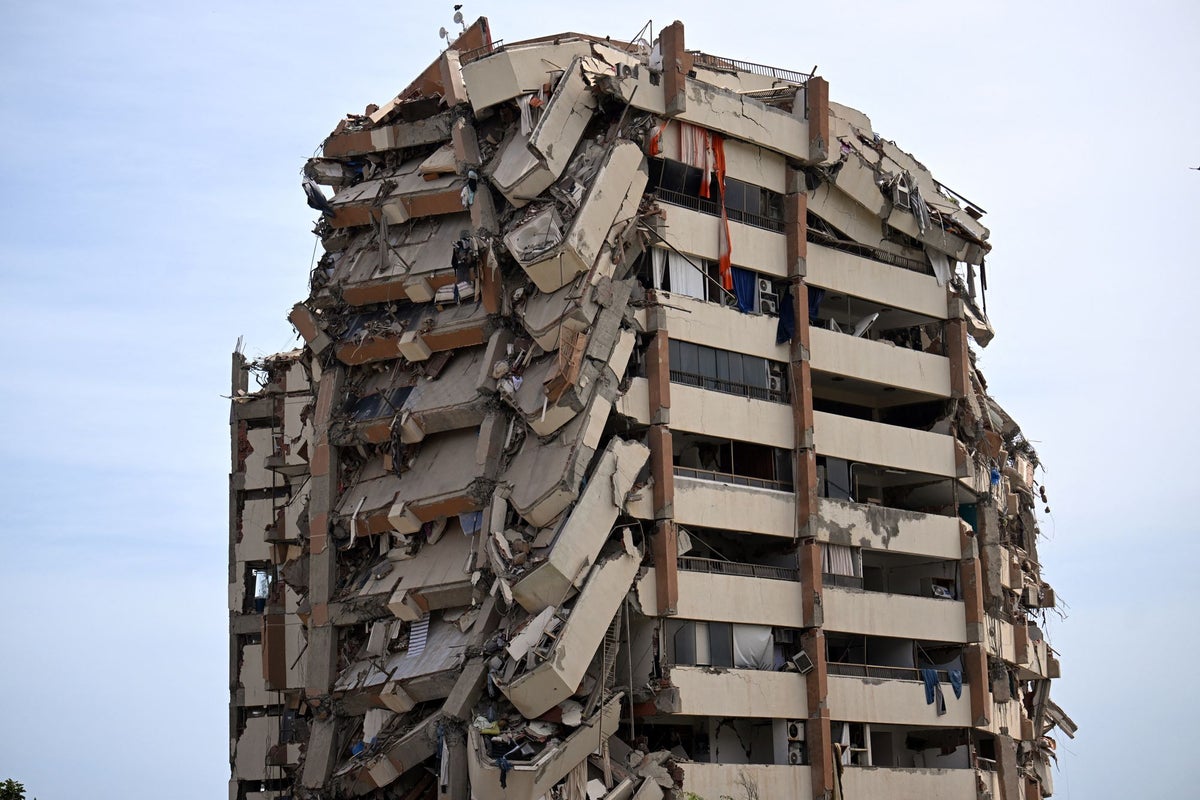
The shaking from the magnitude 7.2 and 7.5 events caused buildings to collapse in cities across the northern part of the country, killing more than 900 people and trapping many more, government officials reported.
University of Southern California geophysicist Sylvain Barbot explained what’s known about the earthquake pulses so far, what risks are still ahead and why Californians should pay attention.
How many earthquakes hit Venezuela, and why did it see so much damage?
Earthquakes are natural phenomena that typically happen at the boundaries of Earth’s tectonic plates. These plates, which make up the Earth’s crust, are tens of miles thick and carry the oceans and continents. They are slowly moving, but not in a smooth, consistent way.
Venezuela sits along the boundary between two of these plates: The South American plate and the Caribbean plate. As they slide past each other, these plates can stick, building up resistance before eventually having a catastrophic failure that generates an earthquake.
There were two big pulses of seismic activity within 39 seconds of each other on June 24, 2026, both over magnitude 7. They could have been separate events or a single earthquake with two pulses. Scientists don’t yet know because we’re still analyzing the data.
Two separate earthquakes is plausible. In 2023 there was an earthquake “doublet” in Turkey, where two magnitude 7-plus earthquakes happened within eight hours of each other. In that case, it was clearly two events.
In Venezuela the pulses were just a few seconds apart. There have been earthquakes of this magnitude in the past that ruptured different segments of very long faults, creating the appearance of two different earthquakes but that were actually ruptures from the same event.
What triggers destructive earthquakes like this?
Earthquakes are controlled by how rocks resist shear and stress. The stress can build up over years or decades until it overcomes the strength of the rocks, making them break. When that happens, the stress propagates and the rupture grows.
That’s not a gradual motion. Within seconds, the plates quickly move, causing an earthquake. This happens several miles underground, where the temperature and pressure are both very high.
That action is difficult to reproduce in a laboratory and involves many processes, from mechanics to chemistry to the motion of fluids. But the outcome is simple: There is a rupture that involves the sliding of rocks past one other that creates a surface rupture that breaks everything in its path, causing damage.
Are there similarities between the fault system in Venezuela and California’s San Andreas?
The faults involved in Venezuela’s earthquake and California’s San Andreas are very similar. They are known as transform faults, where this strike-slip motion happens as plates slide horizontally past each other.
Even the rates of motion are quite similar. In Venezuela the boundaries move past each other at about 0.8 inches (20 millimeters) per year on average. Along the San Andreas Fault it’s slightly faster, about 1.2 inches (30 millimeters) per year.
They also create large magnitude earthquakes at similar frequencies. On the San Andreas Fault, scientists expect on average a large earthquake of magnitude 7 or above every 170 years or so, with the timing varying along the fault. However, this is not clockwork – it can be much more frequent or much less.
Southern California’s last “big one” was the Fort Tejon earthquake of 1857, a powerful magnitude 7.9. A recent study suggested the stress along the southern San Andreas is stronger now than it has been in at least 1,000 years. If the assumptions of the work are correct, it may be ready for a rupture. But there is great variability in how frequently big earthquakes happen, so it may be another 100 years or it could happen tomorrow. We just don’t know.
Many earthquakes have happened on these faults in the past. That alone is reason for communities to have strong seismic codes for buildings and infrastructure, such as bridges and hospitals, and emergency preparedness plans.
Have scientists identified warning signs that might suggest an earthquake is imminent?
Scientists have been actively looking for reliable precursors that could generate warnings of an impending rupture, but we don’t yet have reliable signals.
There are anecdotal cases of seismic swarms before a large rupture that, in hindsight, could have provided some clues to possibly detect early signs of future large ruptures. But that isn’t always the case. Machine learning has identified systematic changes of microseismic activity that precedes large ruptures, and some studies of the physics of earthquakes have started to provide explanations of why that happens.
So, there is hope that in the future we’ll be able to connect the dots and have a good understanding of the mechanics. But we’re not there yet.
We can, however, pick up short-term warnings to issue alerts.
Once an earthquake has started, it generates seismic waves of different kinds that propagate at different speeds. The ones that propagate fastest arrive first, and they can be detected, allowing scientists to predict the second and third waves, which are slower and generally more destructive.
About the author
Sylvain Barbot is a professor of earth sciences at the USC Dornsife College of Letters, Arts and Sciences. This article was first published by The Conversation and is republished under a Creative Commons licence. Read the original article.
After the first waves, called the P waves, you have the S wave – the shear waves – that are a little more intense. And after those you have the surface waves. The first P waves can trigger early warning systems, giving people just seconds, but that’s enough time to stop traffic and shut down gas pipelines, fast-moving trains and infrastructure that is sensitive to shaking. It may be enough time to find cover to avoid being killed in your office or at home by the collapse of the building.
What risks does Venezuela face now?
We know a lot about the tectonics of these regions because geologists have spent decades mapping these faults and learning about their behavior. But to understand this particular event, scientists need to be at the scene to see the extent of damage and assess the extent of the rupture itself.
Meanwhile, earthquakes bring other hazards. The shaking is followed by a period of months or years when the region becomes more prone to landslides because the rocks have moved.
That means the next rainstorm will likely trigger landslides, so Venezuela can expect more damage, more hazards and perhaps more deaths.
Join our commenting forum
Join thought-provoking conversations, follow other Independent readers and see their replies
Comments