
Education
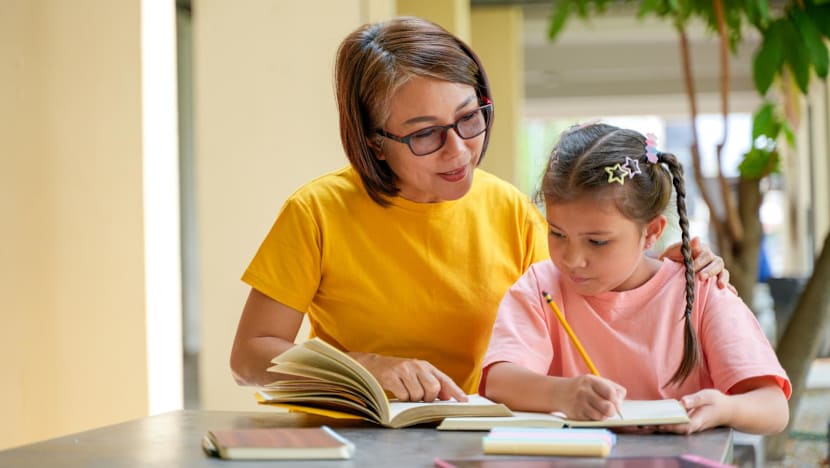
I thought my daughter was learning spelling for school – but she was also learning gender stereotypes
Key Points
I thought my daughter was learning spelling for school – but she was also learning gender stereotypes She expected her daughter to learn new words in primary school. Instead, she found a spelling booklet filled with gender stereotypes, where women cooked and sewed while men worked late. CNA Women senior editor Penelope Chan reflects on the subtle messages children absorb about what girls and boys should do – and who they should become.
I thought my daughter was learning spelling for school – but she was also learning gender stereotypes
She expected her daughter to learn new words in primary school. Instead, she found a spelling booklet filled with gender stereotypes, where women cooked and sewed while men worked late. CNA Women senior editor Penelope Chan reflects on the subtle messages children absorb about what girls and boys should do – and who they should become.
Weeks into starting formal education last year, my youngest daughter brought home her Primary 1 spelling booklet, its corners still perfectly crisp and the pages pristine.
She proudly showed me the cover, on which she had haphazardly written her name and class. She was excited to challenge herself, first on a weekly list of words, then a combination of words and sentences as the year progressed.
Curious about what she and her classmates would be tested on, I flipped through the booklet. For each word, there was an accompanying “sample” sentence illustrating how to use the word. How helpful, I thought, no more learning words in a vacuum.
But as I scanned the pages, I thought perhaps it would have been better to omit the sample sentences entirely – there were numerous instances of gender stereotyping throughout the year-long list.
In the world of this spelling booklet, women and men were expected to behave in certain ways – a woman's place was in the home while the man did everything else.
“Father reads the newspaper” while “Mother bakes a cake”. In one of the weeks, “Grandmother sews a dress for me”; she also takes out butter from the fridge to soften.
Grandfathers, on the other hand, tell stories. Mothers, too, add salt to soup while fathers come home late from work each day.
And then there was the sentence that particularly rankled: “Mother screams when she sees a lizard.”
I put aside the booklet, feeling uncomfortable and worried. Coaching my daughter through each week's list would be easy enough. The bigger challenge, and one I wasn't sure I would succeed at, was offsetting the assumptions these sentences reinforced.
SUBTLE MESSAGES ABOUT GENDER
What troubled me most was the thought of my children – both girls and boys – growing up with such narrow ideas of what women and men should be.
I know they will inevitably encounter more overt forms of gender stereotyping as they grow up and may even be affected by them deeply. What I did not expect was to find those messages embedded in something as innocuous as a weekly spelling list.
I felt bad for the men too. My husband happens to be an excellent cook and, yes, he adds salt to soup, too.
And surely mums work, and work late. When they get home, the family can eat. My children know this well – they wait for me each night before we start dinner.
It’s the same with the worksheets my children brought home when they were in kindergarten, where nurses are women, mothers wear aprons, and doctors and police officers are men. If there is any floor-sweeping done, it’s likely a woman doing it. And the person holding a hammer would be a man.
Some might say I’m making a mountain of a molehill – what’s the harm in one tiny sentence in a spelling list? They’re exposed to worse on television and social media. But it’s from little unforeseen things that giant, immovable stereotypes eventually build.
Through her spelling list, my daughter has been presented with a world where women scream when they see lizards while men work late. Put this way, it sounds ridiculous but she is already absorbing messages about how women and men are expected to behave.
I can only hope that my kids are absorbing more appropriate influences from our everyday interactions as a family.
My husband and I are careful not to prohibit our kids from doing certain things because of their gender. Both our boys and girls are expected to sweep floors, wash the dishes and cook. And my son happens to be more terrified of flying insects than his sisters.
It’s not just my daughters I worry about. I don’t want my sons thinking they can’t be nurses or stay-at-home dads, or that their sisters have no business becoming soldiers or CEOs.
My eldest daughter wrote me a letter on Mother’s Day last year, thanking me for raising her to be a strong, independent woman. I heaved a sigh of relief. She knows she is as capable and intelligent as the guys around her and her gender does not limit what she can achieve. So perhaps, my husband and I have done a few things right.
But this victory is hard-won and the battle continues. She has spent years hearing me and the women in our extended family call out gender stereotypes for her to come to this conclusion about herself.
Her younger sister, however, is just starting that journey.
SPOT THE GENDER STEREOTYPE
I’m aware that spelling lists are reused year after year, and I’m not sure when the initial booklet was put together. I imagine it would have been challenging to create a sample sentence for every word – and ChatGPT didn’t exist then.
I just wish that someone would have been on the lookout for gender stereotyping.
My argument is it doesn’t take much – just a quick scan once a year, not only to spot typos and formatting errors but to check for such stereotyping, and perhaps modernise some examples.
The school also has an entire posse of parents who would step up to help, some of whom work in the diversity, equity and inclusion space.
I eventually did mention it to my daughter’s teacher at a parent-teacher meeting, asking for the school to re-assess the spelling lists and any worksheets across all levels. She reassured me that she would pass the message on but warned me that I might not see any revisions as the next year’s booklets were already in print.
The Primary 2 word lists have similar messages. Mums make fried rice for dinner, little girls make rice dumplings with their grandmothers but a chef adds a pinch of salt to his soup.
I wait in hope for 2027, when the Primary 3 spelling list will reflect a more inclusive and updated picture of both women and men.
On my part, when it came to those weeks that contained "objectionable" sentences, I simply said to my then seven-year-old: “We’re going to learn this sentence but don’t you think grandfathers can bake too? And grandmothers also love telling stories?”
And, “Have you seen any of our house lizards, lately? It’s good that no one screams when we see them.”
When her Daddy becomes a grandfather, while I may be the one taking out the butter to soften, it will be him who bakes sweet treats for his beloved grandchildren. I imagine I might still be working late, and my now grown-up kids and their children would have to wait for me to start dinner. And both my husband and I will be adding salt to the soup.
Penelope Chan is the senior editor of CNA Women.
CNA Women is a section on CNA Lifestyle that seeks to inform, empower and inspire the modern woman. If you have women-related news, issues and ideas to share with us, email CNAWomen [at] mediacorp.com.sg.