
Politics
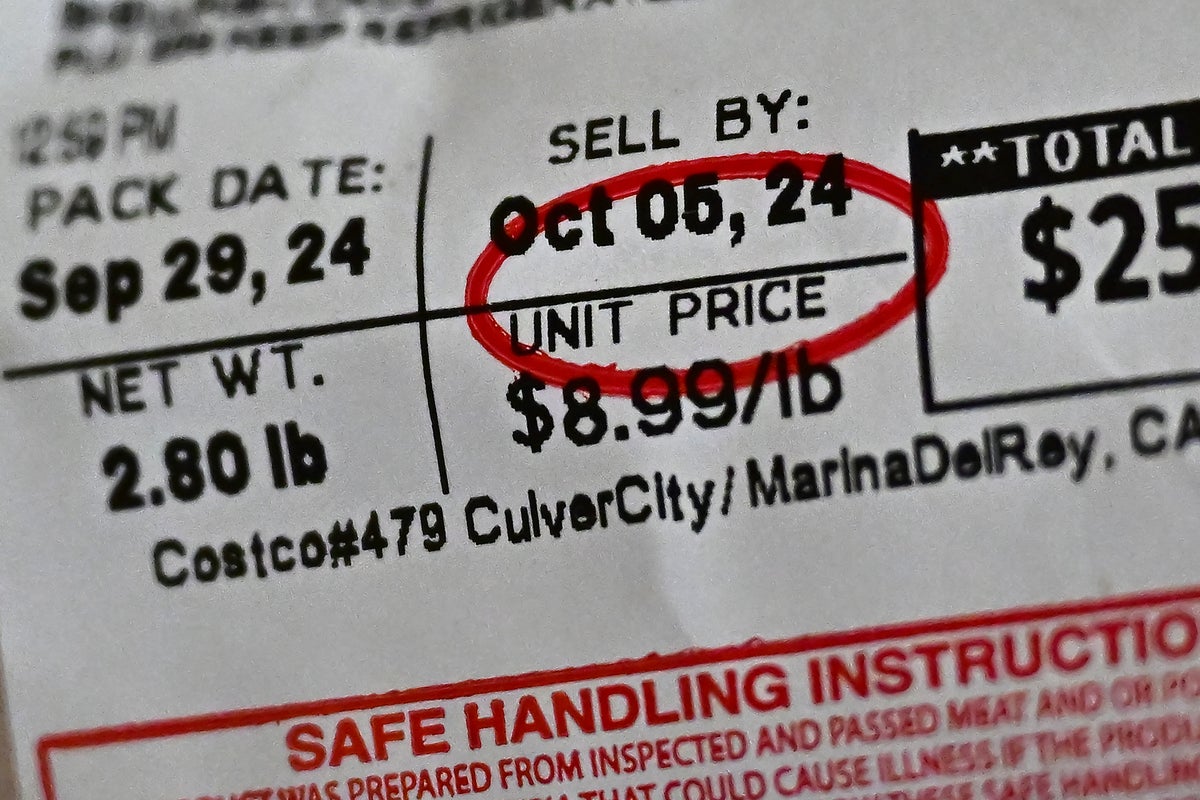
Why California is changing its ‘Best By’ labels on all food items
Key Points
Why California is changing its ‘Best By’ labels on all food items Starting next month, only foods with the approved labels can be sold in California, though older products may still display different labels during the transition - Bookmark - CommentsGo to comments Grocery shopping in California is about to get a little less confusing. Starting July 1, a new state law will simplify food date labels, making it easier for shoppers to know whether a date is about quality or safety. This will...
Why California is changing its ‘Best By’ labels on all food items
Starting next month, only foods with the approved labels can be sold in California, though older products may still display different labels during the transition
- Bookmark
- CommentsGo to comments
Grocery shopping in California is about to get a little less confusing.
Starting July 1, a new state law will simplify food date labels, making it easier for shoppers to know whether a date is about quality or safety. This will also help reduce the billions of pounds of edible food thrown away each year, according to the California Department of Food and Agriculture.
Under the new law, food products manufactured in California must use one of two standardized labels. Products labeled "Best if Used by" or "Best if Used or Frozen by" indicate when the food is at its best quality. Products labeled "Use by" or "Use by or Freeze by" indicate when the food may no longer be safe to eat.
Consumer-facing "Sell By" dates will also disappear, although retailers can still use coded dates behind the scenes to manage inventory.
The new rules apply to food made on or after July 1, so older labels may still appear in stores during the transition. Items like infant formula, eggs, alcoholic beverages and some shellfish are exempt, and businesses that do not comply could face enforcement under California food safety laws.
The goal is to clear up a problem that has long confused shoppers. Food packages in the U.S. currently use more than 50 different date phrases, including "Best By," "Expires On" and "Please Enjoy By,” according to a report published by researchers with the University of Maryland.
Many consumers assume those dates mean food is unsafe to eat after they pass but in most cases, they really indicate when a product is expected to have its best flavor or texture, or help stores keep track of inventory, not whether the food has spoiled.
Unlike what many shoppers think, the federal government doesn't regulate most food date labels.
Except for infant formula, manufacturers have long chosen their own wording, creating a patchwork of labels originally meant to indicate freshness, not food safety.
That confusion has contributed to significant food waste. In a 2025 national survey, 87 percent of respondents said they believed they understood food date labels, but only 53 percent correctly identified what the labels actually mean. The survey also found that 43 percent of Americans regularly discard food that is near or past the printed date, even when it remains safe to eat.
California officials estimate residents throw away the equivalent of 2.5 billion meals of edible food every year, according to CalRecycle.
Organic waste makes up nearly half of what Californians send to landfills, where decomposing food produces methane, a potent greenhouse gas that accounts for about 41 percent of the state's methane emissions.
Join our commenting forum
Join thought-provoking conversations, follow other Independent readers and see their replies
Comments