
Weather
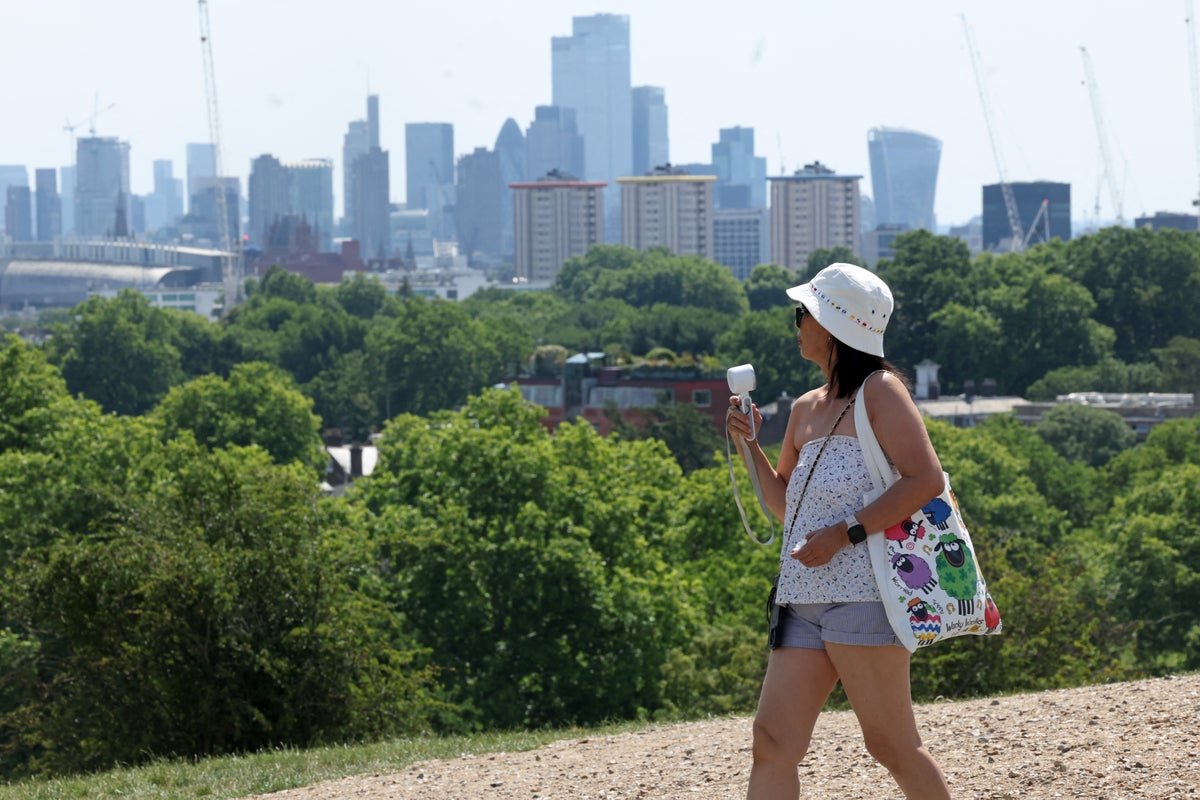
Record heatwave must be ‘wake-up call’ for Britain to prepare for Mediterranean climate, experts warn
Key Points
Record heatwave must be ‘wake-up call’ for Britain to prepare for Mediterranean climate, experts warn Experts warn deadly heatwave is not a ‘one off’ and call for a ‘systemic, nationwide response’ to rising temperatures that will keep happening ‘again and again’ - Bookmark - CommentsGo to comments The record-breaking heatwave gripping the UK should act as a "wake-up call" for Britain to urgently prepare for a Mediterranean climate, experts have warned – with such extreme heat set to happen...
Record heatwave must be ‘wake-up call’ for Britain to prepare for Mediterranean climate, experts warn
Experts warn deadly heatwave is not a ‘one off’ and call for a ‘systemic, nationwide response’ to rising temperatures that will keep happening ‘again and again’
- Bookmark
- CommentsGo to comments
The record-breaking heatwave gripping the UK should act as a "wake-up call" for Britain to urgently prepare for a Mediterranean climate, experts have warned – with such extreme heat set to happen "again and again".
Hundreds of schools were forced to close and three NHS trusts declared critical incidents this week as temperature records for June were shattered for three days in a row, with mercury topping 37.3C in Santon Downham, Suffolk, on Friday.
Extreme heat warnings have been extended overnight into Sunday for much of the country and more than 800 flights were delayed at London’s Gatwick and Heathrow airports as the heatwave turned to thunderstorms.
The deadly heat dome is now moving east to mainland Europe, where temperatures are set to soar above 40C with records broken in Denmark and Slovakia, while roads in Germany are buckling under the strain as it reached a provisional record high of 41.5C. Hundreds of people are believed to have been killed. Some 327 fatalities in Spain are thought to be linked to the extreme heat, while at least 55 people have died in France.
Emma Howden Boyd, chair of the independent National Heat Risk Commission (NHRC), said the stifling temperatures are not a one-off, warning: “This is something that we are going to see happening again and again.”
She said the heatwave should “absolutely” act as “a wake-up call” for Britain to upgrade its infrastructure to withstand higher temperatures alongside work to tackle carbon emissions.
“Some argue we should focus less on reaching net zero and more on adapting to climate change,” she said.
“But adaptation without mitigation is like bailing out a boat while drilling more holes in the hull. We have to do both.”
The NHRC, based at the Grantham Research Institute on Climate Change and the Environment at the London School of Economics and Political Science, was established earlier this year in the wake of a July 2022 heatwave, which saw temperatures in Britain exceed 40C for the first time in recorded history.
Nearly 3,000 Britons died from heat-related causes that summer as runways softened, rails buckled and hospital IT systems shut down amid the sweltering heat.
National upgrades to mitigate against higher temperatures and flash flooding which often follows heatwaves must now be “top of the agenda” alongside reducing carbon emissions, Ms Howden Boyd said.
“We either have a chance to build in that resilience or lock in future vulnerability,” she told The Independent.
Urging Britons to start thinking about measures to make their homes more heat safe, like installing shutters or planting trees nearby, she added: “We need to start thinking about our climate becoming a Mediterranean climate.”
As thermometers hit 30°C in some areas of Britain on Saturday, more than 400 flights arriving at or departing from Heathrow were delayed, according to tracker FlightAware, and another 400 in and out of Gatwick.
Meanwhile, a 22-year-old man’s body has been recovered from a river after it was reported he got into difficulty during the heatwave, police said. Brody Leach’s body was recovered from the River Severn in Shrewsbury, Shropshire, on Saturday morning, West Mercia Police said. The area around the riverside where searches were taking place has reopened following searches for Mr Leach after he entered the river on Friday and then got into difficulty.
Elsewhere, officers searching for a missing 15-year-old boy last seen in the water at Testwood Lakes near Southampton have now found a body, Hampshire Police said. “The boy’s family have been informed and formal identification has taken place. His family are being supported by specially-trained officers,” the force said in a statement.
The two deaths bring the number of people to have lost their lives in water during the recent June heatwave to three after a 50-year-old man was pronounced dead on Wednesday afternoon at Aberavon beach after getting into difficulty while swimming in the sea off the south coast of Wales.
According to the Met Office, summers could be between 1°C and 6°C warmer by 2070 and up to 60 per cent drier, depending on the region. Spanish plumes, which bring hot conditions, could become more intense, creating even hotter weather and more intense downpours during summer thunderstorms.
The Green Alliance, a London-based think tank, said that higher temperatures are the reality of climate change and people are paying the price, after more died in the heatwave of July 2022 than were killed on the roads that year.
Director of politics Holly Brazier Tope said: “We built and planned our homes and communities for a UK that isn’t this hot, and right now, people are paying the price.
“Schools are closing early, NHS appointments are being cancelled, trains are running late. This is the reality of climate change on our doorstep and successive governments have left people to face it unprotected. Without urgent action, 92 per cent of existing homes could overheat by mid-century and heat-related deaths could rise to 10,000 a year.”
She added: “This is not a future threat. It is here, it is now, and it is the consequence of inaction. This government must respond fast with a systemic, nationwide response that delivers smarter planning, community resilience, protection now and net zero for the future.”
Gareth Redmond-King said aiming for net zero emissions is the only route to halt climate change and “stop everything getting ever hotter and more dangerous”.
“But we need to adapt too; the most vulnerable in our society, in nurseries, schools, hospitals and care homes are having their health and lives put at risk as these dangerous extremes get worse,” he told The Independent.
“By working with other countries to hit net zero by 2050, someone in their fifties today could see temperature rises stop, such that extremes aren’t edging ever higher in the 40°Cs in their retirement.
“In short, the weather this week should serve as a wake-up call for us all on net zero. The quicker we get there, the less likely it is that we trip tipping points, like the collapse of the Amazon rainforest.”
A government spokesperson said: “We are working across government to carefully consider the Climate Change Committee's latest recommendations in relation to climate adaptation.
“We are already taking action to help safeguard people, livelihoods and our natural environment by investing in clean power, ensuring new residential buildings are designed to minimise unwanted heat from the sun and launching the Local Authority Climate Service which provides local authorities with easy access to tailored information to support adaptation planning.
"During this week's extreme heat, people should pay attention to the latest alerts and guidance issued for their area by UKHSA."
Join our commenting forum
Join thought-provoking conversations, follow other Independent readers and see their replies
Comments