
Science
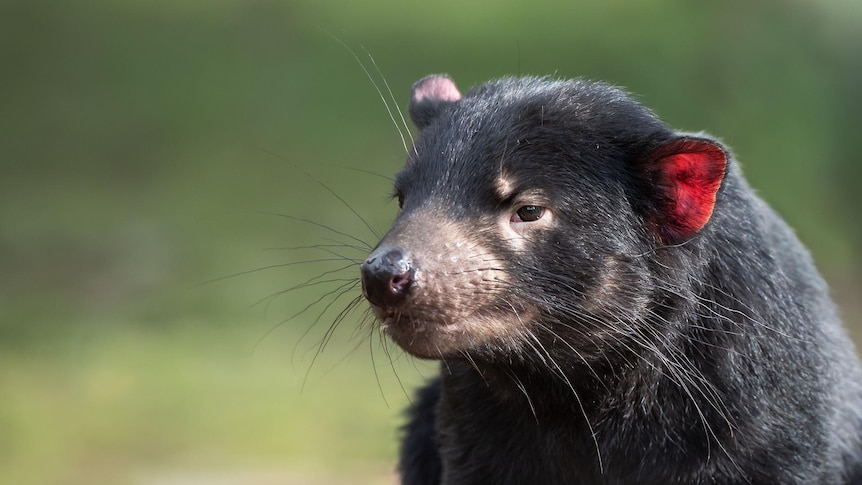
Tasmanian devils the winner from feral cat trapping effort
Key Points
Successful cat trapping effort leads to spike in Tasmanian devil population Sun 28 Jun 2026 at 8:13am In short: Tasmanian devil numbers appear to be improving around the mouth of the Tamar River in the state's north. A dedicated group of Landcare volunteers is behind a five-year feral cat trapping program that has led to an increase in native animals and birdlife in the area. West Tamar Landcare is confident its trapping program can be replicated where feral cats have been detrimental to...
Successful cat trapping effort leads to spike in Tasmanian devil population
Sun 28 Jun 2026 at 8:13am
In short:
Tasmanian devil numbers appear to be improving around the mouth of the Tamar River in the state's north.
A dedicated group of Landcare volunteers is behind a five-year feral cat trapping program that has led to an increase in native animals and birdlife in the area.
What's next?
West Tamar Landcare is confident its trapping program can be replicated where feral cats have been detrimental to native wildlife.
When farmer Greg Squires noticed feral cats darting across his sheep paddocks during the day, he knew he had a serious problem.
His property at Kelso is near the mouth of the Tamar River, about 50 kilometres north-west of Launceston.
The estuary and reserves that hug the coastline are home to a range of vulnerable native species, including the hooded plover, Tasmanian devils, spotted-tailed quolls and eastern barred bandicoot.
"The scientists will tell you that the feral cats will eat about 100 kilos of native wildlife a year,"Mr Squires said.
"If you've got 10 cats, they're probably eating about a tonne."
Feral cats also spread diseases to humans and livestock.
They can carry toxoplasmosis, which can lead to significant abortions of lambs in sheep flocks.
Greg Squires knew his trapping efforts alone would not be enough to slow cat numbers or their migration.
So, in 2019, he enlisted the help of volunteers from West Tamar Landcare.
They collaborated with government, environmental agencies, local communities and an experienced trapper to develop a program to trap feral cats across 6,500 hectares.
The program targeted colony cats that live away from people.
For the past few years, traps were set over four weeks from late autumn and early winter in remote locations and checked daily.
"I think in the first year we caught 35 feral cats,"Mr Squires said.
"That was between here, Greens Beach, Badger Head and Clarence Point.
"This year we caught 13."
Devil numbers growing
The traps on farms, Crown reserves and national parks have not just been catching cats.
Native wildlife are also attracted to the chicken and sardine bait inside the cages.
West Tamar Landcare chair, Peter Voller, admitted bycatch had been unavoidable.
Between May and June this year, volunteers caught and released 56 Tasmanian devils.
Mr Voller said it was a significant increase from five years ago.
"Fortunately for us, what seems to have happened is, as we've removed the cat population from these communities, the devil population has responded at the same time.
"The numbers of devils through the traps now, suggest there's a domination of those marsupials over the ferals.
"And there's hope that the cats might be controlled by devils, through eating kittens."
Mr Voller said he was pleased the devils were in good health, too, adding there had been "no sign of devil facial tumour disease", a highly-contagious affliction which has killed large numbers of devils in Tasmania.
"They're all genders, all ages; the devil throughput has been phenomenal and the response has been so profound across the regions that we're working in."
He said it was "really encouraging for the recovery of the species".
As a result of further monitoring, the trapping program has moved away from areas where devil tracks dominate the landscape and feral cat numbers have declined.
Removing feral cats permanently
The Landcare volunteers will continue trapping feral cats as needed, but they hope populations will eventually disappear from the environment.
Scientific research is underway that could help achieve that, through the National Feral Cat and Biobank Genomics Initiative.
The CSIRO is creating a database of feral cats across Australia and exploring gene drive technology.
This can determine the sex of the offspring and subsequently reduce the number of animals able to reproduce.
But until now, material from northern Tasmania has been limited in the CSIRO's work.
"Samples from all our cats trapped this year have gone to CSIRO in Canberra to be added to the gene pool," Mr Voller said.
"If it turns out that all our cats in the wild can only breed male kittens, then that leads to the extinction of that problem.
"It's a nationally significant response.
"But our little bit of that is giving them enough information about Tasmanian genetic profiles, that they can start doing work for us as well as the mainland."
For Greg Squires, it means his son, who now manages the property at Kelso, can continue to enjoy the native wildlife he grew up with.
"Now we've got a pair of sea eagles that live on the front of the farm," he said.
"And we've got a pair of wedge-tails that hunt the back of the farm.
"It's fantastic and I'd like to see that passed onto the next generation and the generation after that."
Tasmanian (ORG)
the Tamar River (LOCATION)
Landcare (ORG)
West Tamar Landcare (PERSON)
Greg Squires (PERSON)
Kelso (PERSON)
Launceston (LOCATION)
Squires (PERSON)
Greens Beach (LOCATION)
Badger Head (PERSON)
Clarence Point (PERSON)
Crown (ORG)
Peter Voller (PERSON)
Voller (PERSON)
Tasmania (LOCATION)