
Sport
'It's about creating spaces for girls': NBA’s long game beyond superstars
Key Points
TimesofIndia.com in Singapore: Women's sport for years fought one battle above all else: Visibility. It demanded television coverage, sponsorship, bigger crowds and, most importantly, the right to be taken seriously. And across much of the sporting world, that battle has shifted.
TimesofIndia.com in Singapore: Women's sport for years fought one battle above all else: Visibility.
It demanded television coverage, sponsorship, bigger crowds and, most importantly, the right to be taken seriously. And across much of the sporting world, that battle has shifted.
The Women's Premier League has transformed the commercial landscape of women's cricket in India. The WNBA is entering its 30th season with unprecedented momentum, expanding its footprint, attracting record investment and producing a new generation of global stars.
Women's football has broken attendance records, while governing bodies across sports continue to invest in creating stronger pathways for women athletes.
The challenge today isn't simply getting girls to play. It's ensuring they stay.
Because while leagues, sponsorships and television audiences have grown, one stubborn reality continues to cut across sports and geographies. Too many girls leave organised sport during their teenage years, taking with them not just playing careers but the opportunity to become future coaches, referees, administrators and leaders.
That was the conversation unfolding at Singapore's House of Tan Yeok Nee during the
NBA's Her Time To Play leadership panel. On how to build an ecosystem where girls never feel they have to leave the game.
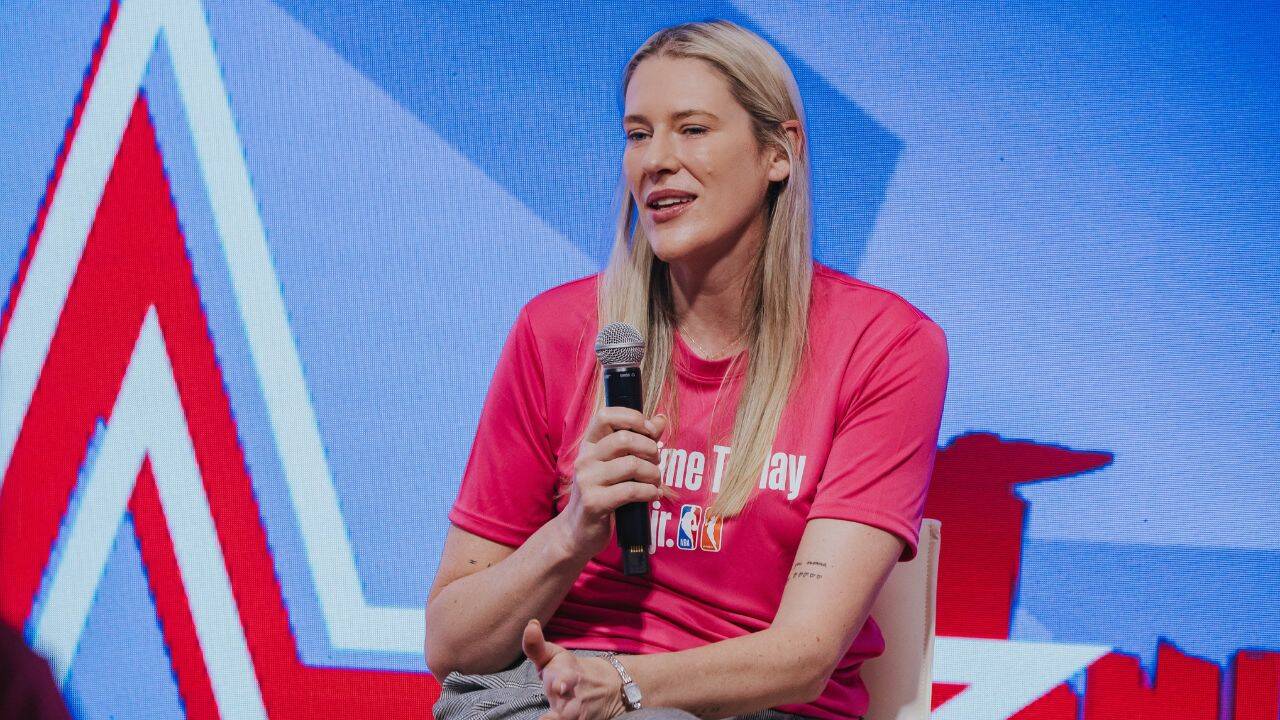
Lauren Jackson during NBA's Her Time To Play panel discussion (Special Arrangements)
It wasn't a new conversation for the NBA. Neither the girls' competition at the NBA Rising Stars Invitational nor initiatives like Her Time To Play represent a shift in philosophy.
The league has spent decades investing in women's basketball, grassroots programmes and leadership pathways.
The rest of the sporting world, however, is also asking the same questions.
Lauren Jackson's bigger question
And that's what made one remark from Lauren
Jackson - the WNBA legend and one of the greatest players the women's game has produced - stand out above everything else.
"We know the drop-offs between 13 and 16 years of age," she said.
The future of women's sport may well depend on what happens next.
Jackson has spent a lifetime proving what women can achieve in basketball.
Four Olympic medals. Multiple WNBA championships. Three WNBA Most Valuable Player awards. A Hall of Fame career that helped shape an entire generation's understanding of women's basketball.
"I think Her Game, Her Future is symbolic of a space for women and girls in sport," Jackson said. "We're at a stage where there are opportunities and resources being put into girls and women in basketball.
NBA's Her Time To Play initiative (Special Arrangements)
But it's important to create those spaces solely for girls. It gives them a chance to enjoy the game without fear. The more we create those opportunities, the greater the impact we're going to have."
It is easy to assume the biggest challenge in women's sport lies at the elite level. Jackson believes it begins much earlier.
During an earlier conversation with Times of India, she reflected on growing up as an awkward, unusually tall teenager who often struggled with self-confidence despite possessing extraordinary talent.
"I wish I'd learnt as a kid how to really step into my power," she said. "I wish I'd learnt how not to be quiet and how not to be afraid."
The lesson, she admits today, arrived much later than she would have liked. That thought resurfaced during the panel.
"I didn't really know my identity until much later in life," she said. "If you invest in understanding who you are earlier, life becomes a little easier to navigate. Nobody really teaches young people to do that."
"We know the drop-offs between 13 and 16 years of age. In basketball we've started closing that gap by offering leadership opportunities, scholarship programmes, mentoring, coaching and officiating.
"We're seeing more girls staying in the sport, which is what we want. We want them leading the sport in the future."
Some may become players. Others may never play professionally at all. Instead, they can become coaches, officials, teachers.
The success of women's sport, Jackson suggested, should not be measured only by the stars it produces but also by the communities it builds.
Building more than players
That broader idea found an echo in Rachel Lim's story.
Long before she co-founded Love, Bonito into one of Southeast Asia's most recognised fashion brands, Lim spent ten years playing competitive netball.
Looking back, she credits those years less for developing athletic ability than for shaping the resilience and leadership that would later define her entrepreneurial journey.
"So much of sport taught me lessons that I carried into becoming an entrepreneur, a leader and a parent,"
Across much of Asia, she argued, parents continue to see sport and education as competing priorities. Perhaps they are asking the wrong question.
"Instead of asking whether my daughter should spend two hours studying or two hours playing sport, maybe we should ask what she is gaining from that experience."
Sport teaches young people how to recover from failure, work within teams, adapt under pressure and lead others, qualities that outlast any sporting career.
Her advice to parents was disarmingly simple.
"When your child comes home from sport, maybe don't ask, 'Did you win?' Ask instead, 'What did you learn?'"
If Lim explained why cultures need to change, Natalie Dau focused on the individual.
The Singapore-based endurance athlete, motivational speaker and Guinness World Record holder has built her reputation by pushing the limits of physical endurance. Yet she repeatedly returned to an idea that had little to do with extraordinary achievement.
Permission.
"When I hear Her Game, Her Future, the first word that comes to mind is permission," she said.
"We spend so much time waiting for someone to give us permission to move forward. But you already have that choice."
Lauren Jackson on NBA's Her Time To Play (Special Arrangements)
Later, reflecting on a 1000-kilometre endurance run that nearly ended on the opening day, Dau explained that resilience is rarely built through grand moments of inspiration.
"I stopped fearing failure and started using it as fuel."
By the time the session drew to a close, Jackson returned to the simplest message of the afternoon.
"Dream," she said. "If you've got something that you really want, dream it into existence. "And for everyone around her - lift her up. Be the village."
The future of women's sport, she seemed to suggest, will not be built by extraordinary individuals alone. It will be built by the communities that ensure ordinary girls never stop believing they belong.
The ecosystem effect
And over five days in Singapore, Jackson's words kept resurfacing.
The answer to the question she posed wasn't confined to the discussion. It had been playing out all week at the OCBC Arena, where some of the best school teams from across the Asia-Pacific region competed in the NBA Rising Stars Invitational.
The girls' competition was never treated as a supporting act. It wasn't new either.
Like the boys' tournament, it formed an integral part of the event, reinforcing the NBA's long-standing belief that the women's game deserves equal space in the conversation around basketball's future.
Across the week, Japan's Seika Girls' High School displayed the discipline that has long underpinned Japanese basketball. Chinese Taipei's Yangming High School showcased a programme built on years of technical development.
Australia, South Korea, the Philippines, Thailand and Singapore each brought different styles, reflecting different stages of basketball's growth but a common commitment to investing in girls' sport.
What stood out wasn't simply the standard of basketball. It was the ecosystem surrounding it.
Coaches exchanged ideas after games. NBA development staff moved between courts and classrooms. Leadership sessions sat alongside elite competition and conversations about officiating, coaching.
Earlier in the week, David Lee, the NBA's Head of Strategy for Asia and Country Head for Singapore, had described the league's ambitions in similar terms during a conversation with Times of India.
Success, he explained, wasn't measured only by producing elite players but by strengthening the entire basketball ecosystem across the region bringing together schools, federations, coaches, communities and commercial partners to create sustainable pathways for the next generation.
Viewed through that lens, programmes such as Jr. NBA, Basketball Without Borders, Her Time To Play and the NBA Rising Stars Invitational are not standalone initiatives.
They are interconnected pieces of a long-term strategy that the league has pursued for years, one that recognises the future of the sport depends as much on participation and retention as it does on producing elite athletes.
That philosophy should sound familiar to Indian sport.
What India can learn
The Women's Premier League has demonstrated what sustained investment can achieve in a remarkably short period. Beyond television ratings and franchise valuations, it has fundamentally altered aspiration.
Young girls growing up in India today no longer have to imagine what a professional cricket career looks like. They can watch it unfold every season.
The ripple effects extend well beyond the boundary rope.
Sponsors see long-term value in women's sport. Parents who once viewed cricket as a distraction are beginning to see it as a legitimate career. The league has not merely created stars; it has changed perceptions.
Basketball, admittedly, operates in a very different landscape.
It lacks cricket's cultural footprint in India and the commercial scale of the WPL. Yet the principles remain strikingly similar.
Visibility creates interest and pathways create participation while communities create longevity.
The WNBA's evolution offers another reminder of that journey. Nearly three decades after its launch, the league has entered one of the most significant periods in its history.
Expansion franchises, landmark media-rights agreements and the arrival of a new generation of stars have propelled women's basketball into mainstream sporting conversations.
Players such as A'ja Wilson, Breanna Stewart, Sabrina Ionescu, Caitlin Clark, Angel Reese and Paige Bueckers have become more than elite athletes; they are cultural figures who have broadened the league's appeal and inspired a new audience.
But commercial success alone does not guarantee the future. Every thriving professional league depends on an even healthier grassroots system.
That may be the biggest lesson India can take from Singapore. The ecosystem Jackson spoke about.
"We're seeing more girls staying in the sport," she said. "We want them leading the sport in the future."
The fight for visibility is far from over, particularly in many parts of the world. But where that battle has begun to shift, another has emerged in its place. Not whether girls can dream. Whether sport can build systems strong enough to ensure they never have to give up on those dreams.