
Science
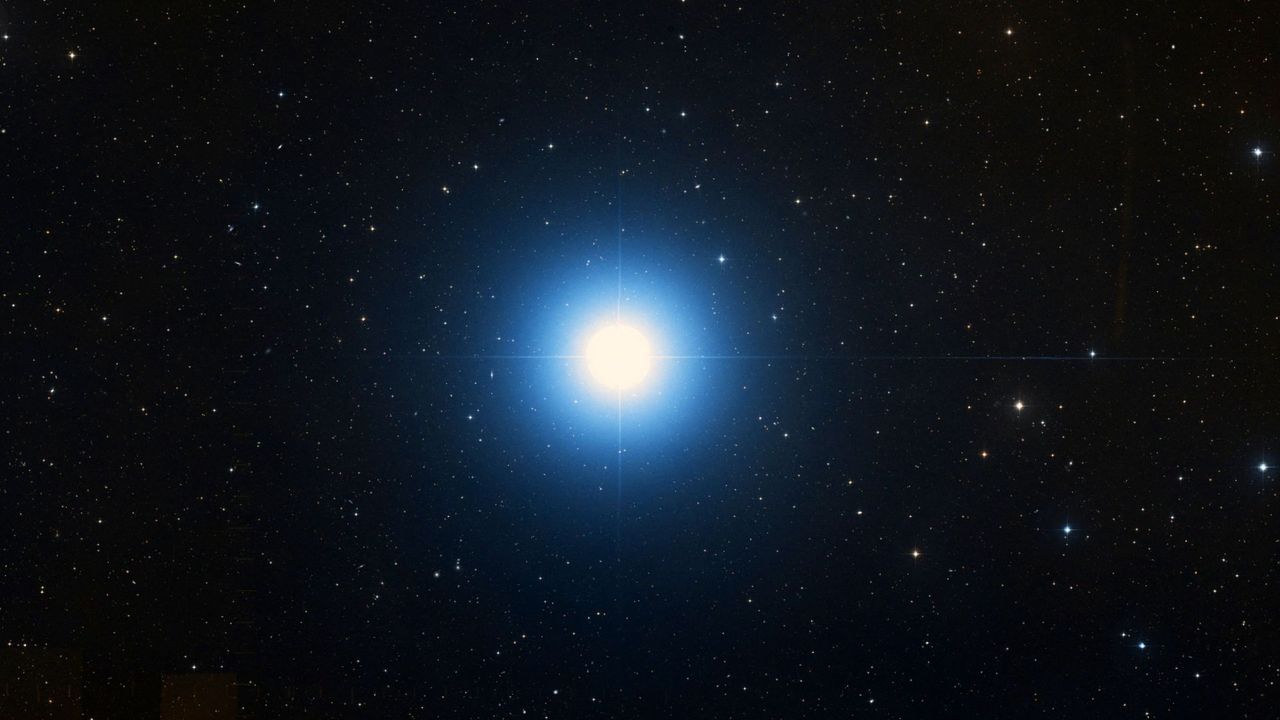
This star's light has been crossing space since the American Revolution. Here's how to find it
Key Points
This star's light has been crossing space since the American Revolution. Here's how to find it This star's light left its surface around the same time that the U.S. was founded.
This star's light has been crossing space since the American Revolution. Here's how to find it
This star's light left its surface around the same time that the U.S. was founded.
The United States' 250th birthday is right around the corner and what better way to celebrate than by looking for a star whose light began its journey to Earth around the time the Declaration of Independence was signed?
Starlight travels through the near-perfect vacuum of space at a staggering 186,282 miles (299,791 kilometers) per second— or the speed of light. Even at this pace, it can take hundreds, thousands, or even millions of years for starlight to reach its destination, rendering each point of light in the night sky a twinkling time capsule, which represents a snapshot in the life of a star encoded at the moment the radiation left its source.
The blue-white double star system Alpha Virginis — known colloquially as Spica — happens to shine roughly 250 light-years from Earth. In other words, the light we see today left the star's surface 250 years ago, around the time that America's founding fathers signed the Declaration of Independence in 1776.
How to find Spica in the night sky
Finding Spica is easy. First, locate the Big Dipper, shining above the northwestern horizon in the hours following sunset in June for viewers in the U.S., with the three stars representing its "handle" pointing up and away from the horizon.
Next, draw an imaginary line following the arc of the handle out into space, until you find the red light of Arcturus, the 4th brightest star in the night sky. Continue the arc beyond Arcturus and the next dazzling bright blue-white star that you spot will be Spica, which twinkles above the southwestern horizon at sunset in early summer.
The single point of light that we call Spica is actually a pair of massive stars that orbit each other once every four days, while shining with the combined light of over 12,000 suns.
Another star at a similar distance from Earth is Bellatrix, which shines at the left shoulder of the celestial hunter depicted in the constellation Orion. This variable star is also located 250 light-years from Earth, but is sadly lost from view in the glare of the sun during the summer months.
Want to get a closer look at the night sky? Then be sure to read our roundup of the best telescopes and binoculars for exploring the post sunset realm, along with our beginner's guide to amateur astronomy.
Editor's Note: If you would like to share your astrophotography with Space.com's readers, then please send your photo(s), comments, and your name and location to [email protected].
You must confirm your public display name before commenting
Please logout and then login again, you will then be prompted to enter your display name.
Anthony Wood joined Space.com in April 2025 after contributing articles to outlets including IGN, New Atlas and Gizmodo. He has a passion for the night sky, science, Hideo Kojima, and human space exploration, and can’t wait for the day when astronauts once again set foot on the moon.
the American Revolution (EVENT)
U.S. (LOCATION)
The United States' (LOCATION)
Earth (LOCATION)
the Declaration of Independence (EVENT)
Starlight (ORG)
Alpha Virginis (ORG)
Spica (PERSON)
America (LOCATION)
Arcturus (ORG)
Bellatrix (ORG)
Space.com (ORG)
Anthony Wood (PERSON)
IGN (ORG)
New Atlas (ORG)