
Business & Finance
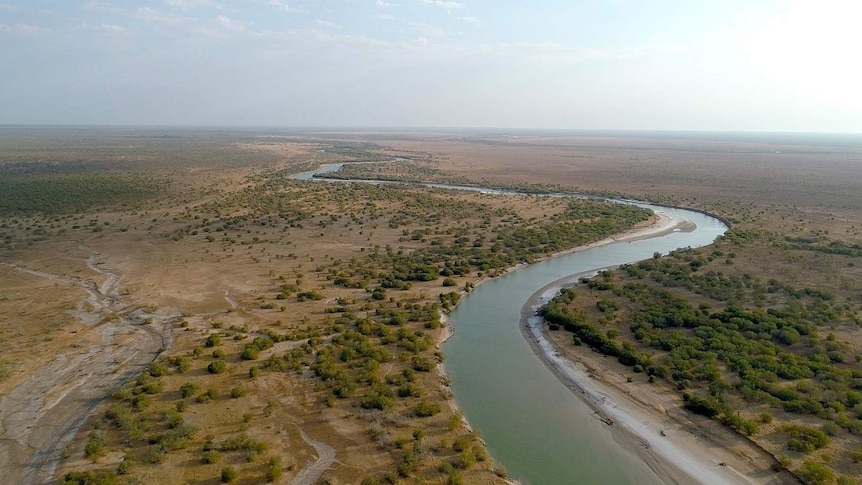
How will one of WA's most famous river systems be managed into the future?
Key Points
The controversial $1m Fitzroy River plan is closing for consultation. Tue 30 Jun 2026 at 8:06am Public consultation on the controversial draft plan to manage one of Australia's vital river systems closes today, with significant work ahead to balance environmental, pastoral and traditional owner interests. The Fitzroy River, stretching more than 700 kilometres from Western Australia's East Kimberley to the Indian Ocean at King Sound, holds deep cultural, ecological and economic importance.
The controversial $1m Fitzroy River plan is closing for consultation. What is it?
Tue 30 Jun 2026 at 8:06am
Public consultation on the controversial draft plan to manage one of Australia's vital river systems closes today, with significant work ahead to balance environmental, pastoral and traditional owner interests.
The Fitzroy River, stretching more than 700 kilometres from Western Australia's East Kimberley to the Indian Ocean at King Sound, holds deep cultural, ecological and economic importance.
In April, the WA government released a draft plan designed to manage water throughout the Fitzroy River catchment and Derby Peninsula.
A three-month period for feedback is set to close today, June 30.
Why was the plan drafted?
The water plan is the first of its kind for the Fitzroy River catchment and related groundwater resources in the Canning-Kimberley groundwater area and will replace older water plans for the Derby groundwater area.
Water Minister Don Punch said the plan was an important step in managing the river system, while supporting the sustainable and productive use of groundwater.
Department of Water and Environmental Regulation officials told a state budget estimates hearing this month the plan cost more than $1 million to produce — and further consultation might still be needed.
There has long been debate over whether more water could be extracted from the river system to bolster the region's cattle industry and economy.
Many traditional owners and environmentalists have argued further extraction would negatively impact the river and the ecosystems it supports.
What were the key points of the draft plan?
No new surface water entitlements will be issued and groundwater use will be limited to a total of 75.5 gigalitres a year.
Water licence applicants are "unlikely" to be allowed to use more than 3 gigalitres a year.
About 25 gigalitres per year of the remaining groundwater will be held by the state government and available to native title holders for licensing.
No further water will be available for licensing in the Derby Peninsula except for public supply purposes.
An advisory committee — likely to be comprised of traditional owners, government, industry, and community representatives — will be established to advise the government on water matters.
How is surface water different to groundwater?
Surface water is any body of water above ground, including rivers and streams.
Groundwater seeps through the ground and accumulates in underground reservoirs called aquifers; it can be brought to the surface using bores, wells, and pumps.
Some northern WA pastoralists argue "extra" surface water flows down the Fitzroy River each year during the wet season, from November to April, and this water could be used for agricultural purposes without environmental impact.
Who does the Fitzroy River system currently supply?
The draft plan covers an area of about 107,000 square kilometres in the Kimberley, including the towns of Derby, Camballin and Fitzroy Crossing — as well as 60 Aboriginal communities and 50 pastoral stations.
Water legislation dating back to 1968 and 1997 stipulated anyone who wanted to use water from the rivers and aquifers in the area had to have a licence to take surface water or groundwater.
Groundwater currently supplies towns, communities, and pastoral stations across the plan area, although is most used on the Derby Peninsula.
What do people think of the plan?
Kimberley Pilbara Cattlemen's Association chief executive Bron Christensen said the industry body requested a number of changes to support local land and animal development.
"The key concern is the handbrake that the current proposed limits will place on agriculture and agricultural development," she said.
"One of the limitations is the 3-gigalitre limitation on a permit.
"Pastoralists agree the water has to be managed … we appreciate the environmental issues, we appreciate community issues, but we also need to be able to develop the pastoral industry."
Kija man Kim Bridge, who grew up in Halls Creek, said the plan's key weakness was a lack of shared management of the underground asset by the state and Aboriginal groups.
"The point of concern for me is [out of] the 61 recommendations made from Aboriginal groups only 7 were accepted," he said.
"They use the term watershed moments and this is one of those," Mr Bridge said. "What's your fear of working together?"
Mr Bridge's father, Labor politician Ernie Bridge, worked to pipe water from the Kimberley to the dry south when he was in office.
But his son wants the plan to take a more considered approach to water usage.
"It does represent an opportunity to use the water reserve but do it in a thoughtful way around cultural care and environment care, and how we foster a number of really thriving business opportunities," he said.
From across the country, New South Wales grazier Rob McBride issued a warning to West Australians that they should fight to save the Fitzroy River from meeting the same fate as the Darling River — which he said was profoundly damaged by excessive water extraction.
"This is not about taking sustainable amounts of water, it's about opening up the most destructive means by which to kill the Fitzroy River in its history,"he said.
"I would really say to the people of that region and of WA in general, please fight — it's not only for yourself, it's for your children and grandchildren."
What happens next?
The consultation period for the draft plan ends at 5pm on June 30.
After this time, the Department of Water and Environmental Regulation said it will continue talking to traditional owners, industry, community, and government representatives as it finalises the plan.
The department's deputy director general for climate and sustainability, Emily Briggs, told a state budget estimates hearing "tens of thousands" of public submissions had been received.
A final report is due to be published by the end of the year.
WA (LOCATION)
Fitzroy River (LOCATION)
Australia (LOCATION)
The Fitzroy River (LOCATION)
Western Australia's (LOCATION)
East Kimberley (LOCATION)
the Indian Ocean (LOCATION)
Derby Peninsula (LOCATION)
Canning (ORG)
Derby (LOCATION)
Don Punch (PERSON)
Department of Water and Environmental Regulation (ORG)
the Derby Peninsula (LOCATION)
Kimberley (PERSON)
Camballin (PERSON)