
Education
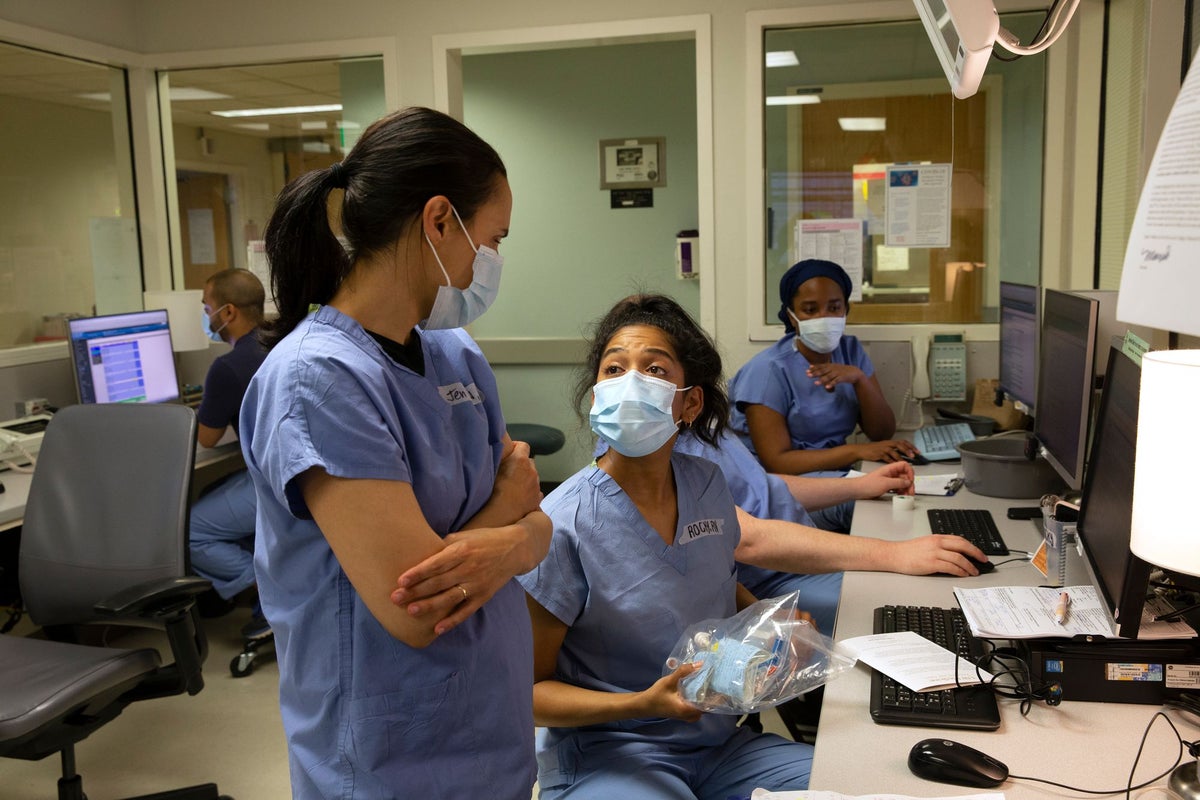
Trump’s student loan rule takes another hit as judge blocks limits on nurses and health workers
Key Points
Trump’s student loan rule takes another hit as judge blocks limits on nurses and health workers Agency officials called it a temporary change while they fight in court to keep the original rule, which defined medicine, law and other fields as “professional programs” but excluded fields such as nursing - Bookmark - CommentsGo to comments Graduate students pursuing degrees in nursing, physical therapy, and several other fields will temporarily be eligible for higher federal student loan...
Trump’s student loan rule takes another hit as judge blocks limits on nurses and health workers
Agency officials called it a temporary change while they fight in court to keep the original rule, which defined medicine, law and other fields as “professional programs” but excluded fields such as nursing
- Bookmark
- CommentsGo to comments
Graduate students pursuing degrees in nursing, physical therapy, and several other fields will temporarily be eligible for higher federal student loan amounts, following a federal judge’s decision to block part of a rule implemented by the Trump administration. The U.S. Education Department announced a revised rule on Monday to comply with the judge’s order, though officials indicated they would continue to fight in court to reinstate the original policy.
U.S. District Judge Beryl Howell in Washington issued last week’s court ruling, specifically blocking parts of the Education Department’s definition of "professional programs" that were added during a federal rulemaking process. Judge Howell characterized the department’s interpretation as "misguided" and a departure from a longstanding definition established by Congress.
The original rule, which took effect last year, was part of a student loan overhaul included in Donald Trump’s tax bill. It established federal borrowing caps of $200,000 for designated professional degrees and $100,000 for other graduate programs. Previously, graduate students could borrow up to the full cost of their education. Administration officials defended the changes as a way to reduce rising student debt and address what they described as unchecked tuition increases.
Under the initial rule, theology programs, applied psychology, and pharmaceutical sciences were among those that shifted from professional to non-professional status, subjecting students to lower loan limits. However, the Master of Divinity degree, common among pastors and ministers, and the Doctor of Pharmacy degree retained their professional status with a more generous loan limit.
The groups that initiated the lawsuit, including representatives for nurse practitioners, therapists, and speech-language pathologists, argued that the rule would compel students to abandon their studies or resort to riskier private loans. Many graduate nursing degrees, particularly in high-demand fields like nurse anesthesia, can exceed the \$100,000 lower loan limit.
The department described the change as temporary, stating its intention to challenge the ruling that found fault with its definition of "professional programs." Undersecretary Nicholas Kent affirmed the department’s disagreement with the judge’s order but pledged compliance, adding, "We will continue to make the case that the definition is both lawful and appropriate."
This development marks a short-term victory for the eight groups who had challenged the department’s initial definition in court. The temporary rule expands the list of professional degrees to 29 specific programs, including master of science in nursing, doctor of nursing practice, and doctor of nursing anesthesia practice, as well as degrees in physical therapy, athletic training, and physician associate programs.
However, the department’s strict application of the judge’s order also means some degrees are now being removed from the professional programs list, subjecting those students to lower loan limits. A separate lawsuit challenging the loan caps, filed by a coalition of Democratic-led states, remains pending.
Join our commenting forum
Join thought-provoking conversations, follow other Independent readers and see their replies
Comments