
Business & Finance
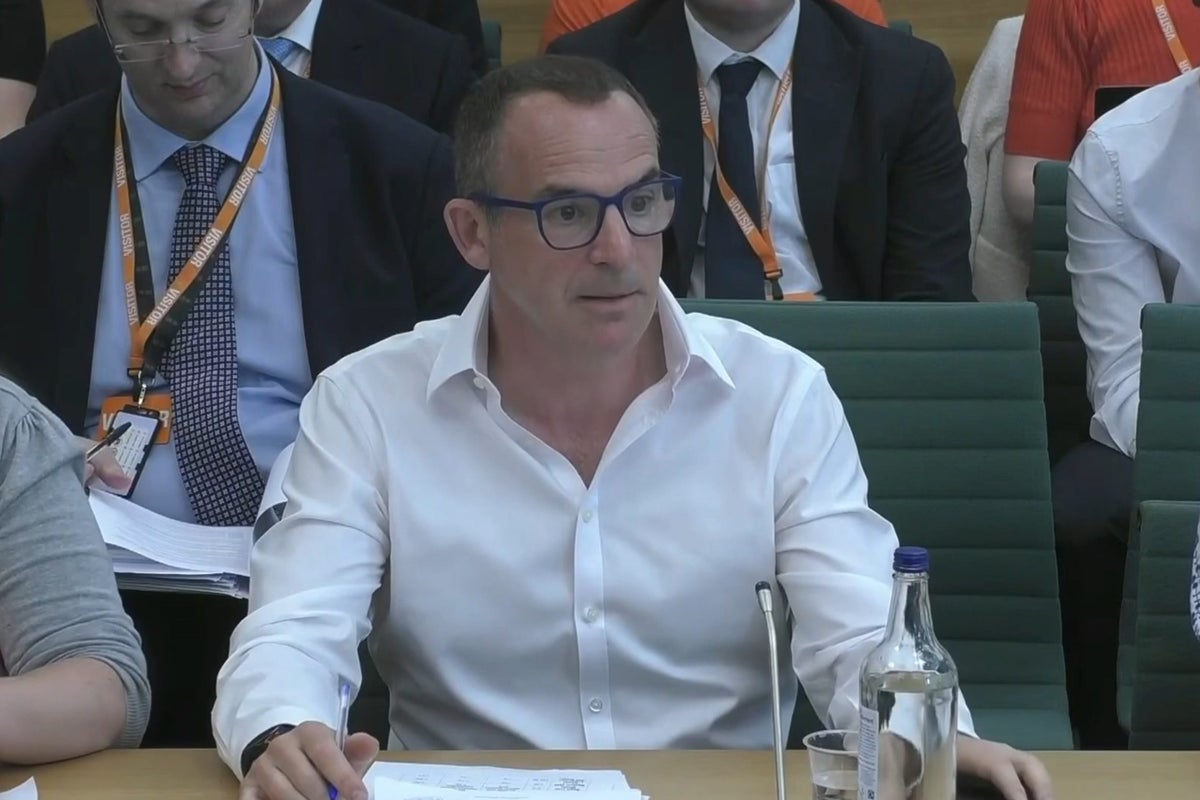
Martin Lewis blasts water firms over baffling language blocking help for millions
Key Points
Martin Lewis blasts water firms over baffling language blocking help for millions Martin Lewis, the founder of MoneySavingExpert, told the Public Accounts Committee that he still did not know what the term meant. - Bookmark Water companies are demanding consumers provide their "equivalised income" when assessing eligibility for social tariffs, a term even financial expert Martin Lewis admits he does not understand. The founder of MoneySavingExpert told MPs on the Public Accounts Committee...
Martin Lewis blasts water firms over baffling language blocking help for millions
Martin Lewis, the founder of MoneySavingExpert, told the Public Accounts Committee that he still did not know what the term meant.
- Bookmark
Water companies are demanding consumers provide their "equivalised income" when assessing eligibility for social tariffs, a term even financial expert Martin Lewis admits he does not understand.
The founder of MoneySavingExpert told MPs on the Public Accounts Committee that such obscure language is a significant barrier for vulnerable individuals seeking support.
Mr Lewis expressed his bewilderment to the committee, stating: "The point I’m making is if none of us in this room knows what that means – and I don’t know what that means – then I think it’s probably not a good way to communicate it to vulnerable people."
When questioned if firms intentionally use complex terminology to deter applicants, Mr Lewis suggested it was more a failure of communication than a deliberate conspiracy. "I tend to think it’s because they’re crap at communicating. I tend to think this isn’t conspiracy, it’s just crap," he said, adding that regulators should "crack down on crapness."
He advocated for a comprehensive communications audit of water companies regarding their social tariffs, suggesting that a standardised approach across all providers would lead to "centralised, really good communication."
The scale of the problem is substantial, according to Mr Lewis. He informed the committee that "According to Policy in Practice, 3.8 million households are missing out on water social tariffs. That’s outrageous. Broadband. 7.5 million households."
Turning to the energy sector, Mr Lewis highlighted a different but equally pressing issue: the absence of a dedicated social tariff. He criticised the current "backstop tariff," which he colloquially termed the "pants cap," for failing to protect the most vulnerable.
"We went for a backstop tariff – I call it the pants cap, not the price cap – we went for a backstop tariff that was meant to be so that the people who never switch will not be quite as hideously ripped off as they would be under a no price cap situation," he explained.
He argued that the energy market has evolved into a "quasi regulated tariff for 60 per cent of the population," creating "illegitimate victims of competition."
Mr Lewis painted a stark picture: "Alternatively then we have your struggling 90-year-old with dementia who pays more than I do to boil the kettle – because that’s how it works, because I, of course, am on a good tariff as you would expect – and therefore is an illegitimate victim of competition." He concluded that the current system, a "halfway house between a market system and price regulation," results in "the worst of both worlds," indicating "some really big systemic problems going on in all these sectors."
Anne Pardoe, head of policy at Citizens Advice, echoed Mr Lewis's concerns, emphasising the "really low" awareness of these tariffs. She highlighted the "lack of standardisation" as a major hurdle, making it difficult for people to understand and claim their entitlements.
Ms Pardoe noted a "critical opportunity" in the water sector for standardisation, recalling that a single social tariff was recommended by the Cunliffe Independent Water Commission, but the government chose not to proceed, which she deemed "a really big missed opportunity."
Regarding broadband, Ms Pardoe pointed out that the voluntary nature of the scheme provides "absolutely no incentive for broadband companies to, A, get these right and, B, promote them." Consequently, she observed, "They’ve done very little in terms of promoting these tariffs amongst their customers."
Earlier, Ms Pardoe also raised alarms about the increasing reliance on AI chatbots for customer service. She described how individuals attempting to contact essential service providers often get "stuck in this cycle," unable to reach a human.
"I’m sure we’ve all done it when we’re trying to contact customer service on a website and you just end up in an endless cycle," she said, adding that even Citizens Advice advisors struggle to connect with creditors, including energy, water, and telecoms companies.
She stressed the crucial role of regulators in monitoring this trend, asserting that "It’s really essential that people are able to contact their essential services providers when they’re having difficulty."