
Sport
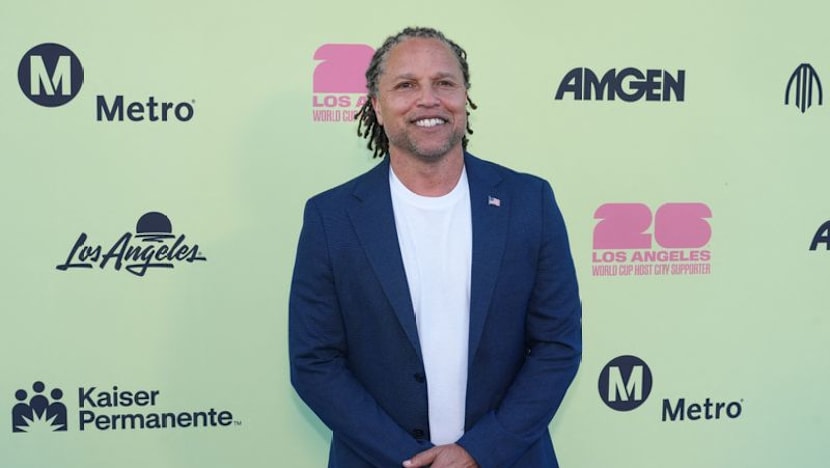
Soccer's American dream has room to grow, says Jones
Key Points
Soccer's American dream has room to grow, says Jones HOUSTON, June 30 : The 1994 World Cup in the United States delivered Major League Soccer, but this edition has the potential for the exponential growth of the game in the country beyond what anyone thought possible, says former international Cobi Jones. Jones was part of the U.S. side that reached the knockout rounds on home soil 32 years ago before a loss to eventual champions Brazil in the last 16. Since then, perceptions of the sport in...
Soccer's American dream has room to grow, says Jones
HOUSTON, June 30 : The 1994 World Cup in the United States delivered Major League Soccer, but this edition has the potential for the exponential growth of the game in the country beyond what anyone thought possible, says former international Cobi Jones.
Jones was part of the U.S. side that reached the knockout rounds on home soil 32 years ago before a loss to eventual champions Brazil in the last 16. Since then, perceptions of the sport in the country have changed markedly.
"In 1994 the World Cup was more of an ‘event’, it was an oddity here within the U.S of, 'Okay, what's this big soccer thing all about?'," Jones told Reuters in an exclusive interview in Houston on Tuesday.
"Within the soccer world, everyone knew (about the World Cup), but there were much more people on the peripheries in the U.S. still trying to figure it out. Now you have a good understanding by the American public of this tournament."
Massive fan zones attracting tens of thousands for every game did not exist in 1994 and for those wanting to watch matches, the best bet was finding an English sports bar or tuning into Mexican channel Telemundo on cable television.
Jones, who would go on to become his country’s most capped international with 164 appearances, believes the impact of the 2026 World Cup goes well beyond fan recognition.
"When we look at 1994, the MLS was a specific planned next step and something that came about because of the World Cup. When we look at this tournament, I’m thinking about the financial side and more companies wanting to get involved," he said.
"The potential is untapped, and we don't know where it could go. I know everyone says soccer will never be the biggest sport (in the U.S.), but it's continuing to grow and continuing to be exciting."
INTERNATIONAL FLAVOUR
With Serbian coach Bora Milutinovic at the helm in 1994, the U.S. roster had an international flavour. One of his key targets was South African striker Roy Wegerle, whose American wife made him eligible to represent the country.
Milutinovic also drafted in Bundesliga defender Thomas Dooley, who spoke limited English but had an American military father who had been stationed in Germany.
Jones sees parallels between that team and the Class of 2026.
"You've got Sergino Dest, with his upbringing (in the Netherlands), and a variety of other players. Folarin Balogun would be another example," he said of the forward born in New York and raised in England by Nigerian parents.
"Everywhere that's the norm (these days), so we're not standing out or being different in any way.
"The biggest thing is, how do they come and integrate with other players that are raised in the United States?"
Jones said the 1994 team had its issues, but they came together to put the country's football on the global map.
"It was a great environment. It was a tight-knit group. Sometimes you can get close through strife, and we had a lot of that early on. But that pain and suffering brought us together.
"It was a dynamic group that had a good mix of local U.S. players and those from overseas. For U.S. sides at World Cups over the years, every time there's a nice balance of that, is usually when the team does well."
The U.S. will play Bosnia in their round of 32 fixture in San Francisco on Wednesday.