
World News
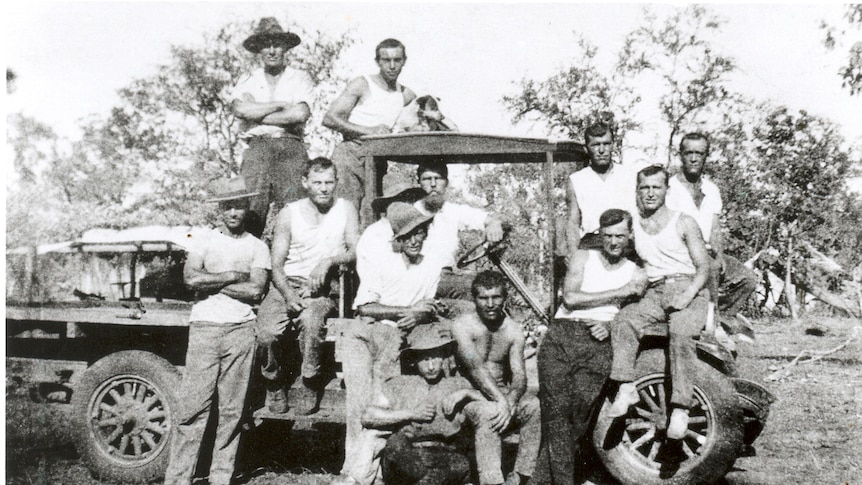
Today in history: NT town of Katherine gazetted 100 years ago
Key Points
Crossroads of the north: NT town of Katherine celebrates 100 years since being gazetted Wed 1 Jul 2026 at 12:41pm The town of Katherine in the Northern Territory has been a meeting place for centuries, and remains a crossroads for people travelling across the north. But it was not until the completion of a bridge in 1926 that the town, 300 kilometres south of Darwin, was officially gazetted. Today, we look back at a century of Katherine — a place many people, from traditional owners to...
Crossroads of the north: NT town of Katherine celebrates 100 years since being gazetted
Wed 1 Jul 2026 at 12:41pm
The town of Katherine in the Northern Territory has been a meeting place for centuries, and remains a crossroads for people travelling across the north.
But it was not until the completion of a bridge in 1926 that the town, 300 kilometres south of Darwin, was officially gazetted.
Today, we look back at a century of Katherine — a place many people, from traditional owners to Russian peanut farmers, have called home over the years.
It is a town that has seen its fair share of triumphs and hardships, from the landmark return of sacred land to traditional owners, to being bombed during World War II.
Tough conditions: No AC, no fans
Katherine's early days of European settlement in the late 1800s were driven by its role as an outpost on the overland telegraph line.
But the modern township, in its present location, came about in 1926 with the completion of the Katherine railway bridge.
The railway brought investment and the first proper homes, built for the engine drivers.
For most people, living conditions were tough in those days.
Town historian Simmone Croft said most people lived in structures that were "more like shanties".
"It would have been pretty hard living in this heat with no air conditioning, no fans, basically no refrigeration — so people lived on salt beef, dampers and whatever they could grow," she says.
Lisa Mumbin, a traditional owner, senior Jawoyn elder and chair of the Jawoyn Association, said the experience for many Aboriginal stockmen and their families was extremely tough.
In the 1960s, the mass walk-off from Wave Hill Station to Katherine's south-west brought the payment of Aboriginal workers with flour, sugar and tea to national attention and was a flashpoint in the land rights movement.
A melting pot in the north
Early Chinese migrants brought much-needed culinary skills, with many working as cooks on nearby cattle stations.
"They knew how to grow greenery, they were very good gardeners and cooks," Ms Croft said.
Russian peanut farmers, displaced from their homeland by civil war, also settled in the town in the 1920s and 1930s, having originally come to help construct the railway under a federal government program.
The peanut enterprise ended up failing due to mould problems, but the Russians remained, with Katherine suburbs still bearing names like Cossack.
The melting pot of cultures in Katherine's early years was encapsulated by the man now depicted in a statue on horseback on Katherine's main drag.
Sabu Sing, born to a Wardaman Aboriginal mother and a Chinese station cook father, was a highly skilled horseman.
"He worked with cattle, he was very good with animal husbandry, and he could do bird calls that sounded like the real deal," Ms Croft said.
"He worked very hard … Sabu was very iconic to our town, and very loved."
Japan's furthest inland strike
Most of Katherine's residents were evacuated during the Second World War while tens of thousands of troops took up postings in and around the town.
A core group of around 100 shopkeepers, postal staff, police and health workers stayed behind with the soldiers.
The military saw inland Katherine as a strategic location on Australia's northern front, with railway access and a hospital, which became especially important after the bombing of Darwin in February 1942.
The sense of relative security was shattered when a group of nine Japanese aircraft dropped around 90 bombs on Katherine's airfield on March 22, 1942, killing one Aboriginal man named Dodger Kodjalway who was working at the hospital.
The resulting damage was minor from a military perspective, though craters and shrapnel marks from the bombing can still be seen today.
Jewel in the crown
Nitmiluk Gorge is Katherine's biggest drawcard, winding its way in sharp 90-degree zigzags through fractures in a gigantic slab of sandstone.
Ms Mumbin said the gorge had always been deeply important to the Jawoyn, many of whom lived in what is now Nitmiluk National Park.
"There's a lot of stories, a lot of traditional cultural parts to that place that have to be managed … and this is why a lot of the elders fought for that country,"she said.
The Jawoyn pushed to have their claim over Nitmiluk recognised, sparking a fierce public debate.
"We just wanted to be part of that country still, and have the impact of caring for country. That was very important," Ms Mumbin says.
"We weren't going to take it away from the people of Katherine."
When the park was handed back in 1989, the Jawoyn immediately struck an agreement with the government to run Nitmiluk as a national park.
Jawoyn rangers now maintain the park, which attracts more than a quarter of a million visitors every year, while the Aboriginal-owned Nitmiluk Tours operates boat cruises and kayaking.
"We kind of proved a lot of people wrong," Ms Mumbin said.
Flooding changed the town
The people of Katherine are no strangers to floods.
The town's centenary celebration this week is taking place at the showgrounds on land that was underwater just four months ago, when Katherine's worst flood in 28 years inundated hundreds of buildings and caused tens of millions of dollars in damage.
The river peaked at 19.2 metres, almost swallowing the high-level bridge.
For long-term residents, there were echoes of the worst flood on record in 1998, when the river hit 20.4m.
Ms Mumbin remembered fleeing to higher ground.
"We had only a short moment to get ourselves out," she said.
"It was very devastating. We knew it was going to affect us all."
Ms Croft said the town "suffered terribly" and more than 2,000 people left in the aftermath.
However, according to Ms Croft, one silver lining was that the 1998 flood marked a "major turning point" in the relationship between the townspeople and the nearby Tindal RAAF Base, which was made a permanent base by Bob Hawke in the 1980s.
There was a "huge injection of help" from the base, whose airmen and women had been perceived as "blow-ins" up until then.
"That became a happier subject," Ms Croft said.
Katherine (PERSON)
Crossroads (LOCATION)
the Northern Territory (LOCATION)
Darwin (PERSON)
Russian (ORG)
World War II (EVENT)
European (ORG)
Simmone Croft (PERSON)
Lisa Mumbin (PERSON)
the Jawoyn Association (ORG)
Wave Hill Station (LOCATION)
Chinese (ORG)
Ms Croft (PERSON)
Russians (ORG)
Cossack (PERSON)