
UK News
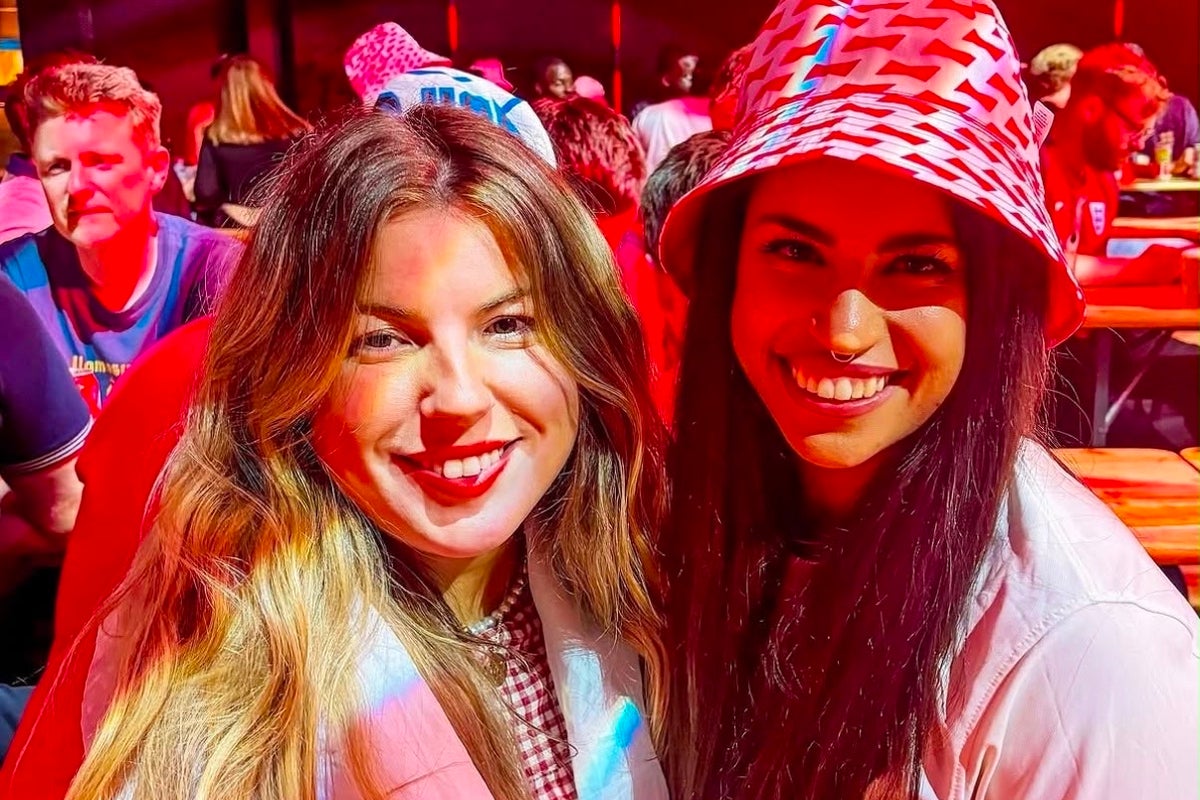
The England fans who fear flying the national flag after it was ‘hijacked’ by the far-right
Key Points
The England fans who fear flying the national flag after it was ‘hijacked’ by the far-right Divisive figures such as Tommy Robinson and his fans have used the St George flag to spread anti-immigrant and racist messaging - Bookmark - CommentsGo to comments Having grown up in a family that loved to watch football, Anna Johnstone had always been an England fan. Yet it was the excitement of the 2021 Euros and a crush on Man City player Jack Grealish that ignited her real obsession and left her a...
The England fans who fear flying the national flag after it was ‘hijacked’ by the far-right
Divisive figures such as Tommy Robinson and his fans have used the St George flag to spread anti-immigrant and racist messaging
- Bookmark
- CommentsGo to comments
Having grown up in a family that loved to watch football, Anna Johnstone had always been an England fan. Yet it was the excitement of the 2021 Euros and a crush on Man City player Jack Grealish that ignited her real obsession and left her a devoted football fan.
In previous years, she had displayed the St George’s flag from her window and draped herself in the red and white, but this year was more apprehensive given it’s connections with Britain’s far-right agitators.
“The flag fell down and I felt like putting it back up was a hate crime,” she said. “Even though i’m doing it in a fun and positive way to support an international tournament, I can’t say it hasn’t been totally appropriated by the far-right.”
She is not the only one who has felt reluctant to wave the England flag during this summer’s World Cup tournament.
Since the race riots in the summer of 2024, following the Southport stabbings, the flag has been increasingly associated with an anti-migrant rhetoric, racism and controversial figures such as Tommy Robinson.
At a recent Unite the Kingdom rally in central London, which saw more than 100,000 protesters listen to speeches from the likes of Robinson and tech billionaire Elon Musk, thousands carried the England and Union Jack flags.
Amira Arasteh, 32, has been similarly dedicated to the England team since she was young, with both her and her sister playing football at school.
“I’ve always watched the international games where everyone will come together, and found it to be such a positive environment,” she said.
As a Persian woman living in London, she has always been careful to avoid the far-right rallies which have taken place with increasing frequency in Westminster.
“I purposefully have to stay at home, but one time I had plans with a friend later in the day and travelled to central. I came out of Embankment station and there were guys with flags at the pub who had been on the marches, and it dawned on me what the flag meant for them.”
The topic of flags has made headlines over the last year after a group named Raise the Colours began placing English and British flags on lamp-posts in towns and cities across the country, as well as painting the red and white St George’s cross on roundabouts and buildings.
Their website describes themselves as a “grassroots movement” with the intention of covering Britain in “symbols of unity and patriotism”.
Figures such as Reform UK leader Nigel Farage have supported the campaign, writing in The Sun: “We have had enough of our country and its history being trashed. We have had enough of being called far-right simply because we believe in tough border controls and our national identity.”
However Sir Keir Starmer took a different stance following Robinson’s rally and said: “Our flag represents our diverse country and we will never surrender it to those that use it as a symbol of violence, fear and division.”
Local authorities such as Oxfordshire county council have taken legal action, securing a landmark injunction to prevent the group from hanging the flags without permission.
In their formal legal notice in March, the council said that the installation of unauthorised flags was an “act of intimidation and division” which left residents feeling “distressed”.
Michael Bradley, a spokesperson for Stand Up To Racism, said: “The far right have adopted this as their logo and everything from Raise The Colours on high streets to Tommy Robinson's demonstrations, this has become the symbol.
“The way its being used in communities is not a sense of national identity, it’s a 'you're not welcome' message, it’s spread across the country, people have attempted to remove flags and have been attacked.”
He added some people are pushing a narrative of “poisonous” version of nationalism utilising the flag.
As a result, Amazon now sell “Proud not racist” flags, while one Essex woman, Flo Finch, has gone viral on TikTok for personalising her own flag with the slogan “For football not Farage”, in a move to ‘reclaim’ the symbol.
The four-storey Kirby estate in Bermondsey famously decorate their buildings in hundreds of England flags for every major football tournament but foster an inclusive environment, and encourage other residents to hang their own national flags to celebrate the game.
Ms Arasteh said: “It’s difficult isn’t it, there shouldn’t be any kind of ulterior motive other than it is the flag of the country and the one we use to support our team and the World Cup. It’s sad we have this negativity associated with it.
“I was with my friends and we passed a cafe with the flag flying. It’s bad that you see the national flag and you immediately think racism but then you have to remember it’s the World Cup.”
In November last year, YouGov found that 52 per cent of ethnic minority adults say the St George’s flag is now a racist symbol, compared to 36 per cent of white adults.
A majority of ethnic minority adults believe those putting up St George’s crosses are doing so “mostly as a way of expressing anti-migrant and/or anti-ethnic minority sentiment”, with a plurality (41 per cent) saying the same of the union flag.
However, during this tournament, Ms Johnstone is hoping to ‘reclaim’ the flag in her own way and use it to show support for the diversity of London and England - which is echoed in the men’s football team.
“We are such a diverse team so waving the flag during the England game is a direct support of the team, which is made up of children of immigrants and immigrant backgrounds.
“I’ve just been treated by the NHS where I spent two and a half weeks in hospital and was treated by lots of amazing health workers from immigrant backgrounds.
“We don’t want the flag to be a symbol of the far-right but the more we avoid waving it and using it, the more we are allowing it to become a symbol of the far-right.”
On Tuesday, Sir Keir Starmer said: “The prime minister is proud of the St George's flag and proud to back England, alongside millions of fans across the country.
“As we said before, it's our flag, it's our history, it's our heritage, and it's our values, and decisions on number 10 flags reflect a range of national moments across the year.
“We will be flying the flag for knockout matches, the flag will go up on Wednesday morning for the next game, and the PM has been very clear. He wants the whole country to come together behind the England team, which is why we're extending pub opening hours for knockout matches and cutting red tape, so fans can enjoy the tournament together.
“So, as I say, the decisions on number 10 bags reflect a range of national moments across the year, but the flag will be going up on Wednesday morning.”
Join our commenting forum
Join thought-provoking conversations, follow other Independent readers and see their replies
Comments
England (LOCATION)
Tommy Robinson (PERSON)
St George (LOCATION)
Anna Johnstone (PERSON)
Man City (LOCATION)
Jack Grealish (PERSON)
the St George’s (LOCATION)
Britain (LOCATION)
World Cup (EVENT)
Southport (LOCATION)
Kingdom (LOCATION)
London (LOCATION)
Robinson (PERSON)
Elon Musk (PERSON)
Amira Arasteh (PERSON)