
World News
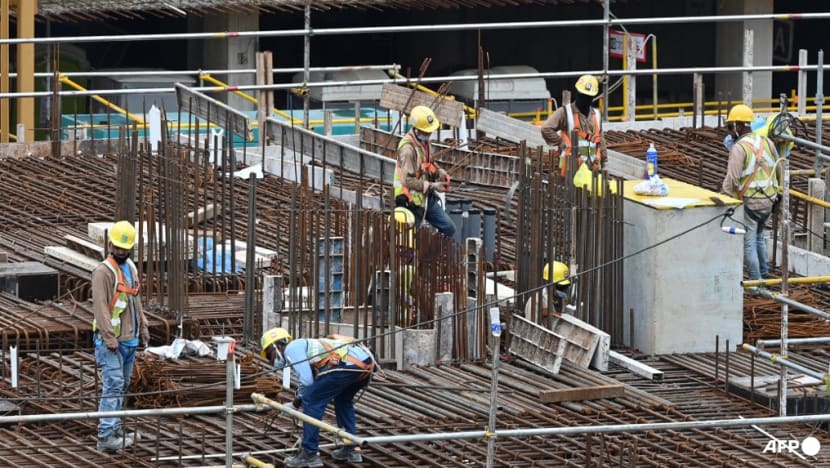
Construction firms adjust to ‘new normal’ of higher material costs after Middle East conflict
Key Points
Construction firms adjust to ‘new normal’ of higher material costs after Middle East conflict Soaring costs are squeezing profit margins and raising expectations of higher tender prices for future projects. Construction firms are adapting to what industry players are calling a "new normal" of higher fuel and material costs, months after the Middle East conflict disrupted global supply chains. Companies told CNA that soaring costs are squeezing profit margins and raising expectations of...
Construction firms adjust to ‘new normal’ of higher material costs after Middle East conflict
Soaring costs are squeezing profit margins and raising expectations of higher tender prices for future projects.
SINGAPORE: Construction firms are adapting to what industry players are calling a "new normal" of higher fuel and material costs, months after the Middle East conflict disrupted global supply chains.
Companies told CNA that soaring costs are squeezing profit margins and raising expectations of higher tender prices for future projects.
Prices for key construction materials such as concrete, cement, reinforcement bars and bitumen remain elevated despite supply chains stabilising, they added.
MATERIAL PRICES REMAIN ELEVATED
Official data from the Singapore Department of Statistics on construction material market prices reflects the trend.
For instance, high tensile steel reinforcement bars in the 16-32mm diameter range cost S$704 (US$543) per tonne in May, up about 10 per cent from S$637.10 in February when the Middle East conflict escalated.
Ready-mixed concrete rose from S$130 per cubic metre in February to S$145.60 in May, an increase of just over 10 per cent.
“The main impact for us is that our profit margin is being eroded,” said Mr Bruce Peng, executive director at Right Construction.
“For certain materials, because we are heavily dependent on suppliers, we can't really do much. We can only try to mitigate this price increment.”
To cope with the higher costs, some firms are negotiating with suppliers while investing in measures such as battery storage systems and electric machinery to reduce diesel consumption on worksites.
While Mr Peng believes the conflict will eventually end, he said inflation means material prices are unlikely to return to pre-war levels.
For now, the impact on ongoing projects appears limited.
The Micro Builders Association Singapore, which represents about 200 contractors specialising mainly in landed housing projects, said fewer than one in 10 projects have experienced delays.
The association’s chief assessor Chua Tai Kee said while some projects may face delays, the impact has not been severe.
“It's like weeks to a month. It's not like last time, during COVID-19, where the delay could be a year or one-and-a-half years,” he added.
“In this type of situation, unless the price is really going up rocket high, then of course, you can see contractors cannot buy material. You start to see delays. But it seems like it's quite all right.”
HIGHER TENDER PRICES EXPECTED
Construction firms expect the higher-cost environment to be reflected in future tender prices.
For now, they do not expect the additional costs to be passed directly to homebuyers, with developers and contractors likely to absorb much of the increase.
But experts warn that such an arrangement may not be sustainable if material and fuel costs stay elevated.
“I think it's very unlikely for the contractor or even the developer to absorb these costs for the long term,” said Professor Sing Tien Foo, provost's chair professor of real estate at the National University of Singapore's Business School.
“At the end of the day, I think when the material costs increase, you should expect some price pressure, especially on the housing prices.”
Prof Sing said whether that materialises will depend on how long the higher material and fuel costs persist, given continued uncertainty surrounding the conflict in the Middle East.