
World News
Why Putin keeps targeting Kyiv while his war machine grinds to a halt on frontline
Key Points
Why Putin keeps targeting Kyiv while his war machine grinds to a halt on frontline Russia has amplified its attacks on Ukraine despite insistence it is open to peace talks - Bookmark - CommentsGo to comments At least 17 people were killed in large-scale Russian missile and drone attacks on Kyiv on Wednesday night, authorities said, with children among the casualties. Kyiv Mayor Vitali Klitschko, writing on Telegram, put the number of injured at 86 while damage included six floors of an...
Why Putin keeps targeting Kyiv while his war machine grinds to a halt on frontline
Russia has amplified its attacks on Ukraine despite insistence it is open to peace talks
- Bookmark
- CommentsGo to comments
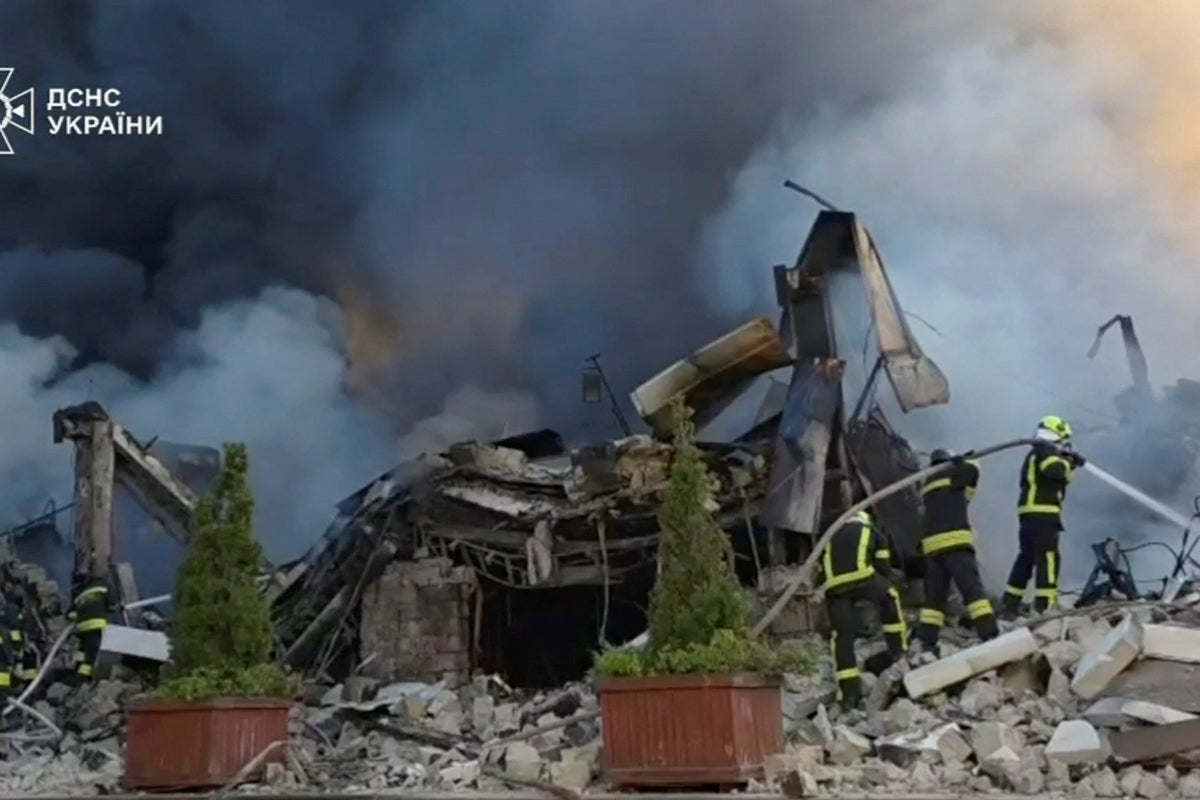
At least 17 people were killed in large-scale Russian missile and drone attacks on Kyiv on Wednesday night, authorities said, with children among the casualties.
Kyiv Mayor Vitali Klitschko, writing on Telegram, put the number of injured at 86 while damage included six floors of an apartment building that had partially collapsed after a direct hit from a Russian projectile.
The Russian defence ministry said the attacks were a response to recent strikes by Kyiv on energy infrastructure that have sparked fuel shortages across Russia in recent weeks.
Ukraine’s air force said 74 missiles and 496 drones were launched overnight, with 25 ballistics missiles and 12 drones hitting 33 locations.
Russia has waged a devastating aerial campaign against Ukraine since its all-out invasion of its neighbour over four years ago. US-led diplomatic efforts this year to stop the fighting have so far come to nothing.
Analysts accuse Russia of deliberately targeting civilian infrastructure in order to wound morale.
Natia Seskuria, an associate fellow at the Royal United Services Institute (RUSI), said that the “systematic” targeting of civilian infrastructure was a “central element” of Russia’s strategy, “designed to terrorise the Ukrainian population and erode public morale”.
“The underlying calculation is that a war-weary society subjected to sustained attacks might exert pressure on the government to accept almost any settlement that promises an end to hostilities,” she told The Independent.
“Thus far, however, this strategy has proven ineffective, as Ukrainians have demonstrated remarkable resilience and determination in the face of ongoing aggression.”
In a statement on Wednesday, Moscow said the strike on Kyiv was a direct response to recent Ukrainian attacks on energy infrastructure.
These strikes have triggered a fuel crisis in Russia, forcing the world's third-biggest oil producer to import gasoline from as far away as India.
Last month, Russian forces hit a thousand-year-old Kyiv cathedral foundational to the Orthodox faith in both countries.
Sybiha rejected any attempts to justify Russian strikes as retaliation for Ukraine's long-range attacks, saying Ukraine was exercising its right to self-defense under Article 51 of the U.N. Charter while Russia remained the aggressor.
The Ukrainians have intensified strikes on refineries, depots and supply routes in recent months, having learned to overwhelm Russia’s defences with a growing arsenal of cutting-edge long-range drones.
Their successes have created debilitating shortages across Russia, from occupied Crimea to the eastern expanses of Siberia, fomenting public discontent.
Keir Giles, a fellow of the Russia and Eurasia programme at Chatham House, told The Independent that Moscow’s attacks are designed to “cause the maximum possible misery and suffering among the civilian population”.
“That’s the principle we saw applied in Syria, in Chechnya and in countless others of Moscow’s wars dating back decades and centuries,” he said.
Mr Giles said Ukraine was “the victim of Russia’s attempts to demoralise its victims through inhumanity.
“That’s the reason for attacks on maternity hospitals, and nurseries, targeting the most vulnerable in society, as well as for the systematic torture and starvation of Ukrainian military and civilian captives – not for any objective purpose other than deliberate and demonstrative cruelty.”
Foreign Minister Andrii Sybiha called on Ukraine's allies to strengthen the country's air defenses following what he described as a "night of horror" in Kyiv, urging partners not to delay decisions on supplying air defense systems and missiles.
Writing on X, Sybiha said the death toll after the attack may rise as the rescue teams continued their work.
Zelensky has recently proposed talks with Russian President Vladimir Putin to end the more than four-year-old war, which the Kremlin leader has rejected.
Join our commenting forum
Join thought-provoking conversations, follow other Independent readers and see their replies
Comments
[Image text:] ACHC
YKPAIHN