
World News
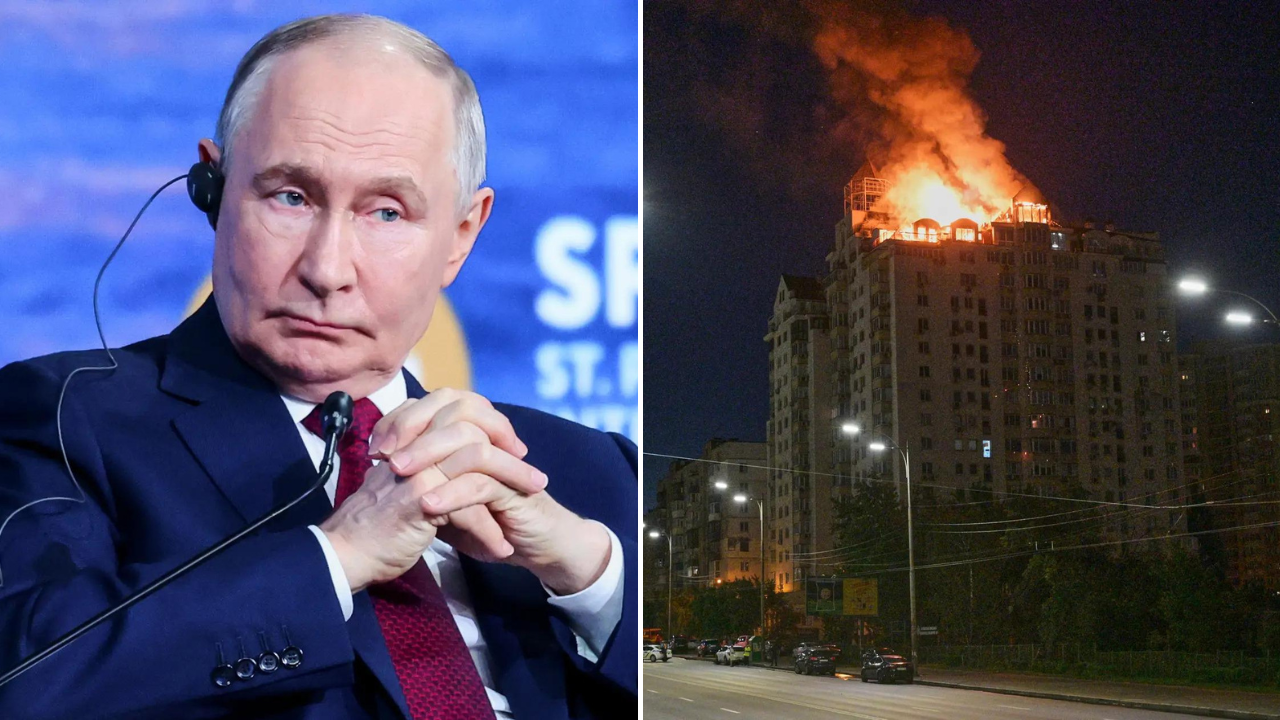
Putin unleashes 'night of horror' on Ukraine, 17 killed; message for Nato ahead of key meet?
Key Points
Russia launched one of its largest aerial assaults of the war overnight, killing at least 17 people and injuring more than 90 in Kyiv, as President Vladimir Putin intensified pressure on Ukraine just days before President Volodymyr Zelenskyy is set to press Nato allies for additional air defence support. The overnight barrage, which Ukrainian officials described as a "night of horror", saw waves of drones and missiles strike the capital for nearly 11 hours. Residential buildings collapsed,...
Russia launched one of its largest aerial assaults of the war overnight, killing at least 17 people and injuring more than 90 in Kyiv, as President Vladimir Putin intensified pressure on Ukraine just days before President Volodymyr Zelenskyy is set to press Nato allies for additional air defence support.
The overnight barrage, which Ukrainian officials described as a "night of horror", saw waves of drones and missiles strike the capital for nearly 11 hours. Residential buildings collapsed, fires broke out across multiple districts and hundreds of emergency workers searched through rubble for survivors. Ukrainian authorities warned the death toll could rise as rescue operations continued.
Also read: 10 ways Russia-Ukraine conflict has changed the world for decades to comeThe attack came after Zelenskyy had cut short a visit to Ireland, saying intelligence indicated Russia was preparing a "massive" strike. The timing has also fuelled speculation that Moscow is seeking to send a message ahead of Zelenskyy's meetings with Nato partners, where he is expected to renew calls for more Patriot missile systems capable of intercepting Russia's increasingly frequent ballistic missile attacks.
Kyiv battered as Russia claims retaliation
According to Ukraine's Air Force, Russia launched 74 missiles, including 24 ballistic missiles, alongside 496 drones in what it described as a "massive combined strike".
Air defences intercepted or neutralised most of the incoming weapons, but dozens still hit targets across the country, with Kyiv bearing the brunt of the attack.
Kyiv Mayor Vitali Klitschko said at least 17 people were killed and more than 90 injured, including children. Damage was reported at around 30 locations across the capital, with more than 20 residential buildings affected. In the Darnytskyi district, six floors of a nine-storey apartment block collapsed after a direct strike, while fires erupted in high-rise buildings elsewhere in the city.
Residents spent much of the night sheltering in underground metro stations as explosions echoed across the capital. Emergency services deployed hundreds of firefighters, rescue workers and specialised vehicles to tackle fires and search damaged buildings for survivors.
Russia's Defence Ministry said the assault was retaliation for Ukrainian strikes on Russian civilian infrastructure, claiming it targeted military industries, energy facilities and airfield infrastructure in Kyiv and several other regions. Ukrainian officials rejected that explanation, insisting most of the damage was inflicted on civilian neighbourhoods.
Ukraine seeks stronger air defences as war escalates
Ukrainian Foreign Minister Andrii Sybiha condemned the assault as a "night of horror", accusing Putin of deliberately targeting civilians.
"War criminal Putin can only wage a vile and terroristic war against civilians, women and children," Sybiha said, urging allies not to delay supplying additional air defence systems and missiles. He added that Ukraine was informing international organisations and partners about what it described as serious war crimes.
Even as Russia pounded Kyiv, Ukraine continued its own long-range campaign inside Russian territory. Ukrainian officials said drones struck one of Russia's largest oil refineries in the Nizhny Novgorod region, while forces also hit a railway bridge in occupied Luhansk used to transport Russian troops and military supplies.