
Politics
The split driving 2026’s most closely watched Senate race: From the Politics Desk
Key Points
Welcome to From the Politics Desk, a daily newsletter that brings you the NBC News Politics team’s latest reporting and analysis from the White House, Capitol Hill and the campaign trail. In today’s edition, we look at the latest in how the conservative majority at the Supreme Court and the GOP majorities across the street at the Capitol are handling President Donald Trump. Plus, Jonathan Allen digs into some new polling data in Maine’s hotly contested Senate race.
Welcome to From the Politics Desk, a daily newsletter that brings you the NBC News Politics team’s latest reporting and analysis from the White House, Capitol Hill and the campaign trail.
In today’s edition, we look at the latest in how the conservative majority at the Supreme Court and the GOP majorities across the street at the Capitol are handling President Donald Trump. Plus, Jonathan Allen digs into some new polling data in Maine’s hotly contested Senate race.
Programming note: The newsletter will be on summer break Friday, July 3, through the end of next week. Our next edition will hit your inbox on Monday, July 13.
Sign up to receive this newsletter in your inbox every weekday here.
— Scott Bland
The split driving 2026’s most closely watched Senate race
Analysis by Jonathan Allen
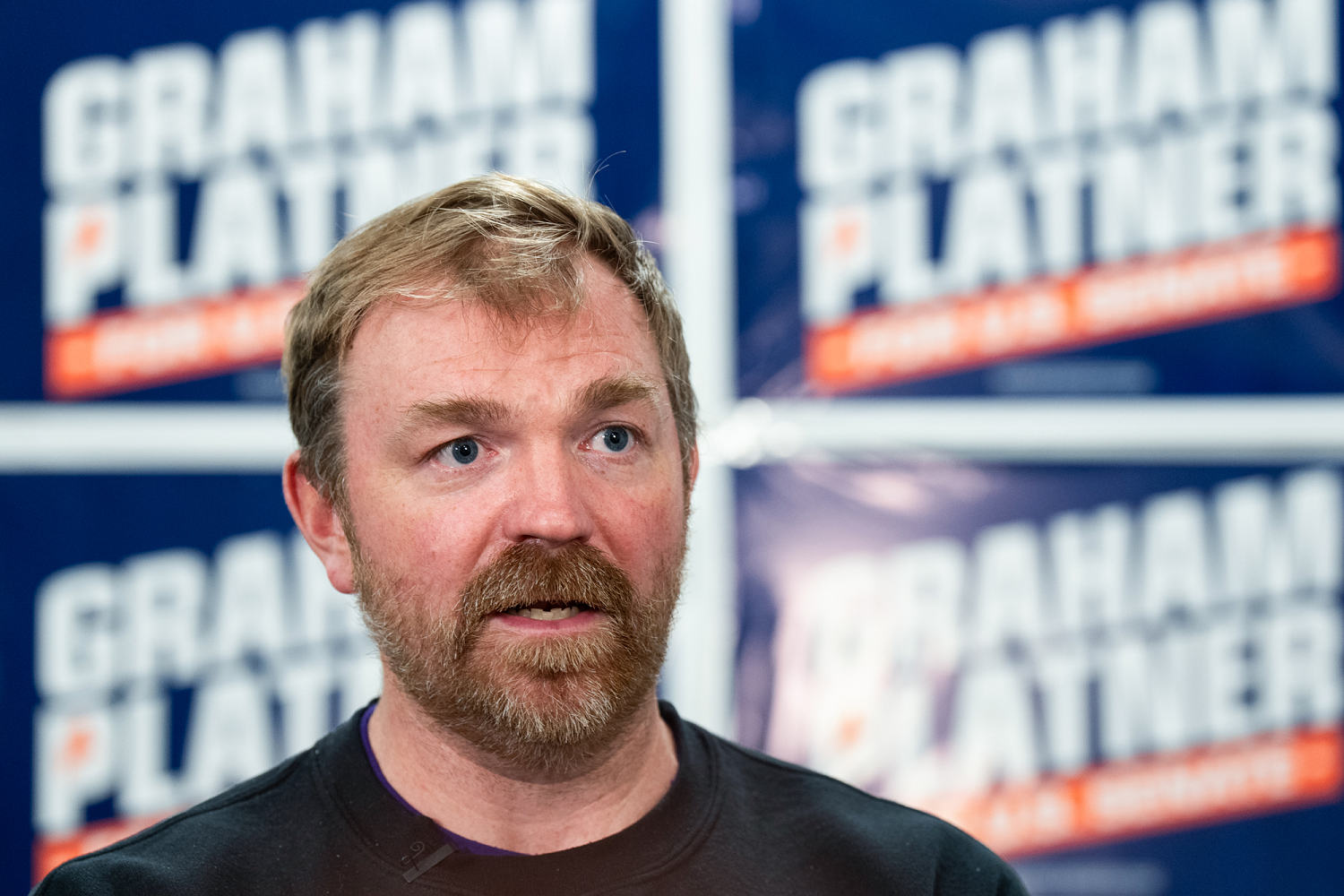
Democrat Graham Platner has branded himself as a working-class champion against Sen. Susan Collins, R-Maine. But that’s not the set of voters who have put him within striking distance of an upset that could alter the balance of power in Washington.
A late-June New York Times/Portland Press Herald/Siena poll of 608 likely Maine voters found Platner up 49%-47%, which is well within the margin of error. A Fox News survey of registered voters has Collins, who has held the seat for 30 years, up 50%-47%, a spread that is also well within the margin of error.
The crosstabs from both surveys tell an interesting story about how Platner’s narrative is landing with voters.
Collins is crushing him with voters who don’t have a college degree, 58%-37%. That’s very close to how she did in 2020, according to exit polling, when she blew out Democrat Sara Gideon. Back then, Collins won non-college voters 57%-35%, the exit poll showed.
Platner, meanwhile, is cleaning up among folks who have at least a bachelor’s degree, despite or because of his emphasis on that working-class brand. He’s a veteran and an oysterman who does not have a college degree and he talks about those things frequently, in between stints defending himself against scandal.
Of course, education level and class are not the same. But, absent data on income level and voting preference, the college question is a reasonable stand-in for measuring how Platner’s message is, or is not, moving working-class voters.
In 2020, Gideon outran Collins 53%-42% among college grads, per the exit poll. Platner leads Collins among the same group by a 66%-32% spread in the Times/Press Herald/Siena poll.
Fox has Platner up by a much slimmer 15-point margin with college-educated voters and pegs Collins’ advantage with non-college voters at 15 points.
These splits track with a phenomenon that has accelerated in the Trump era, in which education level has become one of the best indicators of how people vote — with non-college voters leaning toward Republicans and college grads breaking toward Democrats.
The risk for Collins and for other Republicans in these midterm elections is that more educated voters tend to be more likely voters. But the static nature of the non-college voters from 2020 to 2026 — they still like Collins by a wide margin — gives her a clear target for November.
To win, she has to blunt the effectiveness of Platner’s message with voters who have gotten more education than he did.
For subscribers: Once an ally, progressive influencer Cheyenne Hunt turns her focus against Graham Platner
By Natasha Korecki
Progressive social media influencer Cheyenne Hunt was an early backer of Graham Platner’s, endorsing him in the Senate primary last fall. Now, she is involved in an effort directly opposing him.
When Trump’s interests and allies’ interests diverge
In the Donald Trump era, the Republican Party sometimes has the look of a monolith, especially when we’re following his political endorsements from primary to primary. But two stories this week illustrate how things aren’t always so simple in the evolving conservative movement.
At the Supreme Court, we saw the conservative majority flexing its strength — standing up to the president in some ways while, as Lawrence Hurley writes, plotting “its own course in moving the law rightward, frequently to his benefit.”
The court defied Trump on birthright citizenship, deadlines for counting mail ballots and some other issues. It also gave the executive branch more power to fire people at previously independent federal agencies and handed Trump some wins on immigration. Other cases saw the right win victories on a few culture war issues.
“It was certainly a conservative term. It was not a Trump term,” said Jonathan Adler, a professor at William & Mary Law School.
Moving from the courtroom to the Capitol and the campaign trail, “Resentment is building in Republican circles over President Donald Trump’s quixotic effort to pass a bill that would rewrite the nation’s election laws,” Peter Nicholas, Matt Dixon and Sahil Kapur write, “along with a fear that he will use the measure’s defeat as a pretext to blame GOP lawmakers if the party loses seats in the midterm elections.”
Trump might be the dominant figure in politics, but he doesn’t have total control — especially of the other two branches of government.
What he does have firmer control over, though, is public opinion within his base. And that could be an issue for congressional Republicans seeking re-election if Trump maintains his focus on legislation that is “considered doomed in the Senate,” as the team writes.
🗞️ Today's other top stories
- 🤝 Big endorsement: Rep. Alexandria Ocasio-Cortez is throwing her support behind former Wayne County health director Abdul El-Sayed in the hotly contested Michigan Democratic Senate primary. Read more →
- 🧐 Double deal: Prosecutors in Alaska are investigating whether the campaign for a U.S. Senate candidate who has the same name as GOP Sen. Dan Sullivan could be part of a conspiracy to confuse voters. Read more →
- 🚨 Ukraine under fire: A Russian attack on Kyiv killed at least 25 people in Ukraine’s capital. Read more →
- 📉 Hiring slowdown: Just 57,000 jobs were added in June, marking the slowest monthly hiring stats since February. Read more →
- 🏥 Hospital details: Paramedics conducted CPR on an individual experiencing a “cardiac arrest” at a known address for Sen. Mitch McConnell, R-Ky., on the day his office disclosed he had been hospitalized, according to police scanner audio obtained by NBC News. Read more →
That’s all From the Politics Desk for now. Today’s newsletter was compiled by Scott Bland and Annelise Hanson.
If you have feedback — likes or dislikes — email us at [email protected]
And if you’re a fan, please share with everyone and anyone. They can sign up here.
Senate (ORG)
the Politics Desk Welcome (ORG)
the NBC News Politics (ORG)
the White House (ORG)
Capitol Hill (ORG)
the Supreme Court (ORG)
GOP (ORG)
Capitol (LOCATION)
Donald Trump (PERSON)
Jonathan Allen (PERSON)
Maine (LOCATION)
Scott Bland (PERSON)
Analysis (ORG)
Democrat (ORG)
Graham Platner (PERSON)