
World News
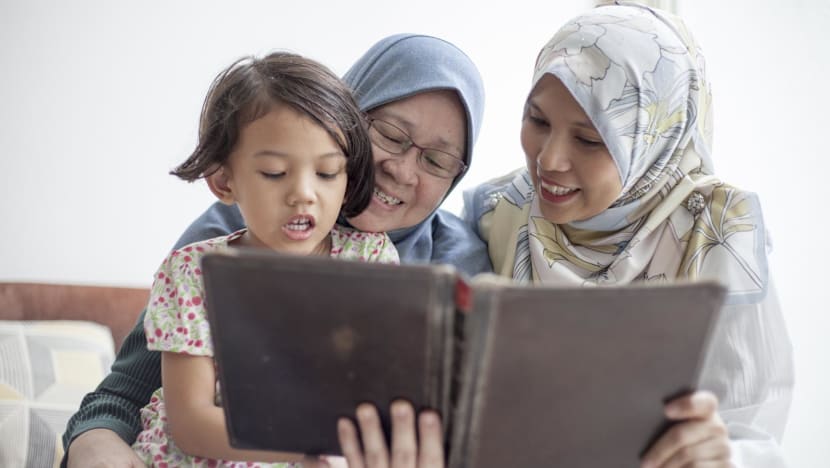
Motherhood isn’t a competition or exam – so why do we judge other mums like we’re grading them?
Key Points
Motherhood isn’t a competition or exam – so why do we judge other mums like we’re grading them? Mothers just can’t seem to catch a break, even with each other. The writer explores how being “judgy” can make mothers overly critical of one another, and how she’s trying to stop measuring other mums against her own standards – even as others do the same to her.
Motherhood isn’t a competition or exam – so why do we judge other mums like we’re grading them?
Mothers just can’t seem to catch a break, even with each other. The writer explores how being “judgy” can make mothers overly critical of one another, and how she’s trying to stop measuring other mums against her own standards – even as others do the same to her.
Two years ago, before I gave birth to my son, I joined my first WhatsApp group for mothers.
I was nervous, but also excited at the prospect of meeting other mums and bonding over the struggles that came with caring for a baby.
“A group can make you feel less lonely about pregnancy and new motherhood,” my friend, who was also pregnant, said.
Well, less lonely was one way to describe the experience.
The group, with over 700 members, was based on our estimated delivery date. But that was about the only thing we had in common.
Everything else, from socioeconomic background to our opinions on diaper brands, confinement practices and how we dealt with hunger pangs, was different.
At first, this seemed interesting and I did learn a few things. After all, here were hundreds of women going through roughly the same stage of pregnancy, asking various questions at odd hours of the day. Was this discharge normal? Which breast pump was worth buying? Who else is unable to sleep?
But I realised that a community built around shared uncertainty could also become one where judgement is rampant.
Barely a week after I joined, a few mums had an intense argument about babymoons. One mum in her final trimester had asked for destination suggestions and some mums commented that she was being extremely irresponsible for holidaying during that period.
When the disagreement got ugly – condescending remarks flew thick and fast and there were intense debates about what made a “good mother” – I left the group.
I realised that a community built around shared uncertainty could also become one where judgement is rampant.
I could not escape the mentality, however. The atmosphere of judgement among mums followed me everywhere, from pregnancy to birth and beyond.
When I opened up about my son not sleeping unless my husband or I were close by, one friend remarked: “Oh, but did you know if you keep doing that, he’ll never learn independence?”
When he turned one, and I shared my struggles with trying to stop breastfeeding or getting him to eat more, another mum said: “It’s probably because you’re not resilient enough and you give in every time he cries.”
I see this on social media too, where loud voices hide behind anonymity and parade around on their high horses. And there, it’s worse.
Commenters who watched a video of a mum sleep training her one-year-old son said she was “heartless” and “selfish”. A post by another mum about low-stimulation forms of screen time for toddlers was flooded with comments that she was “lazy” and “not creative enough in engaging kids”.
Rather than responding with curiosity or empathy, or giving constructive advice, it seems there are always mums ready to turn someone else’s parenting choice into a moral test.
THE RULEBOOK MENTALITY IN MOTHERHOOD
There is a term for this. Some call it a rulebook mentality, which refers to a mindset where all mums must follow a certain set of rules – and if they don’t, they will be judged.
In motherhood, this manifests as the belief that there is a One and Only Correct Way to Mother, and that anyone doing it differently must be careless, selfish, ignorant – or just a bad mother.
I am guilty of this, too. I catch myself giving the side-eye when I see a mum using a digital device to calm her toddler’s tantrum. I feel taken aback if a mum goes on frequent long holidays without her young children. And don’t get me started on mums who push all the playtime to their helpers.
I have watched another mum choose differently from me and felt that small, ugly spark of superiority.
I do not like admitting this. It makes me come across as petty and self-righteous – and I know that, in those moments, I am.
So why are mums so rigid with their rulebooks? And why do we judge others when we hate being judged?
Jackie Li, a 38-year-old speech therapist and mum of one, has a theory: “Many mums are over-functioning – we wear a lot of hats, giving and giving but don’t receive the recognition or take the rest that we need.
“This makes us more easily exhausted or burnt out, yet we still feel like we need to strive to be ‘perfect’ or control everything to make sure things are right.
“So when we see someone approaching parenting differently, calling them out or judging can be a quick feel-good move or even provide us with some form of validation that we’re better. We look at other mums doing it ‘wrong’ and think, ‘Phew, at least I’m not doing that’.”
This over-functioning also hides mums’ deep-seated insecurities and a desire for affirmation, Li said.
This makes sense to me. Parenting is full of everyday decisions that rarely come with instant confirmation that we have made the ‘right’ choice. We pick a sleep method, feeding approach, a daycare centre or childcare arrangement – then worry that we’ve got it all wrong.
THE IMPACT OF CONSTANT JUDGING
Of course, some decisions are objectively harmful and should be called out, including unsupervised or excessive screen time, neglecting a child’s medical or emotional needs, verbal abuse disguised as jokes or putting kids in unsafe situations.
But I’m not talking about those extremes, I’m referring to the ordinary, everyday decisions that differ from family to family.
If another mum sleep trains her baby and I do not, it can feel as though one of us must be wrong. If I choose to let my child go barefoot at the playground and another would never dream of it, it can feel as though one of us is either too relaxed or too particular about hygiene. If I choose to work while another stays home, it may feel like only one way is right.
When another mum chooses differently, it feels like a challenge to our own decision-making. It seems easier to decide that the other must be wrong.
Perhaps mums judge other mums because women are so used to being measured against one another – at work or home, in relationships or looks, in ambition or progress.
It’s akin to the Queen Bee mentality, where a woman in a position of authority or success in the workplace acts unsupportively or with hostility towards other, usually junior, women around her.
Motherhood may not be the workplace but in a society where women are often pitted against each other, it is hard not to feel that familiar competitiveness in parenting, which leads to constant judging.
We treat other mums as competitors, every choice becoming proof of our moral character and what good mums we are.
We become overly defensive and make excuses for our choices, even if they are flawed. Advice, even when well-meaning and constructive, becomes harder to hear.
In the process, we lose what mum communities ought to be: Safe spaces where we can be exposed to different perspectives and feel relieved that we’re not alone in this ever-changing journey of parenthood.
ADVICE IS NOT THE SAME AS JUDGEMENT
By judging less, we open ourselves to something all of us could benefit from: constructive advice.
Not every comment on one’s parenting is judgemental. Sometimes, it’s simply a mum who has been through a particular stage or problem wanting to help another mum with it.
Advice helps us become better versions of ourselves – even the best mothers among us need it.
At times though, the two can be difficult to distinguish. A comment can sound like judgement disguised as concerned advice. For example, “That’s not right, you should really try this”, “I would never do that, I’d do this instead”, or “Actually, that won’t work, the better way is…”
Being “judgy” carries an element of assessment that concludes with a pronouncement – Good Mother or Bad Mother. It also says that there’s only one way and that’s mine – which means yours must be wrong.
Advice, on the other hand, offers perspective. While it may be annoying to receive unsolicited messages, it is built on good intentions to help make another mum’s life easier, be it caring for her teething baby or handling a stubborn three-year-old.
Nabilah Moen, a 34-year-old mum of three and homeschooling educator, said: “Mothers give advice on different issues because they went through the same thing, and what they did led to either a good or bad experience, so they take every opportunity to talk about it.”
Sometimes what looks like bad parenting from the outside is just a mother making the least bad choice available to her.
Amanda Ong, a mum of one, shared the sentiment.
“Some mums give advice without being asked because they feel like their parenting methods have worked for them, so they want to make sure that other mums are aware of them, too,” the 31-year-old co-founder of online group Mindful Mamas said.
NO SINGLE RULEBOOK FOR PARENTING
Judgement assumes that every child is the same and every parent is working with the same values, resources and circumstances.
While we think of parenting as the decisions we make to raise our children, it is as much a response to a child’s unpredictable and varied needs. And this differs from child to child, even in the same family.
A child who thrives on routine may need a parenting style that’s different from one who hates being on a schedule. A mother with family support will make different choices from one who handles most of the caregiving duties on her own. A parent with a flexible job and a higher salary will undoubtedly have more options than another parent who works on a rigid shift and earns less.
Sometimes what looks like bad parenting from the outside is just a mother making the least bad choice available to her.
This doesn’t mean we should stay in our echo chamber and believe that everything we do is right. As a mum who is still figuring things out, I welcome others’ comments even if I disagree with them.
While I am open to hearing the perspectives of other mums who have been there and done that, it can be debilitating to constantly feel as if every decision I make is questionable and wrong.
I am tired of motherhood being treated like an exam where every woman is secretly marking another woman’s paper.
Perhaps before any of us speaks, we ought to ask ourselves: Am I saying this because a child is truly at risk, or because another mum’s choice makes me feel insecure about my own? Am I offering help, or am I trying to feel superior? Am I sharing what worked for me, or am I turning my experience into a rulebook for everyone else?
I still find myself being judgemental – it’s hard to shake off all my internalised ideas and biases.
But I hope to catch myself faster.
Instead of criticising the way other mums parent, perhaps the best thing I can do is try to be better myself: Take the advice, leave the judgement, and pay closer attention to the child in front of me.
CNA Women is a section on CNA Lifestyle that seeks to inform, empower and inspire the modern woman. If you have women-related news, issues and ideas to share with us, email CNAWomen [at] mediacorp.com.sg.