
Weather
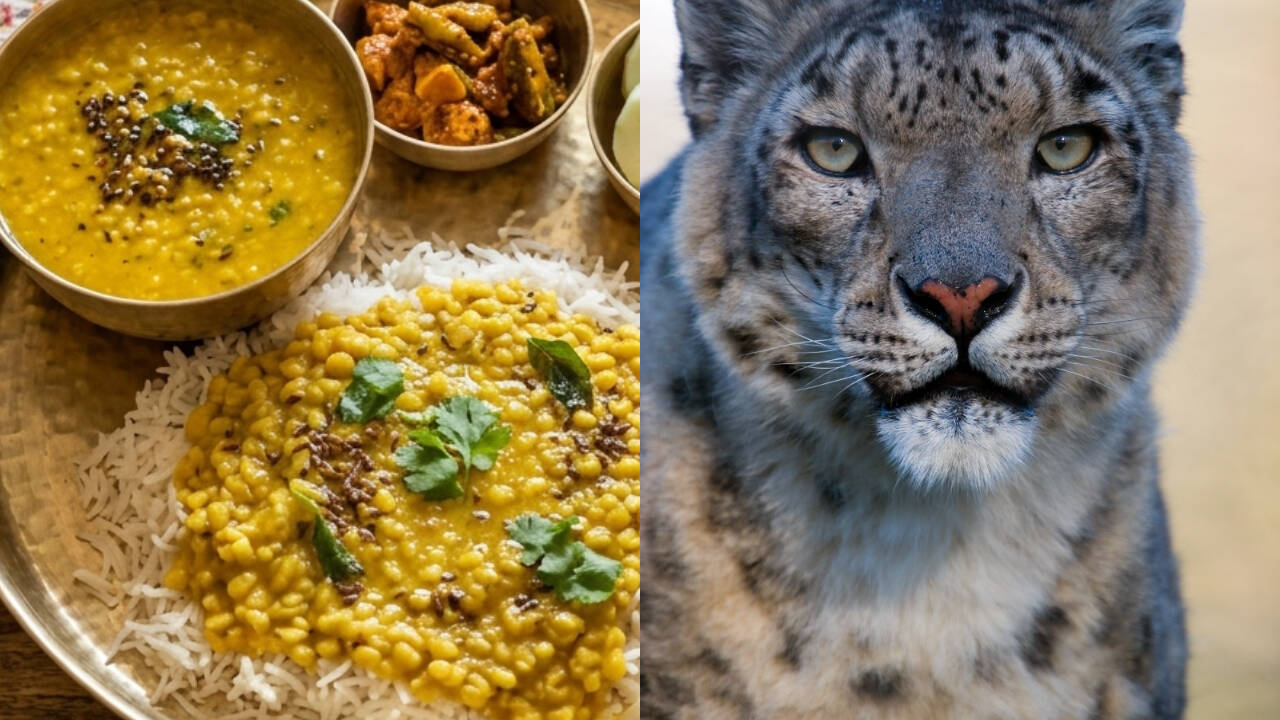
How this Himalayan herb used in Dal Bhat Thali is saving Nepal's snow leopards
Key Points
When it comes to the food chain of humans and animals, we are all connected in some way or the other and sometimes nature helps us understand the correlation in the most beautiful yet unexpected ways. For instance, there exists a Himalayan herb (Jimbu) that is an integral part of Nepal's Dal Bhat thali and also helps save Nepal's endangered snow leopard. Scroll down to understand the context and the correlation.
When it comes to the food chain of humans and animals, we are all connected in some way or the other and sometimes nature helps us understand the correlation in the most beautiful yet unexpected ways. For instance, there exists a Himalayan herb (Jimbu) that is an integral part of Nepal's Dal Bhat thali and also helps save Nepal's endangered snow leopard. Scroll down to understand the context and the correlation. What is Jimbu?
What is Jimbu
Jimbu, also known as Allium przewalskianum is a wild Himalayan chive that thrives in the arid, high-altitude alpine meadows of Nepal, particularly in regions like Manang and Mustang at heights exceeding 3,000 meters. It looks like a cross between grass and chives and is traditionally consumed air-dried. It is added to make tadka with ghee, releases a deeply pungent aroma and is added to dal for a smoky kick; it is served with rice as a complete meal. Experts also believe this herb is known for its health benefits, which help improve digestion and provide relief from headache, pain and nausea.
Jimbu and its relation with snow leopard
To understand its connection with snow leopards, we first need to know that the region has a larger population of blue sheep, which happens to be the wild prey of the mountains' big cats.
When hungry blue sheep come down from the mountain into human villages to eat the crops, this impacts the villagers' livelihood. As the sheep are drawn toward the villages for food, the snow leopards follow them down. As the leopards get close to the villages, they attack and kill the farmers' valuable farm animals, like yaks, goats, and sheep. Losing their farm animals causes excessive financial loss for the villagers and out of anger and a desperate need to protect their remaining animals, heartbroken herders sometimes kill the snow leopards in revenge. Amidst all this farming jimbu helps the farmers, as its pungent smell deters blue sheep from raiding crops, they return to their natural habitat for food and this ultimately keeps the snow leopards away from human land and protects them from being killed.
How did this shift happen with jimbu
It is reported that in 2022, an evolutionary initiative was set out, when The Narpa Bhumi Rural Municipality, alongside the Nepal-based NGO Mountain Spirit, the Snow Leopard Conservancy, and the UK's Darwin Initiative, launched a pilot project to domesticate and farm jimbu on abandoned high-altitude agricultural land. This shift led to an unexpected, natural conservation dividend based on two brilliant ecological mechanisms-the pungent aroma, which helped reduce blue sheep crop-raiding and kept them at a distance from human borders. And the other mechanism is that farming helps keep the snow leopards far less likely to wander into human settlements in search of food.