
Business & Finance
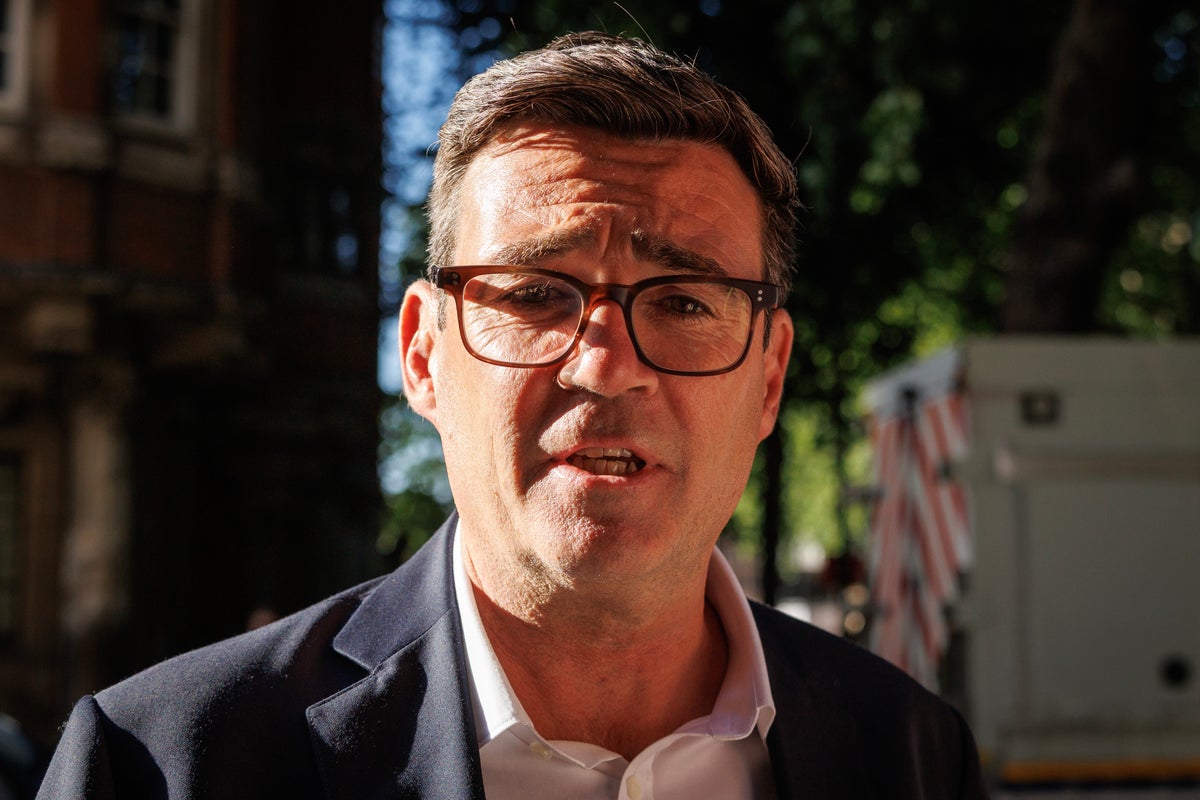
Burnham considers income tax break to help young people onto property ladder
Key Points
Burnham considers income tax break to help young people onto property ladder Exclusive: PM-in-waiting wants to make ‘major offer’ with policy package to bridge generational wealth gap - Bookmark - CommentsGo to comments Andy Burnham is considering giving billions of pounds in tax relief to young people so they can save for a house deposit as part of a major package of policies aimed at helping Gen Z voters. Allies of the prime minister-in-waiting say one potential plan would involve...
Burnham considers income tax break to help young people onto property ladder
Exclusive: PM-in-waiting wants to make ‘major offer’ with policy package to bridge generational wealth gap
- Bookmark
- CommentsGo to comments
Andy Burnham is considering giving billions of pounds in tax relief to young people so they can save for a house deposit as part of a major package of policies aimed at helping Gen Z voters.
Allies of the prime minister-in-waiting say one potential plan would involve exempting young people from paying income tax for the first three years of full-time employment. The move, which could cost up to £3.5bn, would give young people a chance to build up savings, helping them qualify for a mortgage.
The “major offer” would also include help with rent to buy, as well as rolling out the successful Manchester public transport scheme – which offers free or reduced travel for those aged between 18 and 25 –across England.
One Labour MP close to Mr Burnham told The Independent: “He is going to be a major offer to young people looking at education, employment, tax, public transport, rent to buy – helping them through their lives.”
Another close ally, who has been helping shape Mr Burnham’s policy, said: “He has discussed an income tax exemption for the first three years of employment to help young people save for a deposit for a mortgage.
“It is the sort of imaginative idea he considers to look at how we can do things differently – to try and deal with the problems which nobody seems willing to solve.
“Obviously one of the issues about accessing mortgages is that many young people just cannot save for a deposit to get one. This could help break the logjam.”
The move would be on top of plans Mr Burnham has already announced, including having the biggest social housing building policy since the Second World War.
But tax expert Dan Neidle warned there would be serious pitfalls with the proposal.
He said: “Parents would attempt to divert their earnings through their children so they wouldn’t have to pay income tax either. Mr Burnham would also need to explain where he would raise the approximately £3.5bn the policy would cost.”
While Mr Burnham has been given some good news that the impact of Donald Trump’s war in the Middle East has not hit the UK economy as hard as feared, he will be coming into office with little room for manoeuvre. Sir Keir Starmer, who announced his resignation last week, has left a £4.7bn gap in defence spending plans where the money needs to be found.
Mr Burnham has also committed to not changing Rachel Reeves’ borrowing rules, as well as sticking to Labour’s 2024 election manifesto pledge of not raising VAT, income tax or personal National Insurance contributions. He is looking at a tax raid on companies like Amazon which rely on massive warehouses.
Although specific policy details have yet to be firmed up, the discussions make clear Mr Burnham’s desire to help tackle the generational wealth gap in the UK, with the so-called baby boomer generation born in the aftermath of the Second World War holding much of the wealth and resources.
Experts have discussed how Gen Z – born between 1997 and 2012 – in particular are “caught in a rental trap”, unable to buy their own homes.
While about 74 per cent of baby boomers own their own home, less than 5 per cent of Gen Z do.
The average age of a first time buyer in the UK has climbed to 34, according to the Skipton Group's annual home affordability index published in March.
Chief executive Stuart Haire warned the results showed "the aspiration of homeownership has been pushed further out of reach for many younger adults, delaying independence and stability".
The Tony Blair Institute has called for an end of the triple lock protection on the state pension – going up by the highest rate of inflation or 2.5 per cent – to help divert support for the younger generations.
The TBI argued: "Britain's state pension system was built for a different era. We can't keep pouring money into a system that is increasingly unaffordable."
Mr Burnham has yet to say whether he will stick to the triple lock on the state pension going forward.
He has also already made it clear he is prepared to depart from previous Labour orthodoxy to tackle the problem of a million so-called NEETs (young people not in education, employment or training).
On Thursday, he told Andrew Marr on LBC: “I will not defend an education system that is overly focused on the university route and does not pass to a technical qualification for our young people.
“Too many young people get to year 10 at school and they can't see where school is taking them because the system isn't focusing on those young people.
“We need an education system balanced between academic and technical and then at 16 I believe we need the guarantee of a work placement for 16 to 18-year-olds and apprenticeships for every 16 to 18-year-old who wants one.”
He argued that these reforms would also bring down the welfare bill much more effectively than simply slashing or removing benefits.
He said: “I'm not going to go with the crude cuts to benefit levels that then just put people who are struggling in even worse poverty.”
Allies have also pointed to plans to roll out the Manchester public transport scheme across England.
Since 2019 in Manchester, under the Our Pass scheme set up by Mr Burnham, 16 to 18-year-olds can travel free on public transport if they buy a travel card for an administrative fee of £10.
Last year, he extended the scheme to allow 18- to 25-year-olds to travel for half price.
The idea was to make it easier for them to go to interviews and travel to work. Mr Burnham has already complained about the cost of a train ticket from the north west to London for young people seeking employment.
He has previously highlighted that the peak "anytime" return fares from Manchester to London were £369.40 which was more expensive than return flights from Manchester to destinations like India (£343), Jamaica (£345), Brazil (£325), or Ivory Coast (£319).
Mr Burnham said in his acceptance speech after winning the Makerfield by-election: “We do need to bring down water bills, energy bills, rail fares, just as we’ve brought down bus fares in Greater Manchester, to make life more affordable for people.”
He has already set a “Makerfield test” for changing the state to help those who he says have previously been ignored.
He has also promised an end to 40 years of economic policy orthodoxy on “trickle down” liberal economic, vowing: “I am going to do things differently.”
The Independent has gone to Mr Burnham’s office for further comment.
Join our commenting forum
Join thought-provoking conversations, follow other Independent readers and see their replies
Comments
Burnham (ORG)
Andy Burnham (PERSON)
Gen Z (LOCATION)
Manchester (LOCATION)
England (LOCATION)
Labour MP (ORG)
Mr Burnham (PERSON)
the Second World War (EVENT)
Dan Neidle (PERSON)
Donald Trump’s (PERSON)
the Middle East (LOCATION)
UK (LOCATION)
Keir Starmer (PERSON)
Rachel Reeves (PERSON)
Labour (ORG)