
Science
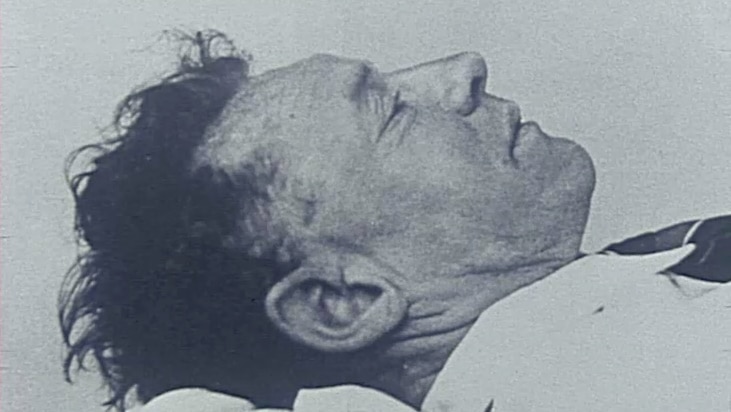
Somerton Man report 'very soon' but intrigue around case set to endure
Key Points
SA Police report to coroner into Somerton Man case complete 'very soon' Mon 6 Jul 2026 at 6:14am In short: An unidentified body was found on Somerton Beach in Adelaide in 1948, along with several intriguing clues as to who he was. The body was exhumed in 2021, and Professor Derek Abbott used DNA found in a bust of his face to identify him in 2022. Police would not say when they would hand their report to the coroner, but Professor Abbott says they told him it would be finished "very soon".
SA Police report to coroner into Somerton Man case complete 'very soon'
Mon 6 Jul 2026 at 6:14am
In short:
An unidentified body was found on Somerton Beach in Adelaide in 1948, along with several intriguing clues as to who he was.
The body was exhumed in 2021, and Professor Derek Abbott used DNA found in a bust of his face to identify him in 2022.
What's next?
Police would not say when they would hand their report to the coroner, but Professor Abbott says they told him it would be finished "very soon".
The man who claims he solved the identity of the Somerton Man through DNA matches says SA Police has told him it is close to finishing its report for the coroner to officially put the 78-year mystery to rest.
Professor Derek Abbott said he was "99.99 per cent sure" the body found on Adelaide's Somerton Beach on December 1, 1948, was Carl "Charles" Webb.
But SA Police is yet to present its findings to the coroner, five years after the man's body was exhumed.
Professor Abbott said SA Police had told him this would happen in the next two weeks and the coroner was expected to present his findings by the end of the year.
"My understanding is it's going to happen very soon, yes," he said.
SA Police exhumed the Somerton Man's body from his grave at Adelaide's West Terrace Cemetery in 2021.
Professor Abbott, who announced his findings in 2022, used hairs from a plaster bust of the man to gather DNA evidence and then compared it with samples submitted by family members on the genealogy website Ancestry.com to confirm Webb's identity.
He said it was unlikely the police would come up with a different result to his findings.
"You're assuming for example that this guy didn't have an unknown twin brother separated at birth or other unlikely things like that," he said.
"Assuming there's nothing weird going on like that, it's beyond reasonable doubt that we've got the right guy."
The ABC asked SA Police whether their report to the coroner has been completed.
In response, a police spokesperson said: "A SAPOL coronial investigation in relation to the 'Somerton Man' is complex and ongoing."
"Once completed SAPOL will provide a report to the Coroner."
Once the police hand their report to the coroner, the coroner will decide whether or not to hold an inquest.
The coroner will then publish their findings and any recommendations.
Cause of death finding 'unlikely'
Neither SA Police nor Forensic Science SA would say where the Somerton Man's body was but Professor Abbott said he understood it still to be at the Forensic Science Centre in the Adelaide CBD.
He said SA Police would be focusing on confirming the Somerton Man's identity rather than investigating his cause of death, since anyone involved would be very elderly or dead.
"In the case of the Somerton Man, when you've just got bones after more than 70 years, it's very unlikely that you can see a cause of death, unless you've got a crushed-in skull or something like that, which we don't have," he said.
"So, really, there's nothing you can do at this stage to determine his cause of death, unfortunately."
He said it was understandable that police had taken five years to investigate the cold case since they rightly prioritised more pressing forensic cases.
South Australian courts regularly hear of waits of six months or more for evidence like DNA to be analysed forensically.
Family 'fine' with wait
Stuart Webb, who Professor Abbott believes is the great-grandson of the Somerton Man's brother, agreed the wait was justified.
"I appreciate police have priorities they have to deal with — that's absolutely fine,"Mr Webb said.
Along with the DNA link, a man appearing similar to the Somerton Man could be seen in family photos, where he was named as Charlie.
His wife divorced him on the grounds of desertion in 1951.
The gravesite where the Somerton Man was once buried under a headstone marked "the unknown man" is now empty.
Once the coroner's findings are handed down, Charles Webb's family will be able to decide whether to rebury him there or move him closer to them in Melbourne, but at their own cost.
Stuart Webb said a move was unlikely.
"It's kind of nice he's buried there," he said.
Mysterious clues continue intrigue
Along with his body, the Somerton Man left behind a series of items that expanded interest in his mysterious death far beyond Adelaide.
They included clothes found in a suitcase at the Adelaide Railway Station, a piece of paper found in his pocket with the words "Tamam Shud" torn from a book of Persian poetry and a seemingly random series of letters in the back of the same book.
Professor Abbott said the only clue that had since been explained is the name "Keane" written on some of the clothes.
He said Charles Webb had a nephew who died in World War II called John Keane and it was likely he took ownership of his clothes after they were sent back to Australia from Europe.
He said people would still be interested in why Webb came to Adelaide and how he died, even if DNA could not prove these details.
"In my opinion, looking at all the evidence we've got, my belief is that probably we'll never find out," he said.
"It will always be a mystery, but I think it is one of those things that will always fascinate the public and there'll always be chatter about it."
The Somerton Man's exhumation was approved in 2019 as part of SA Police's Operation Persevere, which aims to identify all unknown human remains found in the state.