
Business & Finance
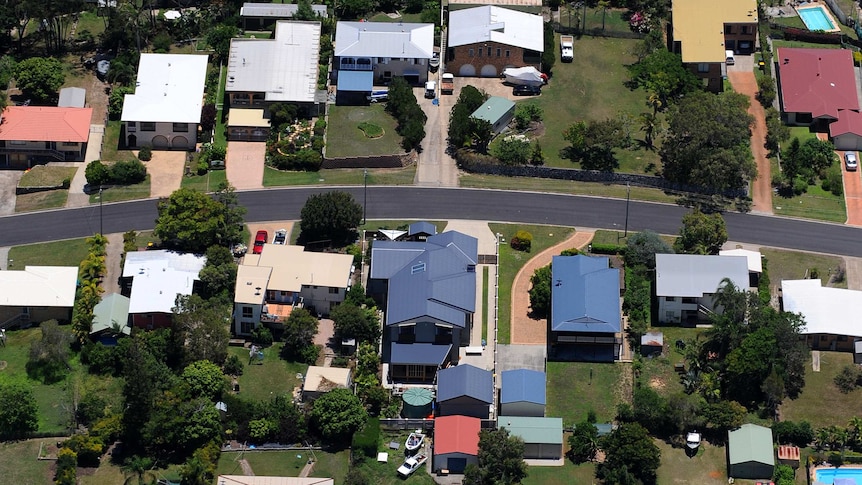
Queensland on track to make almost $5 billion a year from land tax
Key Points
Queensland government on track to make almost $5 billion a year from land tax as revenue grows Wed 8 Jul 2026 at 5:46am In short: The state is expected to make about $2.7 billion from land tax in 2025-26. While in opposition, Premier David Crisafulli referred to it as a "stealth tax" that affected "the most humble" mum and dad investors. Queensland's income from land tax is forecast to rise by 80 per cent over the next four years.
Queensland government on track to make almost $5 billion a year from land tax as revenue grows
Wed 8 Jul 2026 at 5:46am
In short:
The state is expected to make about $2.7 billion from land tax in 2025-26.
While in opposition, Premier David Crisafulli referred to it as a "stealth tax" that affected "the most humble" mum and dad investors.
What next?
Queensland's income from land tax is forecast to rise by 80 per cent over the next four years.
The Queensland government is on track to make almost $5 billion a year from a tax the premier once claimed affected the "most humble" mum and dad investors.
New figures in the budget handed down in the past fortnight reveal the state is expected to make about $2.7 billion from land tax in 2025-26.
Over the next four years the government's annual revenue from the tax is forecast to climb by almost 80 per cent, to $4.8 billion by 2029-30.
Land tax revenue has grown steadily in the past decade with rising land values and is projected to make up about 10.7 per cent of state taxation this financial year.
The tax does not apply to someone's principal place of residence but can apply to investment properties.
Thresholds unchanged
An individual must pay the tax if the value of their land collectively exceeds a $600,000 threshold, based on the valuations set by the state's valuer general.
The threshold has remained unchanged since 2007 — and there is also a smaller $350,000 threshold for companies and trusts.
In an interview with radio station 4BC in 2023, Premier David Crisafulli — who was opposition leader at the time — raised concerns with the threshold.
"Think about a decade ago what $600,000 in land value meant compared to what it is today," he told 4BC.
"This tax is now picking up the most humble of mum and dad investors and I don't think that was the original intent of the tax.
"I think Queenslanders deserve an answer as to why the threshold should remain at a level that it has been for so many years when you had massive bumps."
'Tax by stealth'
He also suggested it was a "tax by stealth" and said he thought the state should "have a look at it".
"I think there needs to be a bit of fairness in the way it's applied," Mr Crisafulli said.
Three years later, the government will not say whether it is considering changes to land tax thresholds.
Asked about Mr Crisafulli's 2023 comments, Treasurer David Janetzki said the government's latest budget included no new or increased taxes.
"We are not taking the easy option other governments have taken and are providing the certainty and stability Queenslanders can rely on," he said in a statement.
Push for review
Real Estate Institute of Queensland (REIQ) chief executive Antonia Mercorella said her organisation still wanted the government to review the threshold and lift it in line with CPI.
She described the government's forecast revenue from land tax as a "very significant amount of money" and said the REIQ's proposal would help address bracket creep.
"We know that that threshold for land tax purposes is set at $600,000," Ms Mercorella said.
"That was established a long time ago, back in 2007, so nearly two decades ago.
"I think we all know that property prices have risen very significantly over that nearly two decades now."
Ms Mercorella said the REIQ was not advocating for the government to abolish land tax but that a review of the threshold was long overdue.
She also suggested recent changes to negative gearing rules and the capital gains tax discount in the federal budget could impact long-term land tax revenue.
The budget papers note the rate of growth in land tax revenue over the next four years is set to "moderate" as land values stabilise.
While growth is expected to come in at 14.3 per cent in 2025-26, it is projected to taper down to 11.7 per cent by 2029-2030.
The estimated $2.7 billion the government is set to make in 2025-26 from land tax is down slightly from the $2.8 billion initially projected in last year's budget.