
Business & Finance
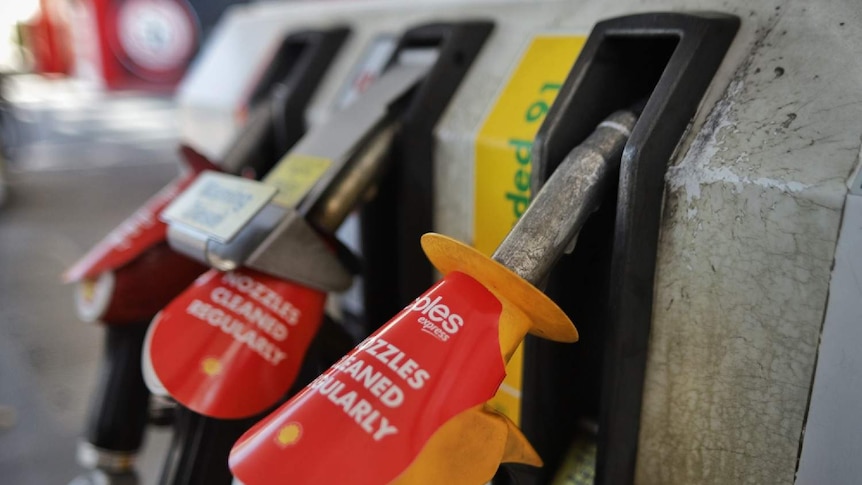
RACQ accuses some retailers of trying to bring back 'unfair' fuel cycle
Key Points
South-east Queensland's 'unfair' fuel price cycle returning, RACQ warns Tue 14 Jul 2026 at 6:19am In short: The RACQ has accused some fuel retailers of attempting to re-establish the unleaded fuel price cycle in south-east Queensland after price hikes of up to 30 cents per litre. RACQ's latest fuel report shows retail margins for service stations have been at their lowest this quarter since 2019. The Australasian Convenience and Petroleum Marketers Association says the fuel price cycle is an...
South-east Queensland's 'unfair' fuel price cycle returning, RACQ warns
Tue 14 Jul 2026 at 6:19am
In short:
The RACQ has accused some fuel retailers of attempting to re-establish the unleaded fuel price cycle in south-east Queensland after price hikes of up to 30 cents per litre.
RACQ's latest fuel report shows retail margins for service stations have been at their lowest this quarter since 2019.
The Australasian Convenience and Petroleum Marketers Association says the fuel price cycle is an indication of competition in the market.
The RACQ has warned of a return to the "unfair" unleaded price cycle in south-east Queensland after some stations hiked petrol prices by as much as 30 cents in the last week.
While the average price for unleaded petrol in Brisbane was 172.1 cents per litre on Monday, RACQ economic and affordability specialist Ian Jeffreys said about ten per cent of stations in the south-east had jumped to just short of $2 per litre.
The federal government's fuel excise discount was halved on July 1, with the full excise set to return at the start of next month, adding an estimated 32 cents per litre.
"We think this is the fuel companies starting to reassert a price cycle. This is the behaviour we see during the price hike phase," he said.
"They will hike prices at a few sites. They'll hold them up high for a while and if nobody else follows, they'll come back down again."
Dr Jeffreys said up until February this year south-east Queensland had a six to eight week-long price cycle.
"Prices at individual sites would jump up 50 to 60 cents in one hit and then they'd slowly discount over the course of about six weeks," he said.
He said the "collapse" in the price cycle after the closure of the Strait of Hormuz brought about a "substantial drop" in average retail margins.
The RACQ fuel price report for the June quarter showed an "indicative retail margin" for unleaded petrol was 10.5 cents per litre, compared to 21.2 cents per litre in the March quarter.
"South-east Queensland hasn't seen retail margins this low since 2019," Dr Jeffreys said.
Brisbane had the longest average duration of petrol price cycles in Australia at six and a half weeks, followed closely by Melbourne at 6 weeks and Sydney at 5 weeks, according to the Australian Competition and Consumer Commission.
Fuel cycle a competition indicator
Australasian Convenience and Petroleum Marketers Association (ACAPMA) CEO Rowan Lee said the fuel price cycle is an indication of competition in the market.
"The fuel price cycle is starting to come back again and Brisbane's no different to Sydney and Melbourne, so south-east Queensland isn't an outlier in that regard at all," he said.
"There will be those who lead the market down and those who'll follow the market down and others will lead the market up and others will follow the market up."
Mr Lee said service stations that have lifted prices by 30 cents "won't be doing much business".
"Everyone can jump on their apps and see where the cheapest fuel prices are in their areas, and that's what we encourage people to do," he said.
Dr Jeffreys said the "apparent attempt" to reintroduce the price cycle shows why regulation like the former Labor government's pre-election pledge to legislate a cap on petrol price rises to 5 cents a litre per day is needed.
"The modelling that we've done suggests a five-cent cap on prices will either break the price cycle or see us revert back to a weekly cycle," he said.
Dr Jeffreys said a weekly or flat cycle provides "the greatest level of competition".
But Mr Lee said most service stations "just wouldn't open" during the fuel crisis if a cap on retail fuel prices had been in place.
"If you had that in place people just wouldn't bother opening because you'd be opening to lose money," he said.
"Why would you open your shop if you're going to lose 15 cents a day on every litre?"
RACQ (PERSON)
South (LOCATION)
Queensland (LOCATION)
The Australasian Convenience and (ORG)
Petroleum Marketers Association (ORG)
Brisbane (LOCATION)
Ian Jeffreys (PERSON)
Dr Jeffreys (PERSON)
the Strait of Hormuz (LOCATION)
South-east (LOCATION)
Australia (LOCATION)
Melbourne (LOCATION)
Sydney (LOCATION)
the Australian Competition and Consumer Commission (ORG)
Australasian Convenience (ORG)