
Education
Tobacco companies are pushing nicotine pouches on teens — and we need to act now to stop them
Key Points
Tobacco companies are pushing nicotine pouches on teens — and we need to act now to stop them Tobacco companies have fallen back on tried-and-tested marketing practices to encourage nicotine pouch use among teenagers. The use of nicotine pouches is increasing among teenagers and young adults in the U.S. As researchers who study nicotine use among young people and develop strategies to prevent it, we worry these discreet products might be driving a new public health crisis. It may be that...
Tobacco companies are pushing nicotine pouches on teens — and we need to act now to stop them
Tobacco companies have fallen back on tried-and-tested marketing practices to encourage nicotine pouch use among teenagers.
The use of nicotine pouches is increasing among teenagers and young adults in the U.S. As researchers who study nicotine use among young people and develop strategies to prevent it, we worry these discreet products might be driving a new public health crisis. It may be that more and more teens are becoming addicted to nicotine pouches under our watch.
To stop that crisis in its tracks, we need to act now. Myriad strategies would help, including eliminating flavored pouches and reducing the amount of nicotine in the products, as well as regulating their marketing and stopping companies from making deceptive claims. And while we await such regulation, informing educators, parents and teens about the harms of nicotine pouches will be key.
Why worry now? Nicotine pouches — small, pillow-like products that users place between their gum and lip — are now the second most used tobacco product among U.S. adolescents. In a recent survey, 2.3% of high school and about 1% of middle school students, an estimated 460,000 students total, reported using a pouch in the past month. More than 9 in 10 pouch users opted for flavored pouches, with mint being the most popular.
While rates of pouch use remain behind e-cigarette use, more students reported using pouches than cigarettes, cigars, smokeless tobacco or any other form of nicotine. Nicotine pouches were the only product whose use increased in the survey, while the popularity of other products declined or remained stable.
What makes nicotine pouches particularly tricky is how invisible they are to the outside observer. Unlike cigarettes, they produce no smoke. Unlike e-cigs, they generate no visible aerosol. They are small and easy to conceal. That invisibility is not a coincidence; it's part of big tobacco companies' intentional design. An adolescent can use nicotine pouches during class and no one around them would know.
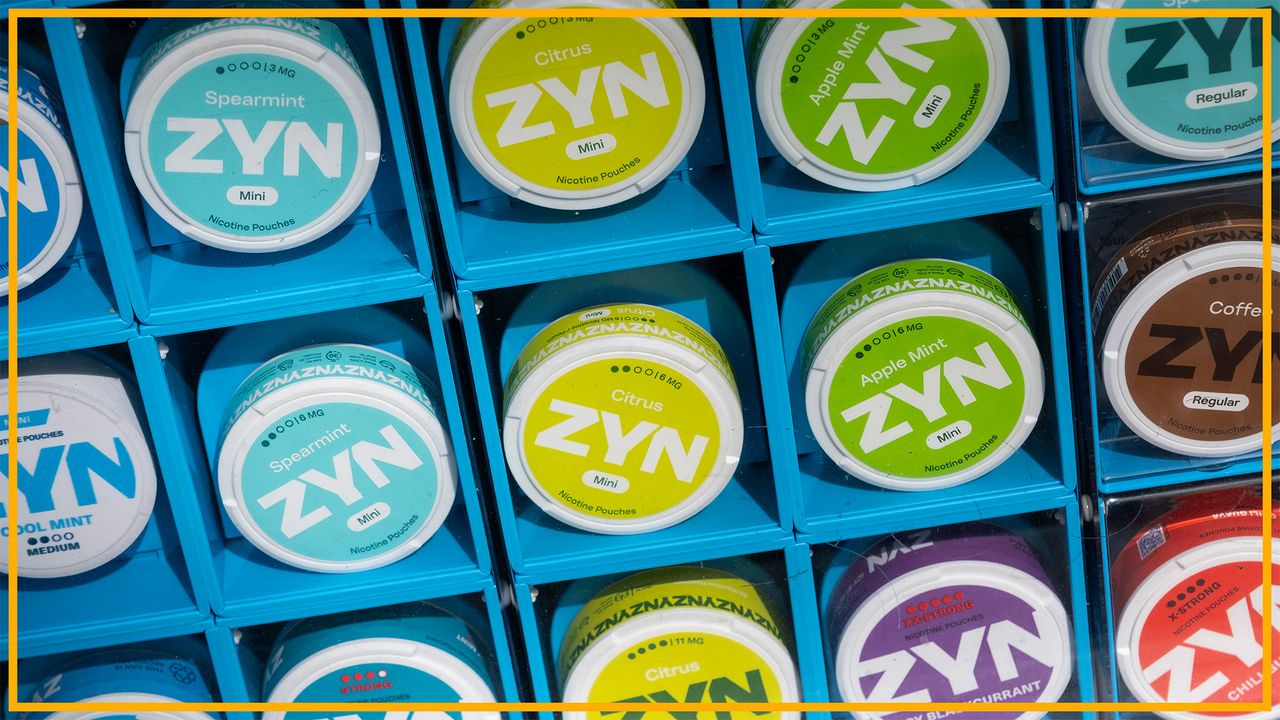
Each pouch contains nicotine powder that is either derived from tobacco plants or synthetically produced, as well as other ingredients like acidity regulators and flavorings. Those flavors can be dessert-like, fruity, minty, and reminiscent of coffee or cocktails — all of which appeal to young people.
The amount of nicotine per pouch varies by brand, but generally, using one pouch is roughly equivalent to smoking one to four — or more — cigarettes. That's a problem because, although pouches don't produce smoke, nicotine is still very addictive and harmful to the developing brain.
Get the world’s most fascinating discoveries delivered straight to your inbox.
Nicotine use can negatively affect teens' attention and impede their impulse control, hurting their academic performance and mental health. In regards to physical health, data suggest that smokeless oral nicotine products may harm some aspects of heart health and raise the risk of death in people with existing heart disease.
It may be tempting to wave away concern because the percentage of adolescents using these pouches appears relatively small. However, that would be a mistake, as doing so would mean watching history repeat itself.
Rates of e-cigarette use also started low, and by the time national data finally showed a clear increase, their use was already a deeply entrenched behavior among adolescents, with many addicted. Furthermore, national surveillance studies are, by design, snapshots in time and often lag behind what is happening in real time in classrooms and communities.
We're concerned that more teens are becoming addicted to nicotine pouches, now, and want to curb the trend. At Stanford Medicine's REACH lab, we work with thousands of schools and teachers across the U.S. every year, providing free, evidence-based tobacco prevention curriculums. We've spoken with hundreds of educators, parents and students across the country who have raised significant concerns about nicotine pouches, and presented talks to over 1,200 people on the subject.
It became clear that we must create a specific approach to prevent teens from using pouches — so, we created a course called Not So Sweet: Oral Nicotine and Smokeless Tobacco Prevention Curriculum.
The free course is designed to be used in schools or by anyone who works with teens. It explains the different types of oral nicotine and smokeless tobacco products and their many health effects, including addiction. It also lays out the marketing tactics employed by the tobacco industry to attract youth in the first place. In just a few short weeks of releasing the curriculum, we already have over 1,500 active users.
We're heartened that people are already engaging with the course, because we might already have a public health crisis on our hands.
Today's nicotine pouch market in the U.S. is dominated by three brands: the top seller, ZYN; On!; and VELO. These brands are owned by Philip Morris International, Altria, and British American Tobacco, respectively. The companies have decades of knowledge in marketing nicotine products that they are now deploying to sell nicotine pouches.
They're falling back on successful advertising tropes, telling consumers that nicotine pouches could help them socialize, unwind, or appear cool to potential romantic partners. Ads also emphasize the discreet nature of the pouches, which allows them to be used anywhere without drawing too much attention.
Related stories
Through these marketing strategies, nicotine pouches have soared in popularity and sales, Zyn has become a household name, gaining nicknames like Zynnie, Zynfluence and Zyndulgence. Zyn has effectively become the "Coke" of colas, the Kleenex of tissues, the Juul of e-cigs.
What's more, the Food and Drug Administration just authorized various Zyn products to be marketed with the claim that using Zyn instead of cigarettes puts you at a lower risk of mouth cancer, heart disease, lung cancer, stroke, emphysema and chronic bronchitis. But when it comes to teenagers, we see many using Zyn or other nicotine pouches alone or alongside other nicotine products that aren't cigarettes. Unlike adult smokers who may be switching to pouches, teens may be newly introduced to nicotine addiction through products like Zyn.
It is not a matter of cigarettes versus Zyn for many teens; it is Zyn versus nothing.
Nicotine pouches might come in tantalizing flavors, but they are not sweet — they are dangerous, especially for adolescents. Reminiscent of what we've seen for decades with cigarettes and over the last decade with e-cigarettes, we once again have a nicotine product that is very appealing to and being increasingly used by young people. Yet, they contain a great deal of nicotine and are unsafe. We need to work together, now, to ensure we don't perpetuate another generation of addicted kids.
Editor's note: Bonnie Halpern-Felsher has served as an expert witness in litigation against various tobacco companies.
This article is for informational purposes only and is not meant to offer medical advice.
Opinion on Live Science gives you insight on the most important issues in science that affect you and the world around you today, written by experts and leading scientists in their field.
Bonnie Halpern-Felsher is a developmental psychologist whose research has focused on cognitive and psychosocial factors involved in adolescents' and young adults' health-related decision-making, perceptions of risk and vulnerability, health communication, and risk behavior. She is a professor of pediatrics in adolescent medicine at Stanford Medicine Children's Health, as well as the founder and director of Stanford Medicine's REACH lab.
You must confirm your public display name before commenting
Please logout and then login again, you will then be prompted to enter your display name.
[Image text:] Spearmint
ZYN
Mini
ZYN
Citrus
Mini
ZYI
Apple
ZY
Regular
Nicotine Pou
YN
JOLMINT
..oo
MEDIUM
ZYN
OO|6MG
Mini
Citrus
ZYN
Mini
Nicot
STRONG
Citrus
ZYN
Apple Mint
Mini
Coffe
ZY
Regular
YN