
Health
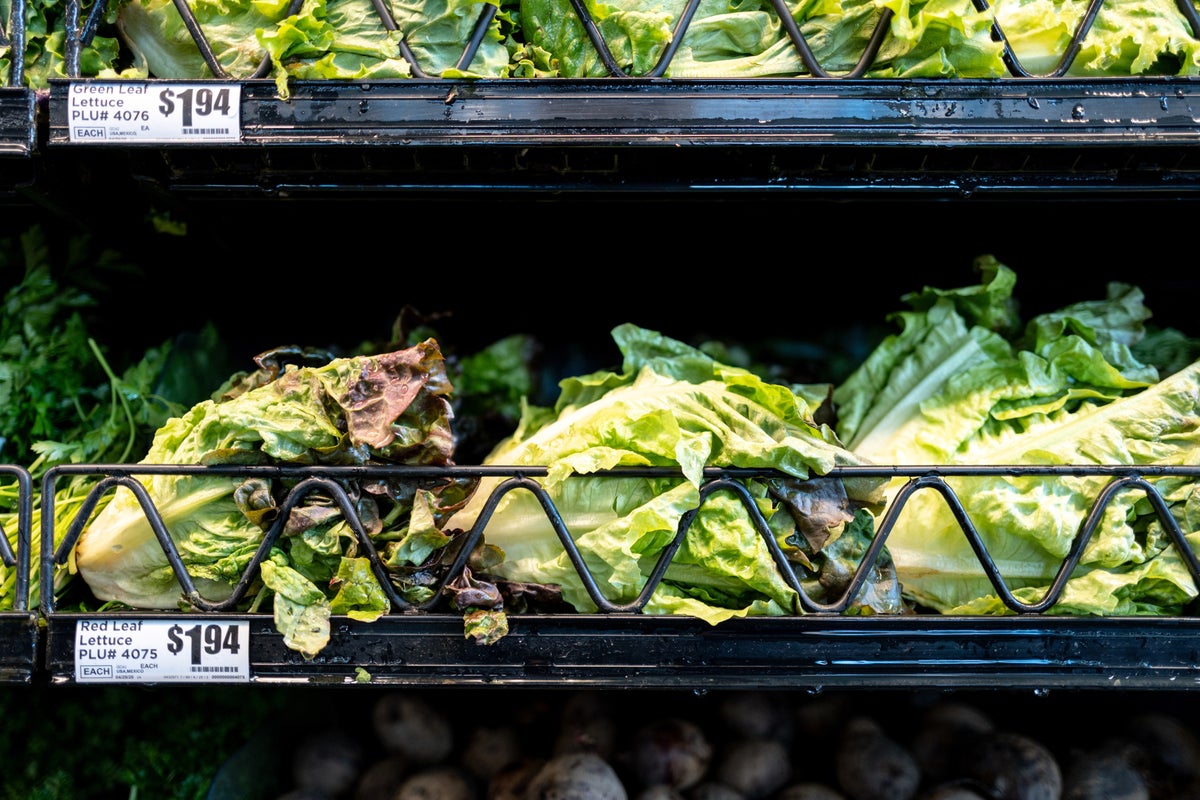
Should you really ditch produce during cyclosporiasis outbreak? As cases spread expert advice varies
Key Points
Should you really ditch produce during cyclosporiasis outbreak? As cases spread, expert advice varies Multiple public health experts have recommended a thorough washing — while at least one says to skip salads altogether for a time - Bookmark - CommentsGo to comments The outbreak of cyclosporiasis, a nasty gastrointestinal illness, raises questions about how to avoid infection, including whether certain types of produce are still safe to eat. Caused by ingesting the cyclospora parasite, the...
Should you really ditch produce during cyclosporiasis outbreak? As cases spread, expert advice varies
Multiple public health experts have recommended a thorough washing — while at least one says to skip salads altogether for a time
- Bookmark
- CommentsGo to comments
The outbreak of cyclosporiasis, a nasty gastrointestinal illness, raises questions about how to avoid infection, including whether certain types of produce are still safe to eat.
Caused by ingesting the cyclospora parasite, the illness has spread to more than two dozen states, sickening thousands of people and becoming one of the most significant outbreak in recent years. While the illness is not typically life-threatening, it can cause a variety of symptoms, including what health officials describe as “explosive bowel movements,” along with fatigue, nausea and vomiting.
Investigators are still working to identify the source of the outbreak, a process complicated by the parasite’s delayed onset of symptoms, which can take over two weeks to manifest. In past cases, contaminated produce, such as basil and cilantro, have been to blame, and officials believe this flare-up may follow a similar pattern.
In Michigan — where there are now 3,309 reported cases — health officials say lettuce is a possible source. The fast-food chain Taco Bell is reportedly under investigation, and several of its restaurants there stopped selling lettuce, cilantro, onion, pico de gallo and guacamole last week.
For consumers, one key question is this: should fresh produce be avoided entirely? Expert advice on this question has varied.
Produce: handle with extra care or avoid entirely?
As the cyclosporiasis outbreak spreads, public health guidance appears to have settled into a middle ground approach: proceed with caution, but don’t panic. Multiple experts are urging consumers to treat fresh produce with heightened care, though at least one has gone further, advising a temporary break from leafy greens altogether.
Don Stoeckel, an environmental biologist and special projects lead at Cornell’s Produce Safety Alliance, told The Washington Post that, with the outbreak’s source still unclear, vigilance is the appropriate response.
“It’s a significant outbreak, but it’s not like every piece of produce is contaminated,” Stoeckel said. “Remember that produce is part of a healthy diet.”
The Post, citing experts, recommended: washing hands thoroughly before handling any produce, rinsing fruits and vegetables under running water while scrubbing, skipping bagged salads and peeling items with skins when possible.
Donald Schaffner, a professor of food microbiology at Rutgers University, struck a similar note.
“We know that fresh (produce is) part of a healthy diet, and I certainly don’t want to discourage that,” he told Today.com.
In other words, peak-season produce need not be banished from the kitchen. The outlet concluded that careful preparation — washing produce thoroughly (but not with soap), removing outer layers, and, when possible, cooking food to at least 158 degrees Fahrenheit — offers a practical layer of protection.
Some experts, though, have cautioned that washing alone may not be enough.
Dana Mordue, a professor of pathology, microbiology, and immunology at New York Medical College, told the Post that the parasite can cling stubbornly to the outer surfaces of produce, meaning a good scrubbing may not eliminate the risk.
Meanwhile, Dr. Richard Smith, an infectious disease specialist in San Diego recommended avoiding leafy greens altogether for a period of time.
Only heat can reliably neutralize the parasite, he told NBC News San Diego. “Other than that, all bets are off — even if you wash it with water and soap,” he said.
“If you’re somebody that seems to go to salad bars on a weekly basis, just give that a rest for a week or two while we figure out where this outbreak is coming from,” he said.
The Centers for Disease Control and Prevention stops short of urging Americans to forgo fresh produce altogether, instead advising: washing hands thoroughly, scrubbing fruits and vegetables under running water and refrigerating items promptly.
Michigan health officials singled out higher-risk items: leafy greens, cilantro, basil, green onions, raspberries, and snow peas. They recommended thorough washing, removal of outer layers when possible, and, where feasible, cooking produce.
More about the latest outbreak
Precise figures for the outbreak appear to remain somewhat elusive, as state-level tallies diverge from federal figures. Of relevance, the parasite was dropped from a key CDC tracking program last year.
As of Wednesday, the CDC reports 1,645 confirmed U.S. cases across 34 states, resulting in 141 hospitalizations and zero deaths. At the same time, the agency says it is “aware of more than 5,100 cases that require further analysis.”
Clusters have emerged across several states, including Illinois, Virginia, Ohio, New York and Michigan. In Michigan alone, health officials report 3,309 cases and 44 hospitalizations, suggesting the state may be experiencing one of the most concentrated surges.
Most individuals with healthy immune systems will recover without treatment, while those in poorer health may be at a higher risk for more severe illness, according to the CDC. People experiencing symptoms are advised to seek out a medical professional, who may prescribe Bactrim, Septra or Cotrim.
Cyclosporiasis is not unusual in itself — it occurs year-round — but infections tend to spike during the warmer months, particularly between May and August.
By recent standards, however, this outbreak appears unusually large. According to CNBC, only a handful of outbreaks over the past two decades have surpassed 1,000 reported cases, placing the current surge among the more significant in recent memory.
Join our commenting forum
Join thought-provoking conversations, follow other Independent readers and see their replies
Comments