
Weather
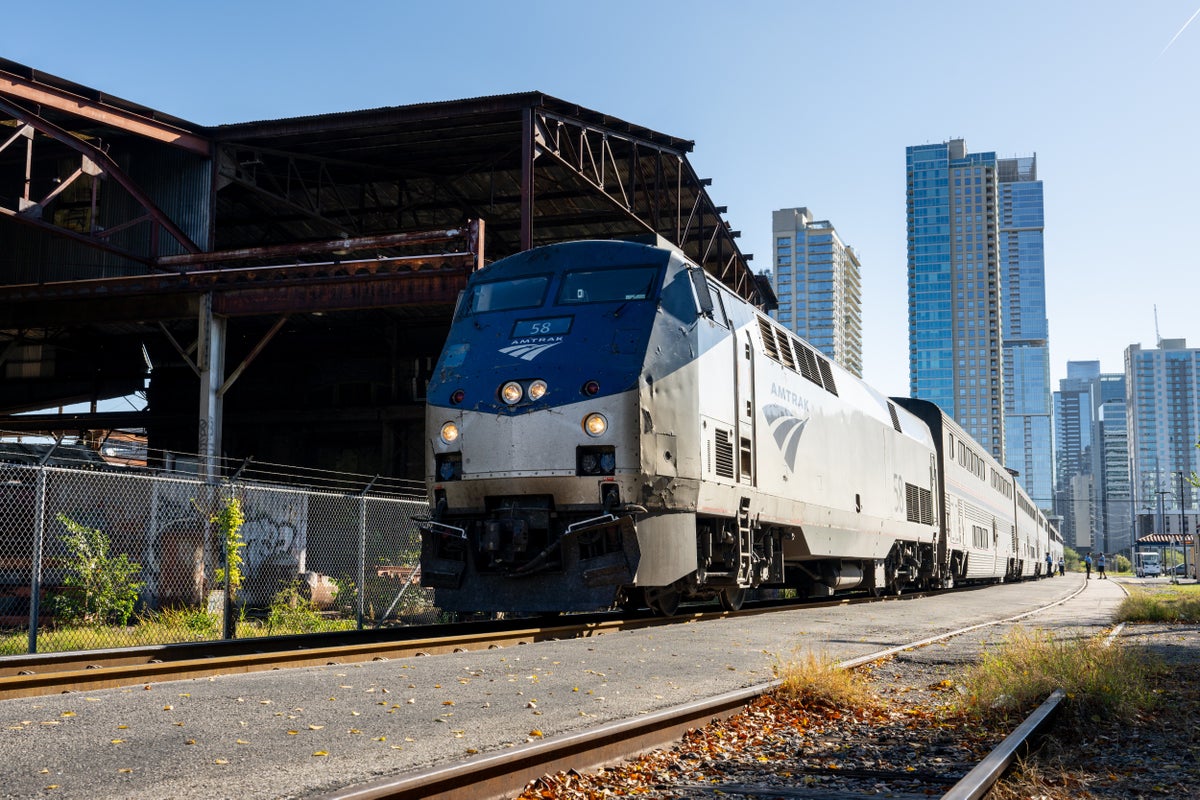
It’s so hot trains are running slower to avoid damaging the tracks
Key Points
It’s so hot trains are running slower to avoid damaging the tracks The precautions are rooted in a fundamental vulnerability: extreme heat can warp steel tracks - Bookmark - CommentsGo to comments As the second heat wave this month scorches large swaths of the United States, the country’s rail networks are confronting a little-known strain: the limits of metal tracks under siege from the sun. Rail operators are adjusting accordingly. A Pennsylvania transit agency has begun reducing speeds by...
It’s so hot trains are running slower to avoid damaging the tracks
The precautions are rooted in a fundamental vulnerability: extreme heat can warp steel tracks
- Bookmark
- CommentsGo to comments
As the second heat wave this month scorches large swaths of the United States, the country’s rail networks are confronting a little-known strain: the limits of metal tracks under siege from the sun.
Rail operators are adjusting accordingly. A Pennsylvania transit agency has begun reducing speeds by as much as 10 miles per hour along certain corridors, while one operating in New York and Connecticut has imposed a 70-mile-per-hour cap — measures likely to trigger delays for commuters and summer travelers alike.
Elsewhere, at least one operator has turned to a seemingly low-tech fix: coating sections of track in white paint to blunt the heat’s intensity.
These measures are rooted in a fundamental vulnerability: steel rail can expand and buckle when met with high temperatures. “When that steel has nowhere to go, it can push sideways and create what we call a thermal misalignment,” Union Pacific chief safety officer Rod Doerr said in a recent statement.
On Wednesday, large sections of the Midwest, the Mid-Atlantic and the Northeast were under heat advisories, according to the National Weather Service, with temperatures climbing through the 90s and, in some places, into triple digits. The stifling conditions follow a record-breaking July 4 heat wave that swept across much of the country less than two weeks ago.
“If you will be situated within any of these areas forecast to experience extreme heat, stay hydrated, take frequent breaks, and limit outdoor activities if possible,” the NWS said Wednesday.
Amtrak warned Tuesday that an extreme heat forecast across the Northeast could slow service this week, with trains potentially forced to reduce speeds from Wednesday through Friday and delays likely to follow.
“While these measures are intended to maintain safe and reliable operations, customers traveling during these hours should continue to monitor their train status for the latest updates,” the company said in a statement.
In the Philadelphia region, the Southeastern Pennsylvania Transportation Authority signaled similar disruptions. On Wednesday, the agency said service to more than a dozen stations could be delayed as temperatures climb.
“During excessive heat conditions when tracks are more susceptible to damage, SEPTA reduces speeds by approximately 5-10 miles per hour for safety on all of its Regional Rail trains, trolleys, and other rail modes,” a SEPTA spokesperson told The Independent.
“These speed reductions also decrease the chance of overhead wires sagging, and although not noticeable to customers, can cause minor delays,” the spokesperson added.
The impact is being felt further north as well, in the country’s most populous region. The Metropolitan Transportation Authority, which operates the New York City subway, the Long Island Rail Road and Metro-North Railroad, has instituted heat-related slowdowns.
“Metro-North Railroad has implemented speed reductions: trains are not exceeding 70 mph,” an MTA spokesperson told The Independent.
State officials say crews are preparing for rapid response as temperatures rise. “Long Island Rail Road and Metro-North Railroad crews will be staged at key locations to be able to respond quickly to weather-related issues,” New York Governor Kathy Hochul said in a press release on Monday. “The railroads will monitor rail temperatures,” and “deploy heat patrols.”
At least one major rail operator is experimenting with a deceptively simple fix to mitigate temperature-related risks.
“Last year, Union Pacific began painting the rails white in some high-heat areas to reflect the sun's rays instead of absorbing them,” a spokesperson told The Independent. “This can result in a 20-degree reduction in the temperature of the rails, reducing stress caused by thermal expansion.”
This approach has been used in Europe but remains largely unadopted in the U.S., according to Union Pacific, which operates throughout the western two-thirds of the country.
Beyond rail lines, extreme heat threatens other critical infrastructure: pavement can buckle and crack, bridges can weaken as materials expand and electrical grids are increasingly vulnerable to outages. Elevated temperatures also put people at risk for heatstroke, dehydration and other illnesses. A recent heat wave in Europe was linked to thousands of excess deaths, officials have said.
Experts say the climate crisis has made heat waves more intense and longer-lasting. In January, the World Meteorological Organization said 2025 ranked among the three warmest years on record, and that the past 11 years were the hottest in the modern era.
Join our commenting forum
Join thought-provoking conversations, follow other Independent readers and see their replies
Comments
the United States (LOCATION)
Pennsylvania (LOCATION)
New York (LOCATION)
Connecticut (LOCATION)
Union Pacific (ORG)
Rod Doerr (PERSON)
Midwest (LOCATION)
Mid-Atlantic (LOCATION)
Northeast (LOCATION)
the National Weather Service (ORG)
NWS (ORG)
Amtrak (ORG)
Philadelphia (LOCATION)
the Southeastern Pennsylvania Transportation Authority (ORG)
SEPTA (ORG)