
Sport
Football with a side of dim sum: Hong Kong teahouse scores big with World Cup fans
Key Points
Football with a side of dim sum: Hong Kong teahouse scores big with World Cup fans Lin Heung Lau, one of Hong Kong’s oldest dim sum restaurants, has boosted its business by 20 per cent despite mounting challenges facing the city’s Chinese eateries. It’s 6am at Lin Heung Lau, one of Hong Kong’s oldest dim sum restaurants. Clouds of steam rise gently from bamboo baskets, but the loudest sounds aren’t the usual clatter from the kitchen – they’re from eager World Cup fans erupting in cheers in...
Football with a side of dim sum: Hong Kong teahouse scores big with World Cup fans
Lin Heung Lau, one of Hong Kong’s oldest dim sum restaurants, has boosted its business by 20 per cent despite mounting challenges facing the city’s Chinese eateries.
HONG KONG: It’s 6am at Lin Heung Lau, one of Hong Kong’s oldest dim sum restaurants.
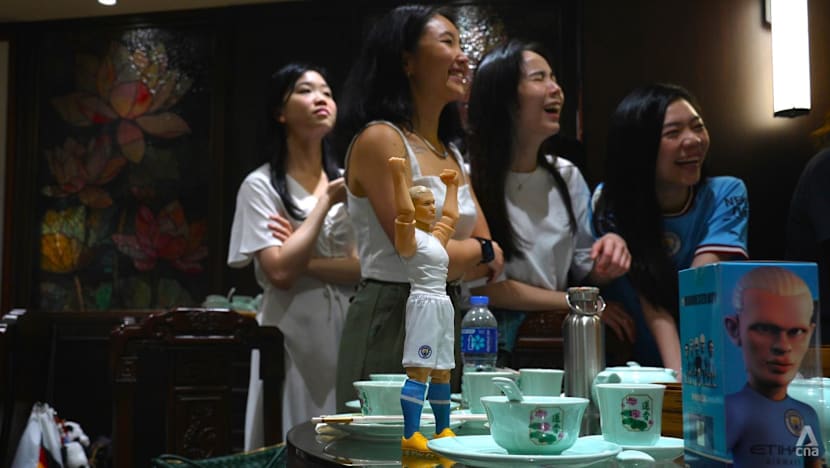
Clouds of steam rise gently from bamboo baskets, but the loudest sounds aren’t the usual clatter from the kitchen – they’re from eager World Cup fans erupting in cheers in the dining hall.
Over a century old, the iconic teahouse has become one of the city’s newest spots for watching football.
“It’s hard to come across Chinese restaurants in Hong Kong that are organising something like this, for us football fans to watch a match while having morning tea,” said a local resident who came with his friends.
Football is a popular sport in Hong Kong, with locals packing the city's sports bars to catch matches which usually kick off at night.
But with many matches at this year's World Cup taking place early in the morning, Lin Heung Lau is among local teahouses cashing in on the unique opportunity.
At World Cup screenings, the restaurant is fully packed, with some social media posts showing long queues outside the eatery even at 4am. The teahouse acquired a one-year broadcast contract to screen the World Cup, and will continue using it for Premier League matches.
The football screenings are part of Lin Heung Lau’s efforts to reinvent the traditional teahouse experience and appeal to new customers.
The eatery also hosts what it calls “dim sum raves”, serving dumplings, pork buns and tea to the beat of retro Cantopop.
The strategy appears to be working. Since starting the dim sum raves a few months ago, the restaurant says business has improved by about 20 per cent. It plans to build on that momentum by continuing to host monthly raves and Premier League watch parties.
Lin Heung Lau’s marketing director Wong Chi Yin said such events have widened the restaurant’s customer base, attracting patrons of different nationalities.
“Especially for the World Cup screenings, we have … people coming to support their national teams,” he said. “For the (rave) parties, we have patrons from different age groups because we play a wide range of music.”
F&B INDUSTRY STILL STRUGGLING
Lin Heung Lau is far from alone. Across Hong Kong, eateries are increasingly turning to novel experiences to stand out in a fiercely competitive market.
Earnings have yet to return to pre-pandemic levels and Chinese restaurants, which have traditionally formed the backbone of Hong Kong’s dining scene, have been the hardest hit.
According to official data released in June, earnings for Chinese restaurants in the first quarter suffered the sector’s steepest contraction in revenue, plunging by 27.9 per cent from HK$13.44 billion (US$1.71 billion) in 2018 to HK$9.7 billion this year.
More than a dozen decades-old restaurants have closed in the first four months of this year alone.
Industry players say the shift is being driven in part by changing consumer habits. More Hong Kongers are crossing the border to Shenzhen for cheaper dining options, while younger diners are favouring newer, trendier eateries.
“(There’s) not only internal competition, but also competition from restaurant operators that come from the mainland,” said Simon Wong, president of the Hong Kong Federation of Restaurants and Related Trades.
Hong Kong’s dining scene has seen an influx of mainland Chinese brands, with chains such as Chagee and Tai Er opening multiple outlets.
These newcomers have been attracting customers with competitive prices, eye-catching marketing and fresh concepts, said Wong.
“They have new ideas to promote their restaurants and food. That is quite challenging for the local (Hong Kong) restaurants, because most of the local restaurants are, in a way, old-fashioned,” Wong said.
TAKING TRADITION ONLINE
Food influencer Keng Wong, known online as Uncle K, is among a growing number of content creators paying homage to Hong Kong’s food scene.
Wong started his Instagram account in November 2024 and has since amassed more than 260,000 followers.
He pointed out that many homegrown eateries are having trouble replacing an ageing generation of chefs.
“If the younger generation doesn’t take over, I think the old brands will eventually disappear,” he said.
Wong had previously said that the food and beverage industry is physically demanding, making it difficult for many ageing chefs and restaurant owners to stay in the business.
He added that one way for traditional eateries to remain competitive is to build a social media presence and refresh their image.
“There are newer cafes like Waso and Red City (run by) people who have worked in Hong Kong-style cafes for many years. They’ve made their cafes more attractive and vibrant, and promoted them online,” he said.
For Hong Kong’s traditional Chinese eateries, preserving their heritage alone may not be sufficient to keep their doors open. Experts say they must also adapt to changing consumer preferences by improving customer service and embracing technologies such as e-payments.