
Health
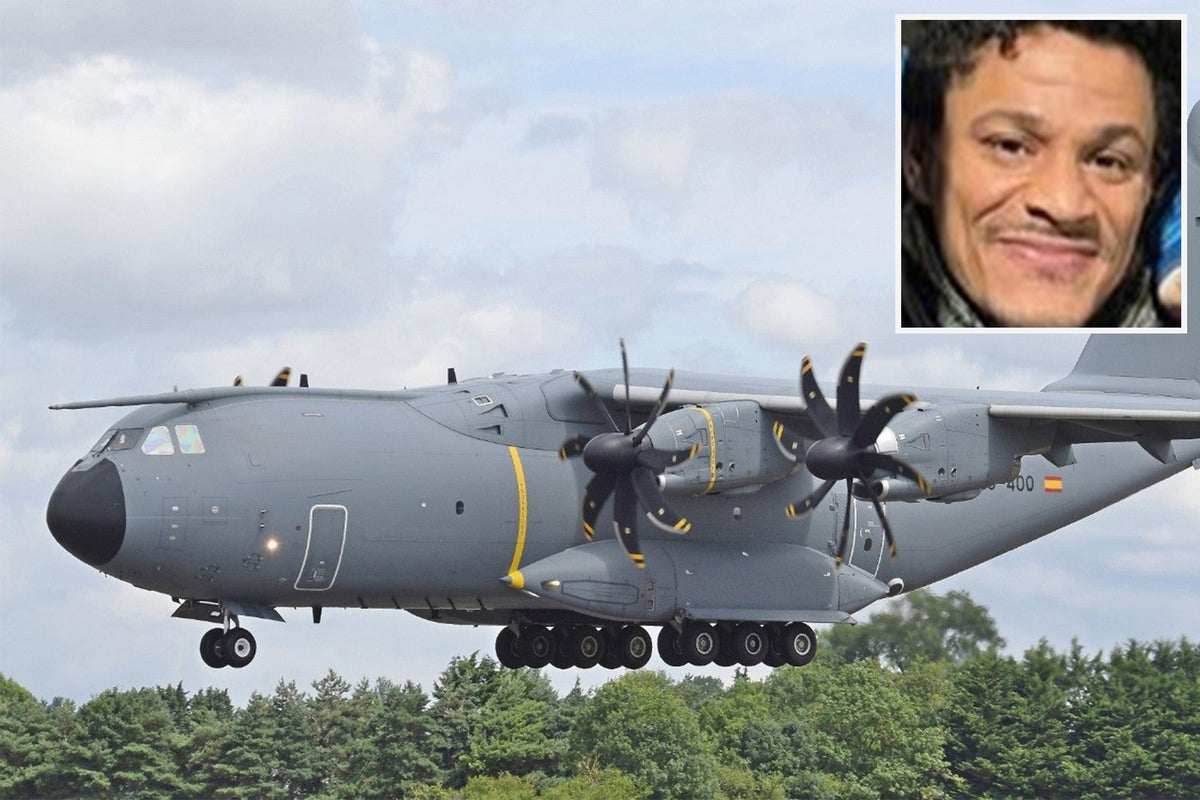
Soldier left so deaf from plane noise that he can’t hear doorbell sues MoD for £700k
Key Points
Soldier left so deaf from plane noise that he can’t hear doorbell sues MoD for £700k Cleophys Hoare says he was unable to wear over-the-ear protection while also wearing a helmet - Bookmark - CommentsGo to comments A Parachute Regiment soldier who says he was left depressed and so deaf he struggles to hear his microwave "ping" after the roar of planes ruined his hearing is suing the MoD for more than £700,000. Former 3 Para infantryman Cleophys Hoare, 34, claims to have sustained...
Soldier left so deaf from plane noise that he can’t hear doorbell sues MoD for £700k
Cleophys Hoare says he was unable to wear over-the-ear protection while also wearing a helmet
- Bookmark
- CommentsGo to comments
A Parachute Regiment soldier who says he was left depressed and so deaf he struggles to hear his microwave "ping" after the roar of planes ruined his hearing is suing the MoD for more than £700,000.
Former 3 Para infantryman Cleophys Hoare, 34, claims to have sustained life-changing hearing loss during his service when he was subjected to "excessive and harmful" levels of noise en route to jumps.
Mr Hoare, of Gloucestershire, says he was unable to wear over-the-ear protection while also wearing a helmet, with only ear plugs to defend his hearing from the roar of aircraft.
Together with further hearing damage caused by the crackle of gunfire in other roles, the injury led to him being medically discharged from the Army in 2024, he says.
He is now suing the MoD for more than £700,000 compensation at the High Court in London, blaming his superiors for not adequately protecting him from hearing damage.
The former para says he struggles to hear his doorbell or his microwave or washing machine "pinging" whilst his hearing struggles have also had a serious impact on his mental health.
The MoD has accepted it will pay 90 per cent of Mr Hoare's damages once determined, but is requiring him to prove that his service was the cause of any hearing loss he suffered.
According to documents filed for Mr Hoare's claim, he served in the Third Battalion of the Parachute Regiment between 2014 and 2020, and then in the Royal Logistics Corps until his discharge.
His barrister, Sabrina Hartshorn, says that while in training at ITC Catterick, he was exposed to the sound of arms fire from machine guns and assault rifles, and from grenades and flashbangs.
Although he used the standard issue hearing protection he was provided with, he always suffered with ringing in his ears after firing weapons, which would remain for a couple of days.
While serving at Merville Barracks, Colchester, and at RAF Brize Norton, he performed about 30 parachute jumps while training for deployment, she continues.
"The claimant was provided only with ear buds placed within the ear," says his barrister.
"Over the ear defenders were not compatible with the helmets used by those parachuting. It was considered more important to wear the helmet rather than the correct hearing protection.
"The claimant was exposed to excessive and harmful levels of noise which came from the sound of the aircraft’s engine the claimant was being transported in.
"Even when not jumping, the claimant was surrounded by noise from aircraft such as the C130 Hercules or Airbus A400M Atlas military aircraft.
"The claimant assumed at the time that the hearing protection was adequate given that it was standard issue and provided to the claimant by the defendant."
Mr Hoare was ultimately downgraded medically due to hearing problems and was discharged from the Army as a lance corporal in 2024 after 10 years in the forces.
Ms Hartshorn said Mr Hoare had suffered bilateral hearing loss and tinnitus, which makes it difficult for him in groups of three or more people.
"Loud sounds made him feel uncomfortable and he didn’t like having lots of different noises around at the same time," she said.
"He struggled to hear his three young boys with the television on and the loud noise made him feel stressed.
"The claimant struggled to hear the doorbell, could not hear the bell for the microwave nor could he hear when the sound played when the washing machine had finished."
She said a psychiatrist had assessed Mr Hoare and, in diagnosing an adjustment disorder, noted that he had found the transition to civilian life "very hard."
"He had lost confidence; he was not sleeping well; he was sad and tearful most of the time; he rarely experienced pleasure; he felt tired and lacking in energy; he struggled to concentrate," she said.
According to defence documents, the MoD accepts that "the levels of noise to which the claimant was exposed were capable of causing harm to the claimant’s hearing."
However, MoD lawyers are requiring Mr Hoare to prove the extent of his injuries and that they were actually caused by noise exposure in the Army.
"The claimant is required to prove that the defendant’s negligence/breach of duty caused or materially contributed to the alleged, or any personal injury, loss and damage to the claimant," said barrister Kam Jaspal.
The case recently reached court for a hearing before Deputy Master Lorna Skinner dealing with the future progress of the case towards trial.
Mr Hoare's lawyer Sam Edwards told the judge that his claim, while still not fully quantified, already exceeds £700,000.
The case will return to court for a full trial at a later date, unless settled outside court.
Join our commenting forum
Join thought-provoking conversations, follow other Independent readers and see their replies
Comments
Cleophys Hoare (PERSON)
Parachute Regiment (ORG)
Hoare (PERSON)
Gloucestershire (LOCATION)
Army (ORG)
the High Court (ORG)
London (LOCATION)
MoD (ORG)
Mr Hoare's (PERSON)
the Third Battalion of the Parachute Regiment (ORG)
the Royal Logistics Corps (ORG)
Sabrina Hartshorn (PERSON)
ITC (ORG)
Merville Barracks (LOCATION)
Colchester (LOCATION)