
Business & Finance
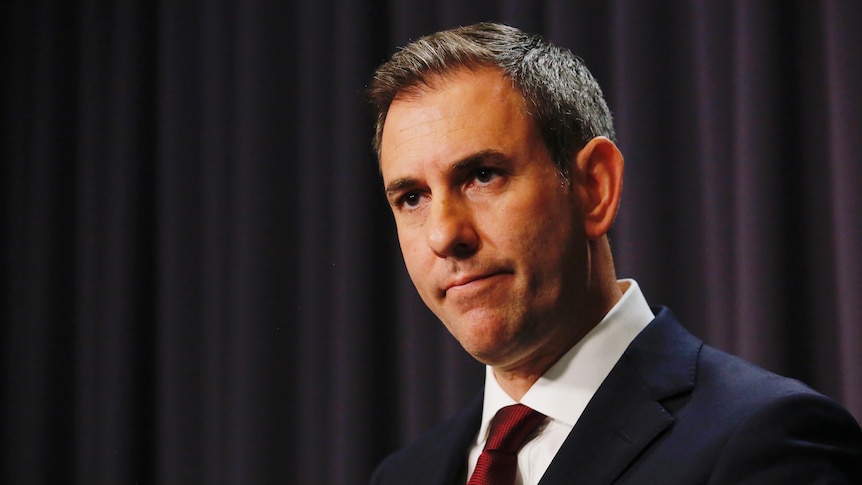
Treasurer says AI key to raising productivity, lowering interest rates
Key Points
Treasurer Jim Chalmers says AI central to raising productivity and lowering interest rates Fri 17 Jul 2026 at 1:22pm In short: Treasurer Jim Chalmers has given further insight into the government's approach to AI and details of his meeting with AI giant Anthropic. He says it is central to the government's plans to increase productivity, but tech giants will still be subject to regulation and copyright controls. What's next: The government will release its intergenerational report before the...
Treasurer Jim Chalmers says AI central to raising productivity and lowering interest rates
Fri 17 Jul 2026 at 1:22pm
In short:
Treasurer Jim Chalmers has given further insight into the government's approach to AI and details of his meeting with AI giant Anthropic.
He says it is central to the government's plans to increase productivity, but tech giants will still be subject to regulation and copyright controls.
What's next:
The government will release its intergenerational report before the end of the year.
Treasurer Jim Chalmers says artificial intelligence is central to his aim to turn around Australia's lagging productivity, which could ultimately help lower interest rates.
Productivity and real wages growth have been generally stagnant in Australia for more than a decade, with business investment also generally weak, albeit with recent signs that capital expenditure is starting to pick up.
Stagnating productivity means that, instead of making and selling more goods from each hour worked, businesses can generally only maintain or increase their profits by raising prices.
This drives up inflation and has created a key sticking point for the Reserve Bank when it considers whether to raise or lower interest rates.
Loading...OECD data shows that instead of productivity, corporate Australia is relying on high migration, consumer wealth from house values and favourable terms of international trade to maintain its profitability.
In an interview with Alan Kohler for the That's Business podcast Treasurer Jim Chalmers spruiked the government's new AI framework announced by Prime Minister Anthony Albanese and said artificial intelligence and productivity would be "front and centre" of the intergenerational report he would be releasing towards the end of the year.
"If you look at all the big shifts in the global economy and in our societies — aging and demographics, changing industrial base, geopolitical fragmentation, the energy transformation, all of that is relevant to this technological revolution which we see in AI,"he said.
"For me, it's central to the work that I do as Treasurer, and it's central to the work that I do trying to turn around a couple of decades of ordinary productivity performance.
"Everybody recognises at the most basic level that AI has the capacity to make our economy more dynamic and therefore more productive and the best way to grow our economy over time and lift living standards for people is to make it more productive."
Mr Chalmers said Australia's productivity decline had spanned two decades and the most recent federal budget included an estimated $10 billion cut in compliance costs forecast to lift GDP by $13 billion — the biggest boost to productivity in three decades, according to the Treasurer.
Australia's AI investment opportunity
Mr Chalmers defended the government's track record on AI, including its AI institute, but said the announcement this week to centralise regulation in the prime minister's office was about legislating the standards for data centres and making sure creators maintained control of their work.
"I see a lot of upside in AI when it comes to our economy and our society,"he said.
"When investors look around the world, they see our renewable energy opportunity, they see our government stability, our geography, our national security arrangements, all of that is very attractive to them."
Loading...He signalled the government wanted to house more than just regular cloud-based data centres and could also be home to large-scale frontier AI training, the data centres that help AI learn.
"We want to maximise this opportunity. We want to make the most of our leverage,"Mr Chalmers said.
"One of the brightest parts of our economy right now is the way that business investment has come up substantially. That's not just about data centres, but they are an important part of the story."
On meeting with Anthropic and copyright
Mr Chalmers also gave an insight into his recent meeting with Dario Amodei, the chief executive of AI giant Anthropic in April, and whether the proposed $21 billion investment in Australia involved copyright agreements.
"The meeting that I had with Anthropic was really about understanding their position, but also conveying our position," he said.
"It wasn't Anthropic presenting to us a series of conditions. It was understanding each other's position."
He said the government's position on copyright was clear.
"Creators need to maintain control of their work, that's a non-negotiable. How we go about getting to a landing that everybody can live with is part of the work that we will do now," Mr Chalmers said.
"There is a balance to be struck here. And I'm really confident that we are finding an effective balance to attract this investment, not to deter it."
We intend to get it right, Chalmers says
The Treasurer said he was also alive to AI's risks for the labour market.
"The big risk is obviously that we don't find a way to make this improve people's standard of living at work," he said.
"We are dealing here with some of the biggest, most fundamental issues, not just in our economy, but in our society more broadly. These are historical questions.
"We don't intend to get it wrong. We intend to get it right.
"Getting it wrong invites a whole bunch of consequences that we don't want to contemplate."
And then there's bracket creep
The Treasurer also weighed in on the issue of "bracket creep", an issue in Australia's income tax system when incomes move higher over time, pushing more people onto higher rates of taxation.
The Parliamentary Budget Office (PBO) published a report this week saying that the government's predictions of a return to surplus in 2035 would only eventuate if there were no more tax cuts in that time, clawing back bracket creep.
Treasurer Jim Chalmers said budget repair was underway and the government was cutting taxes in five different ways, despite opposing the Coalition's call for indexation of income tax brackets so that they reflected inflation.
"This is a government which returns bracket creep," he said.
"We're doing it five times and we found three different ways to return that bracket creep so that we can cut taxes for workers.
"If you look at that 10-year period that the PBO is talking about, I think it would be a brave and unwise assumption that no government is going to cut income taxes again in a 10-year period."
You can hear Alan Kohler's interview with Treasurer Jim Chalmers here.