
Weather
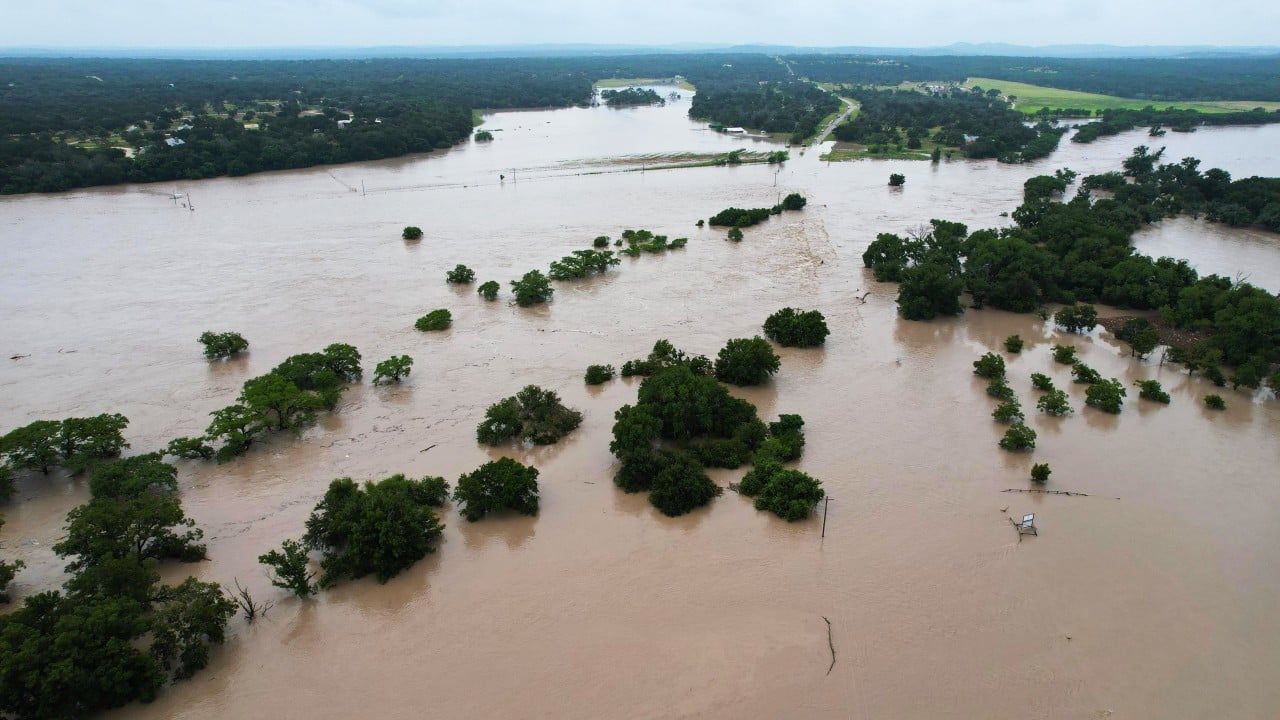
US confronts floods, heatwaves, smoky skies all at once amid Trump aid cuts
Key Points
US confronts floods, heatwaves, smoky skies all at once amid Trump aid cuts An expert said the scale-back of federal resources has left the country ‘in a really difficult spot’ Across the US this week, different disasters – from Canadian wildfire smoke darkening the skies in the Midwest and northeast to extreme heat along the east coast to catastrophic flooding in Texas – are disrupting daily life and putting people’s health at risk. When multiple weather catastrophes play out like this at...
US confronts floods, heatwaves, smoky skies all at once amid Trump aid cuts
An expert said the scale-back of federal resources has left the country ‘in a really difficult spot’
Across the US this week, different disasters – from Canadian wildfire smoke darkening the skies in the Midwest and northeast to extreme heat along the east coast to catastrophic flooding in Texas – are disrupting daily life and putting people’s health at risk.
When multiple weather catastrophes play out like this at the same time, or in quick succession, experts refer to them as compound events. As climate change makes compound events more likely, experts warned that grappling with them is further complicated by the Trump administration’s cuts to disaster work.
The American disaster complex has long been struggling to cope with the increasing number of costly crises, but recent cuts to the Federal Emergency Management Agency (FEMA) have made the situation worse, according to Jeffrey Schlegelmilch, Columbia University’s faculty director of the National Centre for Disaster Preparedness. “We are not as well prepared as we were a few years ago,” he said.
“It leaves us in a really difficult spot,” said Samantha Penta, an associate professor specialising in emergency preparedness at the University at Albany, noting the scale-back of federal resources means “there’s a lot of pressure” on state and local governments to manage complex crises on their own.
John Abatzoglou, a climatologist at the University of California at Merced, said scientists expect compound calamities to increase as wildfires are ignited during more frequent heatwaves. And a climate-charged super El Nino could bring more extreme rain, flooding and landslides across a swathe of states.
“If you increase one type of extreme, the odds are that you’re going to get hit with another extreme that results in a larger impact,” he said.
US (LOCATION)
Trump (ORG)
Canadian (ORG)
Midwest (LOCATION)
the east coast (LOCATION)
Texas (LOCATION)
American (ORG)
the Federal Emergency Management Agency (ORG)
FEMA (ORG)
Jeffrey Schlegelmilch (PERSON)
Columbia University’s (ORG)
the National Centre for Disaster Preparedness (ORG)
Samantha Penta (PERSON)
the University at Albany (ORG)
John Abatzoglou (PERSON)