
Weather
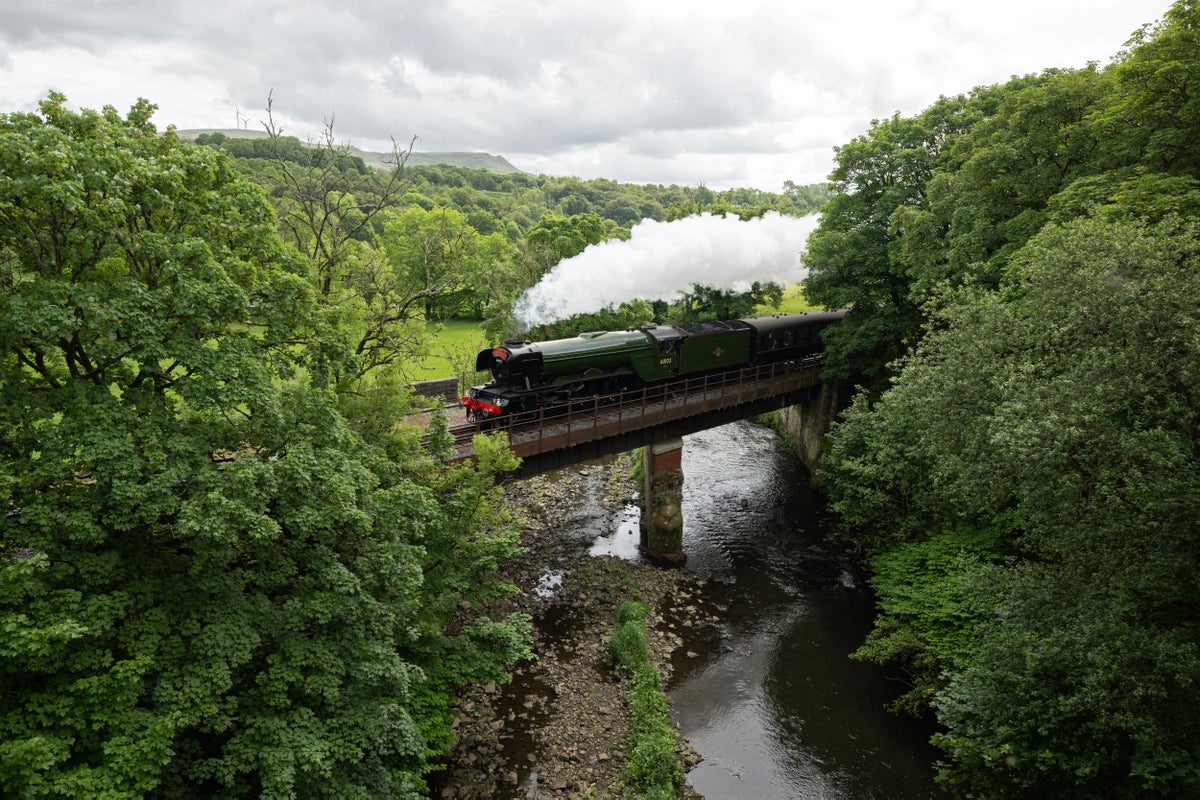
Network Rail bans steam trains from running after ‘Harry Potter’ train sparks wildfire
Key Points
Network Rail bans steam trains from running after ‘Harry Potter’ train sparks wildfire The grounding has led to service cancellations, and diesel engines being brought in as last-minute replacements - Bookmark - CommentsGo to comments Network Rail has imposed a nationwide ban on steam trains over fears they could trigger wildfires amid Britain’s ongoing heatwave. It comes after a West Coast Railway (WCR) train is believed to have sparked a wildfire in Cheshire, which resulted in 72 West...
Network Rail bans steam trains from running after ‘Harry Potter’ train sparks wildfire
The grounding has led to service cancellations, and diesel engines being brought in as last-minute replacements
- Bookmark
- CommentsGo to comments
Network Rail has imposed a nationwide ban on steam trains over fears they could trigger wildfires amid Britain’s ongoing heatwave.
It comes after a West Coast Railway (WCR) train is believed to have sparked a wildfire in Cheshire, which resulted in 72 West Coast Main Line trains being cancelled, and 158 delayed.
The service is popularly known as the “Harry Potter train," as the service famously supplied the steam engine and iconic red carriages for the films featuring JK Rowling’s wizarding world.
The grounding has led to mass service cancellations, and diesel engines being brought in as last-minute replacements.
The ban will bring bitter disappointment for many, as schools across the country begin their summer holidays this week.
While Network Rail is investigating the source of the blaze in Cheshire, a spokesperson highlighted the necessity of the steam train ban: “The current long periods of hot dry weather have increased the risk of wildfires across the country.
“As a result, we have asked charter operators to replace steam engines with diesels in line with our steam charter fire risk policy.”
The policy states that, due to risks associated with burning cinders and sparks from the coal-fired engines, steam trains must not be used in some weather conditions.
While these sparks usually pose little threat, three back-to-back heatwaves, which have seen temperatures soar to 37C in some areas, have left trackside grass embankments and surrounding farmland bone dry — significantly increasing the potential for a stray spark to start a fire.
This year has seen fire and rescue services in England and Wales respond to 342 wildfires, with 65 of those recorded measuring areas of 30 hectares or more.
Some 19 separate wildfire incidents have occurred this week alone, a phenomenon experts have previously termed a "firewave".
The National Fire Chiefs Council (NFCC) warned that this particular heatwave poses extreme risks for further firewaves, stating: “Prolonged periods of warm, dry weather allow vegetation to dry out.
“If these conditions persist, the risk of larger, faster-moving and more challenging wildfire incidents is expected to increase in the coming days and weeks.”
With large parts of the country in the midst of a third week of a heatwave, a spokesperson from Mid-Norfolk Railway described the decision to pause the use of steam trains as “the responsible course of action,” amid increasing wildfire reports.
The news follows the release of the Met Office’s annual state of the climate report, which cautioned that extreme weather events are becoming the new “normal” in the UK.
Join our commenting forum
Join thought-provoking conversations, follow other Independent readers and see their replies
Comments
Network Rail (ORG)
Harry Potter (PERSON)
Britain (LOCATION)
West Coast Railway (LOCATION)
Cheshire (LOCATION)
West Coast Main Line (ORG)
Rowling (PERSON)
England (LOCATION)
Wales (LOCATION)
The National Fire Chiefs Council (ORG)
Mid-Norfolk Railway (ORG)
the Met Office’s (ORG)
UK (LOCATION)
Independent (ORG)