
Science
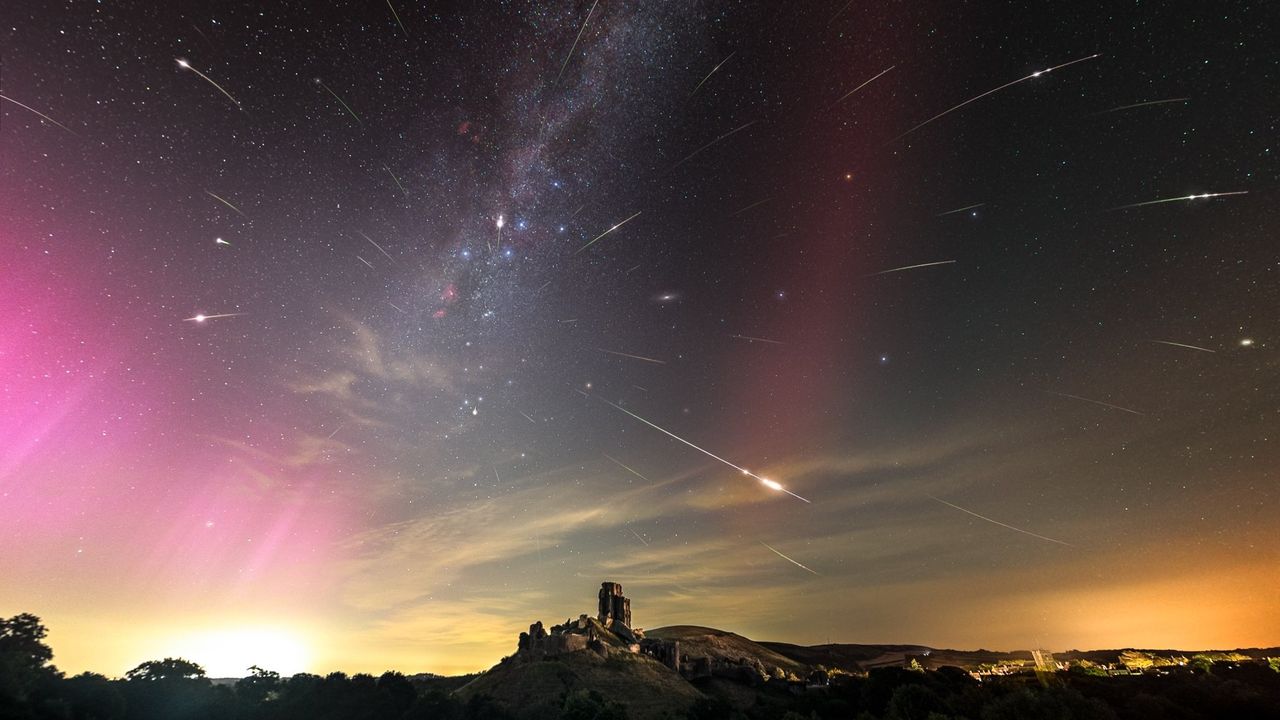
Beyond the Perseids: 6 meteor showers worth watching this summer
Key Points
Beyond the Perseids: 6 meteor showers worth watching this summer The Perseids may steal the spotlight, but six lesser-known meteor showers could also light up summer skies. The Perseids may be the summer meteor shower everyone marks on the calendar, but they are not the only reason to look up this season.
Beyond the Perseids: 6 meteor showers worth watching this summer
The Perseids may steal the spotlight, but six lesser-known meteor showers could also light up summer skies.
The Perseids may be the summer meteor shower everyone marks on the calendar, but they are not the only reason to look up this season.
From mid-July through late August, Earth plows through several other streams of comet and asteroid debris, triggering a series of lesser-known meteor showers across Northern Hemisphere skies.
Most will not deliver the dazzling hourly rates of the Perseids, and moonlight will spoil some peak nights in 2026. But for patient skywatchers under dark skies, these lesser-known showers can still serve up bright fireballs, faint streaks and a preview of the main event to come.
The duration in days of a shower we provide here is somewhat arbitrary, since the beginning and ending are gradual and indefinite. While the hourly rates from these other meteor streams provide but a fraction of the numbers produced by the Perseids, combined, overall, they provide a wide variety of meteors of differing colors, speeds and trajectories.
Capricornids
First to appear are the Capricornids, starting around July 10, with their maximum on July 25 and end on Aug. 15. Under the best conditions only a few bright meteors per hour come from this stream, so you'll hardly know it is in progress unless you plot meteor trails on a star map and trace them back to their common intersection point; most of the meteors you'll see will be sporadics or members of another shower.
The radiant reaches its highest point at about 30 degrees high in the south, about 2:00 a.m. local daylight time. The waxing gibbous moon will have set at around 1:40 a.m. on the night of the peak, leaving the rest of the night dark for prospective meteor watchers.
Delta Aquarids
Next come the Delta Aquarids, July's most prolific shower, with maximum on July 29, and as many as two or three dozen meteors per hour under ideal conditions. The shower lasts from July 12 to Aug. 23. It has a double radiant, indicating that we are seeing two distinct streams of celestial debris burning up in the Earth's atmosphere.
The meteors are mostly faint; a few bright, 5-10% leave persistent trains; they move at medium-slow speeds because they are coming in sideways across Earth's orbit. On peak night this year, the double radiant will be highest — roughly 40 degrees above the southern horizon — at 3:30 a.m. Unfortunately, in 2026, peak activity will coincide with full moon, so most of these streaks will likely be squelched by bright moonlight.
Piscis Australids
Another weak shower is the Piscis Australids, on July 30, with normal limits July 10 to Aug. 10. This is a lesser stream; only about eight members per hour are seen under best conditions to observers in the Southern Hemisphere, where the radiant — near the bright star Fomalhaut — climbs high in the sky.
As is the case with the Delta Aquarids, the moon, only one day past full, unfortunately, wrecks any chances of getting any decent views this year.
Alpha Capricornids
The final shower peaking in July is the Alpha Capricornids, which begin about July 7, peak on July 31, and end on Aug. 15. The radiant reaches its highest point, about 30 degrees high in the south at about 1:00 a.m. local daylight time. Though sparse (5 per hour) in number, the Alpha Capricornids are photogenic, frequently producing bright yellow fireballs that can be quite spectacular. Sadly, the bright moon, 93% illuminated, is in eastern Capricornus and will seriously impact the peak of this year's display.
Iota Aquarids
The last minor shower before the Perseids is the Iota Aquarids, a two-radiant shower having detectable members from July 15 to Aug. 25. At peak activity on Aug. 6, only about six members per hour are seen under good conditions; the radiants are at their highest point, about 40 degrees in the south at 2:30 a.m. A last quarter moon will be about one-third up in the eastern sky at that hour, which will interfere to an extent with viewing these meteors.
Perseids
The Perseids are predicted to reach their peak in 2026 on the morning of Aug. 13. Meteors whose paths extended backward intersect at a spot near the Perseid-Cassiopeia border not far from the famous Double Cluster in Perseus.
It rises at dusk and is highest in the sky — nearly overhead — at 5:40 a.m. When maximum occurs in a dark sky, as will be the case this year, this rich stream offers a crescendo in hourly rates averaging more than 50 members per hour, though double this rate has been seen on occasion. Many flaring meteors with trains are seen. This shower normally extends from July 17 through Aug. 24.
Kappa Cygnids
The last summer shower is the Kappa Cygnids. The limits of this shower run from Aug. 3 to Aug. 25, with the peak on Aug. 17. Though the maximum rate is only about four per hour, the stream does provide slow-moving flaring fireballs, and a careful observer may be nicely rewarded for the time spent.
The radiant is just north of the star Kappa Cygni and is nearly overhead — some 80 degrees high — at around 10:00 p.m. local time. At about that same time, a waxing crescent moon is low in the southwest and is about to set and will offer little viewing interference.
Where to look
The radiant is the place in the sky where the paths of shower members, if extended backward, would intersect when plotted on a star chart. Many people are misled into thinking that this is the best place to look for these meteors, but only stationary meteors — ones coming nearly straight at you — can be seen here.
The greatest numbers will be seen perhaps 30 degrees away from the radiant, in the general direction of the zenith. Remember that your clenched fist held at arm's length is roughly equal to 10 degrees.
In addition to shower meteors, there are always sporadic ones, apparently unrelated to one another, that occur at an average rate of about 7 per hour. The duration in days of a particular shower is somewhat arbitrary, since the beginning and ending are gradual and indefinite.
Skywatching tips
The only equipment you'll need is your eyes and a modest amount of patience.
The number of meteors an observer can see in an hour depends strongly on sky conditions. The rates quoted here are based on a limiting star magnitude of +6.5 (an exceptionally good, dark sky), an experienced observer, and the assumption that the radiant is directly overhead.
The lower the radiant in the sky, the fewer the numbers that will be seen. At an altitude of about 30 degrees, the hourly rate is halved, at 15 degrees it is one-third. No two observers prepare for a meteor vigil the same way.
Expect the overnight low temperature to be well below what the weather forecast suggests. When you sit quite still, close to the rapidly cooling ground, and if the air is even just slightly damp, you can become very chilled. It helps to take a late afternoon nap, followed by a shower, and to wear fresh clothing. Heavy blankets, sleeping bags, a ground cloth, an auto cushion, and a pillow are all necessary equipment. Some food and non-alcoholic beverages will help keep you comfortable.
Don't forget the moon
Another factor is the phase of the moon, which this year will be full on July 29 and new on Aug. 12. This makes it a very favorable year for viewing the Perseids, but not so favorable for those displays peaking at the end of July into early August. However, most are also active for a good number of days before and after maximum activity, so you can also watch for them when moonlight is not a hindrance.
Are these meteor showers worth watching?
In short, minor summer meteor showers are worth watching if you enjoy patient, low-key skywatching, but they are not ideal if you expect a dramatic display.
They offer a long observing season, require no equipment, and can produce a variety of meteors with different colors, speeds, paths, and occasionally bright fireballs. They also give observers more chances to watch when skies are clear and moonlight is less intrusive.
However, most are weak when compared to the Perseids, with low hourly rates and many faint meteors. Moonlight, low radiant positions, overlapping showers, and sporadic meteors can make them harder to see and identify, so observers need dark skies and patience.
Joe Rao serves as an instructor and guest lecturer at New York's Hayden Planetarium. He writes about astronomy for Natural History magazine, Sky and Telescope, The Old Farmer's Almanac and other publications.
You must confirm your public display name before commenting
Please logout and then login again, you will then be prompted to enter your display name.
Joe Rao is Space.com's skywatching columnist, as well as a veteran meteorologist and eclipse chaser who also serves as an instructor and guest lecturer at New York's Hayden Planetarium. He writes about astronomy for Natural History magazine, Sky & Telescope and other publications. Joe is an 8-time Emmy-nominated meteorologist who served the Putnam Valley region of New York for over 21 years. You can find him on Twitter and YouTube tracking lunar and solar eclipses, meteor showers and more. To find out Joe's latest project, visit him on Twitter.