
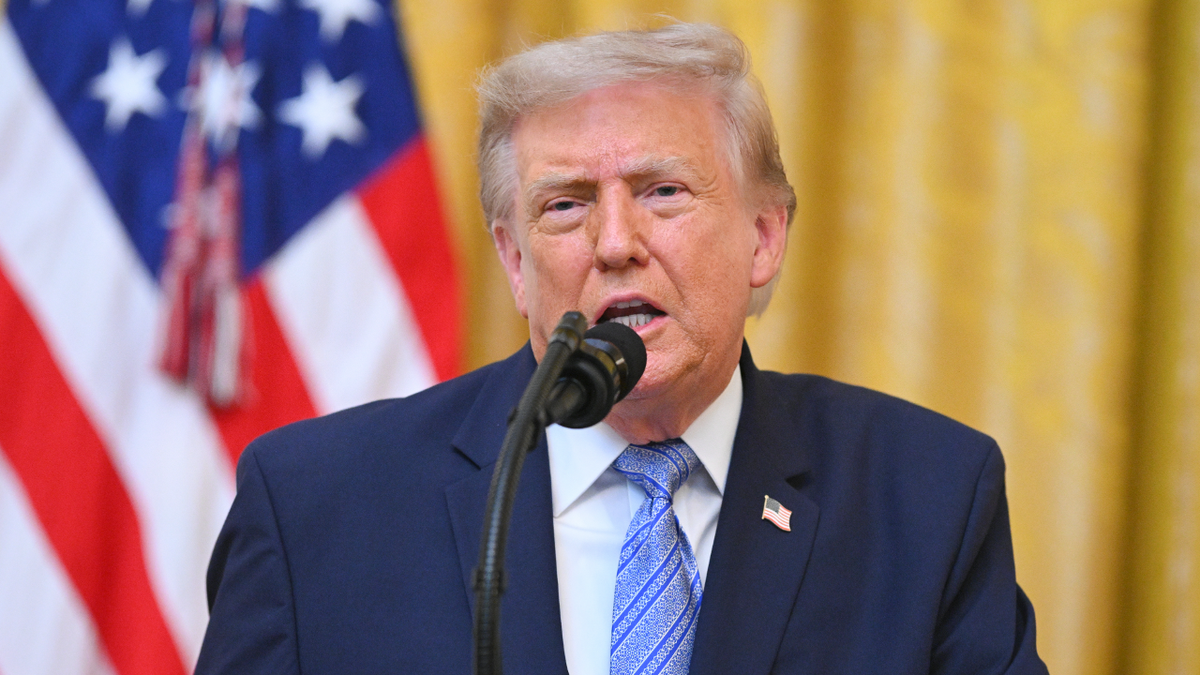
In his speech to the nation on July 16, President Donald Trump made a fundamental point seemingly lost on his critics:
Every American, whether you’re a Republican, Democrat, independent or otherwise, should be able to agree that we deserve the most secure, honest, and fair election system anywhere in the world. Secure elections should not be a partisan issue.
Yet Democratic critics are already disputing the evidence and conclusions Trump presented.
'SHADOW GOVERNMENT': TRUMP CLAIMS INTEL COMMUNITY BRAGGED ABOUT HIDING CHINESE MEDDLING
Here are the seven biggest takeaways about the vulnerabilities in our election process, as outlined by the president:
1. In his speech, Trump said newly declassified intelligence showed that China had illicitly acquired or attempted to acquire voter-registration information involving as many as 220 million Americans across multiple states. He characterized it as the "largest compromise of election data in history," involving the theft of "220 million U.S. voter files."
This allegation is shocking but not surprising. The Chinese engaged in a similar hack during the Obama administration, when they stole the personnel files of roughly 22 million current and former federal employees (including me) from the Office of Personnel Management. The Chinese military maintains units devoted to cyber operations targeting foreign governments and industries.
2. Instead of warning officials in the 18 affected states, President Trump alleged that individuals within the intelligence agencies "worked to actively suppress and downplay information about the extent of China’s" cybersecurity attacks, without even briefing the president or members of Congress. According to the president, an analyst admitted in an email that officials "deliberately massaged the presidential daily briefing to withhold" this information, while another FBI official said she was running a "shadow government" to keep intelligence about China’s meddling from becoming known.
If true, this is outrageous behavior. The president has instructed federal agencies to immediately provide states with all the information needed to remedy the vulnerabilities that allegedly allowed this to occur. That should have been done when the breach was first discovered.
3. According to President Trump, CIA reports indicate that the Chinese worked to "undermine domestic confidence" in the president. That effort included "efforts to use Chinese contacts with big U.S. companies to influence U.S. business leaders to turn against the president" as well as to use "U.S. journalists who had reported negatively on the U.S. president." These allegations obviously need further investigation.
REPUBLICAN SAYS TRUMP'S TOP ELECTION PRIORITY 'DEAD' IN SENATE AS GOP FRACTURES AHEAD OF MIDTERMS
4. The administration said DHS database comparisons flagged approximately 278,000 voter-registration records nationwide as potentially associated with noncitizens. Fox News Digital separately reported that DHS letters alleged more than 256,000 potential matches in four states. A release from the Department of Homeland Security indicates that 10 states have voluntarily participated in this program, and DHS reviewed the public files from California, Pennsylvania, New Jersey, and Nevada, which have refused to cooperate. The president claims that "since many Democrat states refuse to share their voter files the real number [of registered aliens] is actually much higher than that." But even this "limited analysis" should raise concerns, according to the president — and he is right.
5. The president says that intelligence reports assess "that centralized election-related data repositories, such as voter registration databases, poll books, and other official election websites are most vulnerable to exploitation, and adversaries could use this access to these systems to disrupt election processes." He says Americans "were blatantly lied to about the security of our election infrastructure…They’re vulnerable and they’re easily compromised and people within our government knew that." This calls for complete cybersecurity audits by state officials of their electronic election systems.
6. According to the president, much of this information was found in "burn bags," which are used for classified documents marked for destruction but, because of "gross incompetence," were never burned. The president has directed the Office of the Director of National Intelligence, the Department of Justice, the FBI, and the CIA to investigate "how and why such crucial information was hidden, to fire those involved in the cover-up and to file criminal charges, if appropriate." That is clearly the correct course of action.
7. Finally, the president demanded that the Senate pass the SAVE America Act, which would implement voter ID and proof-of-citizenship requirements for federal elections. He is also right about that — this is needed to fix the current registration "honor" system, which is too often dishonored.
The president’s presentation was not what his critics probably expected. As Fox News’s Ashley DiMella reported, there were no claims that China changed votes or altered election results.
But Trump outlined allegations of serious cybersecurity problems that have now been uncovered, including a Chinese influence campaign, and said the information was apparently hidden from him, the public, Congress, and state election officials.
CLICK HERE FOR MORE FOX NEWS OPINION
Those who claim none of this is true are doing so before they have even reviewed the treasure trove of formerly classified documents that has now been released, and before any states have even begun to investigate the potential compromise of their election systems.
It seems obvious that all of this should — indeed, must — be investigated. That is the only way to address alleged existing vulnerabilities and make sure no future elections are compromised.
A failure to do so will further damage the confidence the American people have in the election process, rather than the president’s decision to bring these intelligence assessments to light. Based on my research, the evidence from states that have implemented election-integrity reforms, such as voter ID, makes it clear that such reforms improve public confidence and turnout in our elections.
That is what we should all be aiming for.