
Politics
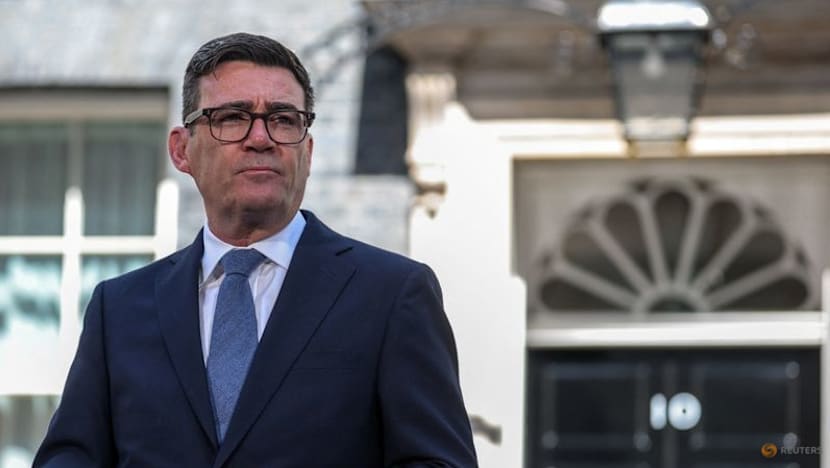
Burnham targets lower energy bills in first move as UK prime minister
Key Points
Burnham targets lower energy bills in first move as UK prime minister The move is to be funded by savings from the cancellation of a £1.8 billion (US$2.42 billion) digital ID programme LONDON: British Prime Minister Andy Burnham said on Tuesday (Jul 21) he would cut taxes on electricity bills, the first of several early moves to signal his intent to ease a cost-of-living crisis and quell anger over successive governments' failure to bring change. In his second day in his new job, Burnham...
Burnham targets lower energy bills in first move as UK prime minister
The move is to be funded by savings from the cancellation of a £1.8 billion (US$2.42 billion) digital ID programme
LONDON: British Prime Minister Andy Burnham said on Tuesday (Jul 21) he would cut taxes on electricity bills, the first of several early moves to signal his intent to ease a cost-of-living crisis and quell anger over successive governments' failure to bring change.
In his second day in his new job, Burnham said his government would remove the value-added tax from domestic electricity bills from Oct 1, cutting around £45 from the average annual bill of around £1,862 that households pay.
With bond investors watching closely for how any fiscal support would be paid for, he said the move would be funded by savings from the cancellation of a £1.8 billion (US$2.42 billion) digital ID programme, announced on Sunday.
"We're taking immediate action to cut taxes on energy bills, put more money in people's pockets and bring back hope," he said in a statement, having pledged to give people more "breathing space" in their lives.
BURNHAM TRIES TO MOVE QUICKLY TO OFFER SUPPORT
Burnham, a 56-year-old former Greater Manchester mayor, wants to move quickly to show people he is "serious about helping them out".
He said on Monday his early policies might not "take all of the pressure off" people struggling with rising prices and that a longer-term plan would be set out later in the year.
But his calls for the governing Labour Party to get behind his agenda might have fallen on deaf ears. An ally of former prime minister Keir Starmer, Darren Jones, said the digital ID scheme was unfunded, questioning whether the new leader had the money to cover his policy move on energy bills.
"The government will have to set out how it will pay for its new policies at the budget," he said on X.
And some energy experts questioned whether the change would have a deep impact on households, especially when gas prices have risen due to the conflict in the Middle East, making it likely that the price cap on energy bills will rise in October.
Energy bills have been one of the main drivers of Britain's cost-of-living crisis after the wholesale gas price, which heavily influences British electricity prices, surged after Russia's full-scale invasion of Ukraine in 2022.
The Conservative government at the time spent billions of pounds to shield households through the energy price guarantee. But while prices eased from mid-2023, they remain up to 60 per cent higher than before the energy crisis.
The End Fuel Poverty Coalition welcomed the move as a sign of positive intent but added: "It does not address the scale of what households are facing."
Ruth Curtice, chief executive of the Resolution Foundation, said the move could benefit higher-income families because the cuts were not targeted. "With bills still set to rise over £150 this October, this money would have been better spent on more targeted support," she said in a statement.
REVOLVING DOOR OF LEADERS
Burnham has said he will unveil more early policies, telling reporters on Monday he wanted his new government "to do some things that people will feel and feel quite quickly", especially those on the lowest incomes.
It is a strategy he hopes can win back voters to the governing Labour Party and fight a challenge from the populist Reform UK, led by Brexit campaigner Nigel Farage.
There is a lot at stake.
Dubbed the "King of the North" for his dogged defence of Greater Manchester, Burnham is the most popular leader of Britain's main political parties, for now.
But Britain's revolving door of prime ministers over the past decade has underlined how quickly parties can move against leaders who are not seen as delivering for voters.
He wants to hit the ground running and in his first speech as prime minister on Monday, Burnham said his ambition was to end rough sleeping in Britain.
To ease pressures on families, he is also expected to look at possible caps to bus fares - something he did in Manchester - and other measures, to back up his assertion that "I will put the care of people at the heart of everything I do".
Markets will be listening keenly to how Burnham and his unexpected pick for finance minister, the former defence secretary John Healey, plan to finance the support, after borrowing costs rose on Monday.