
Weather
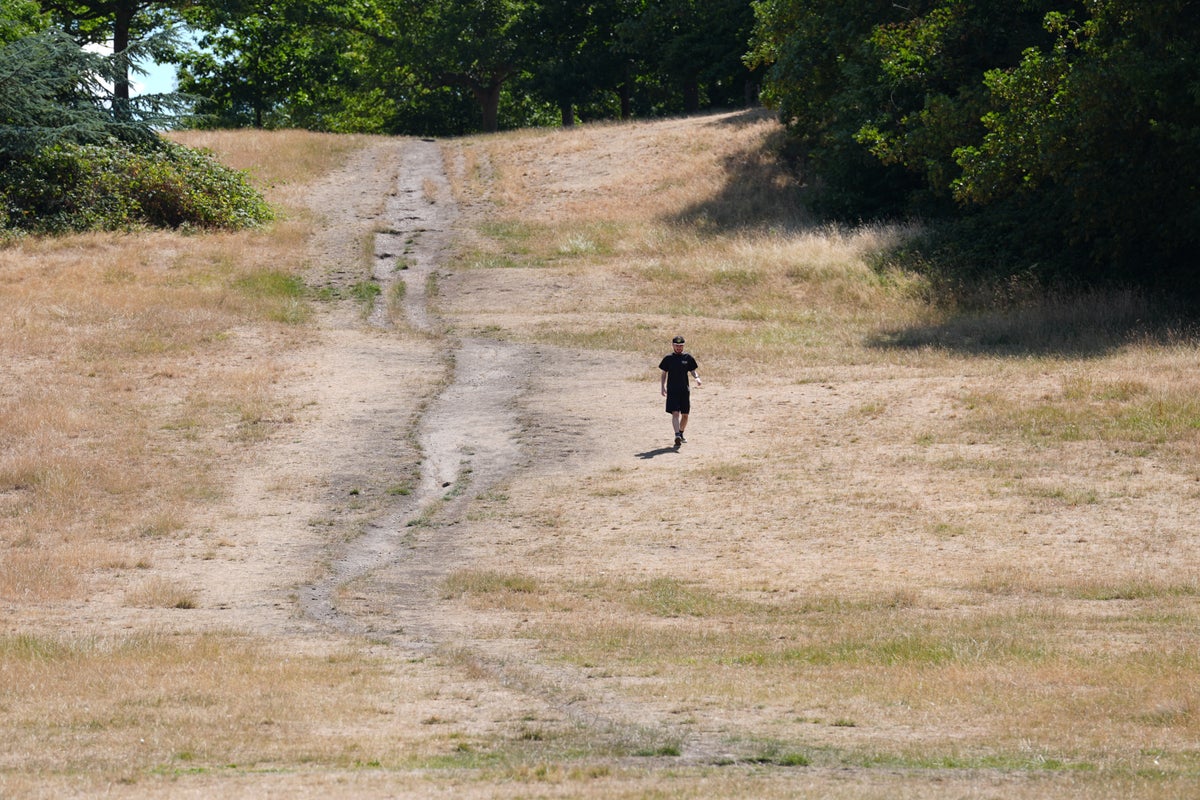
Food shortages could hit supermarkets if no rain in next 10 days in dry areas, say farmers
Key Points
Food shortages could hit supermarkets if no rain in next 10 days in dry areas, say farmers Water use has soared during recent heatwaves with lands, rivers and streams drying up - Bookmark - CommentsGo to comments The coming 10 days are set to determine whether supermarkets will be hit by food shortages later in the year, farmers say, as parts of England come close to a drought. Southern and eastern England have had no rain at all this month, the longest spell without rain in 30 years....
Food shortages could hit supermarkets if no rain in next 10 days in dry areas, say farmers
Water use has soared during recent heatwaves with lands, rivers and streams drying up
- Bookmark
- CommentsGo to comments
The coming 10 days are set to determine whether supermarkets will be hit by food shortages later in the year, farmers say, as parts of England come close to a drought.
Southern and eastern England have had no rain at all this month, the longest spell without rain in 30 years.
England overall has received only 3 per cent of its long-term average July rainfall after the country sweltered in three heatwaves so far.
Land, rivers and streams have dried up, while water use has soared in particularly hot spells.
Prolonged dry weather – the stage immediately before drought – has been declared in East Anglia, the West Midlands, Devon, Cornwall, the Isles of Scilly, Lincolnshire, Northamptonshire, Hertfordshire, London, Wessex, Thames, the Solent and the South Downs.
The National Drought Group, whose members include the Met Office, government, regulators, water companies and farmers, says the extreme weather is having a severe effect on the environment and is affecting water supplies and food production.
Farmers say the heat is drying out cereals, while spring barley yields are expected to be hit by a lack of rain earlier in the season.
Some farmers in East Anglia have had to stop abstracting water from rivers because they are so dry.
Harvests have begun early and there is a greater risk of fires breaking out in combine harvesters because of the heat.
A spokesman for the National Farmers Union (NFU) told The Independent: “Some areas haven’t harvested yet so what happens over the next week to 10 days could have an impact. We’re asking the Environment Agency to be flexible when it comes to abstraction.”
Paul Tompkins, NFU deputy president, said: “Parts of the country, particularly in the east and south, have seen exceptionally low rainfall, creating real challenges for farm businesses. For many arable farmers, this could be another difficult and expensive harvest after extreme weather in both 2024 and 2025 which saw both drought and flood.”
The Met Office is forecasting some rain for the weekend, but it’s most likely in northern parts of the UK.
Thames Water has joined many other water firms that have introduced hosepipe bans, which will take effect from Thursday.
There have been 53 recorded wildfires this year at Sites of Special Scientific Interest, including Dovestone and Tintwistle in the Peak District.
Lower water levels and a lack of rain to top up spawning pools are “significantly” harming breeding of species such as natterjack toads, experts say, while migratory fish, such as Atlantic salmon, cannot move upstream because of lower river flows.
Sea waters around the UK have been hit by marine heatwaves as sea surface temperatures remained well above average.
Oliver Harmar, of Natural England, said: “As well as serious impacts for people, our wonderful wildlife is suffering as the effects of climate change take hold, with the increased likelihood of drought and wildfires.”
He said effects of prolonged dry weather are felt long after the weather cools, reducing populations of wetland birds and amphibians.
Will Lang, chief meteorologist at the Met Office, said there are signs of more changeable weather in early August, which may bring rain to some areas.
“However, confidence in the detail remains low, and any rainfall, particularly across southern parts of the UK, is unlikely to be widespread or substantial.
“Many areas are likely to continue experiencing prevailing dry conditions over the coming weeks, especially across southern England.”
Join our commenting forum
Join thought-provoking conversations, follow other Independent readers and see their replies
Comments
England (LOCATION)
Southern (ORG)
East Anglia (LOCATION)
West Midlands (LOCATION)
Devon (LOCATION)
Cornwall (LOCATION)
the Isles of Scilly (LOCATION)
Lincolnshire (LOCATION)
Northamptonshire (LOCATION)
Hertfordshire (LOCATION)
London (LOCATION)
Wessex (LOCATION)
Thames (LOCATION)
Solent (ORG)
the South Downs (ORG)