
Politics
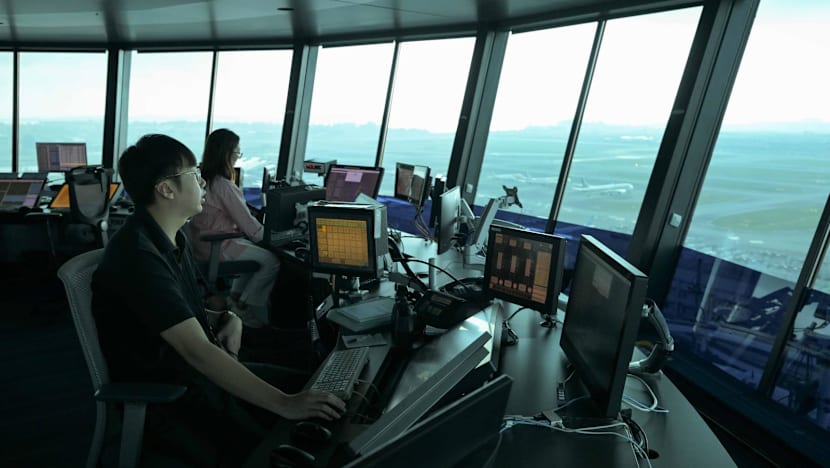
Singapore to expand air traffic control workforce by 40%, with S$20,000 sign-on bonus for new recruits
Key Points
Singapore to expand air traffic control workforce by 40%, with S$20,000 sign-on bonus for new recruits Licensed air traffic control officers can earn about S$120,000 a year after five years of experience. SINGAPORE: To meet rising demand for air travel and prepare for the opening of Changi Airport Terminal 5, the Civil Aviation Authority of Singapore (CAAS) will expand its air traffic control workforce by about 40 per cent over the next decade. CAAS said on Wednesday (Jul 22) that it aims to...
Singapore to expand air traffic control workforce by 40%, with S$20,000 sign-on bonus for new recruits
Licensed air traffic control officers can earn about S$120,000 a year after five years of experience.
SINGAPORE: To meet rising demand for air travel and prepare for the opening of Changi Airport Terminal 5, the Civil Aviation Authority of Singapore (CAAS) will expand its air traffic control workforce by about 40 per cent over the next decade.
CAAS said on Wednesday (Jul 22) that it aims to grow its pool of air traffic controllers from about 500 currently to around 700 by the mid-2030s, as part of a wider S$4 billion (US$3.1 billion) upgrade to Singapore's air navigation services over the next 15 years.
To attract more Singaporeans into the profession, CAAS also announced a S$20,000 sign-on bonus for all new air traffic control officer recruits. The bonus, which took effect on Jun 1 this year, is on top of the existing remuneration package.
The bonus will be paid in two equal tranches – upon completing the 10-month theory and simulator training, and upon obtaining the air traffic control licence, typically about 18 months after joining.
Fresh university graduates joining the profession will receive a starting salary of about S$64,000 a year, while diploma holders will start on around S$49,000.
After obtaining their licence, new officers are placed on the same scheme of service regardless of qualifications, and can earn about S$120,000 a year once they have five years of experience.
CAAS controllers manage 2,000 flights a day, including 1,000 into and out of Changi Airport.
Citing projections by the International Civil Aviation Organization, CAAS said air passenger volume will nearly triple over the next 25 years, with the Asia-Pacific region accounting for half of this growth.
“Air navigation service providers need to build capacity and capabilities to better manage our skies that match investments in airport infrastructure on the ground," CAAS said.
“As a major air hub, Singapore will continue to invest in air navigation service capabilities to ensure that flying remains safe, efficient, and sustainable throughout the region as demand grows.”
GROWING THE WORKFORCE
Beyond the sign-on bonus, CAAS announced several other initiatives to strengthen recruitment.
These include plans for a new undergraduate degree with an air traffic control specialisation, developed with a local university to be announced at a later date. The programme will combine undergraduate studies with air traffic control training, letting students earn both a degree and a licence through an accelerated pathway.
CAAS has also introduced an air traffic control undergraduate scholarship to attract young Singaporeans with technical aptitude and leadership potential, with the first scholarship awarded earlier this year.
Scholars will undergo professional air traffic control training and may work on international projects to improve aviation safety and air traffic management, including overseas stints at Singapore's permanent mission to the International Civil Aviation Organization in Montreal, Canada, and other aviation organisations.
In August, CAAS will launch an air traffic control management associate programme, targeting fresh graduates with up to two years of work experience who are interested in air traffic control and aviation leadership careers.
CAAS will also establish an engineering development centre to strengthen engineering capabilities in air navigation services, focusing on customising and enhancing systems to meet Singapore-specific needs.
Separately, the authority is providing stipend top-ups for local PhD students under the Nanyang Technological University Research Scholarship scheme to build up Singapore's research capabilities in air traffic management.