
Business & Finance
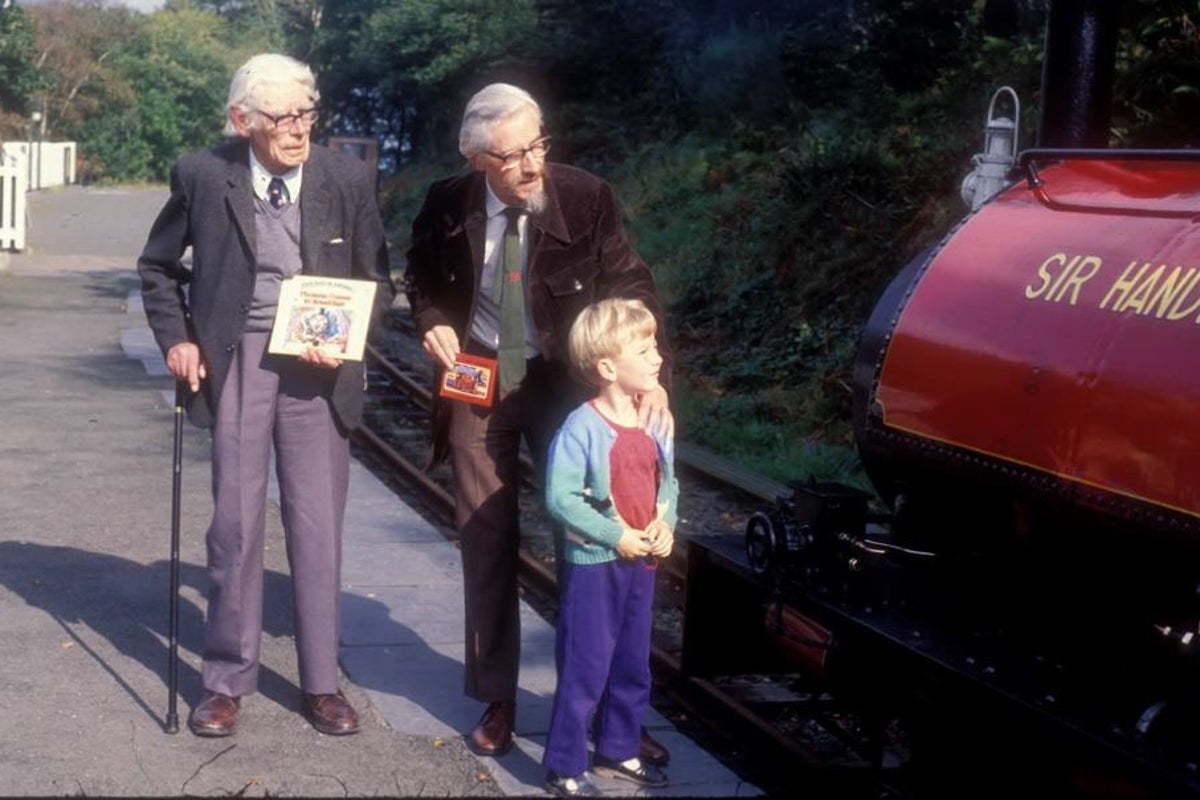
Grandchildren of Thomas the Tank Engine author in HMRC court fight over huge tax bill on royalties
Key Points
Grandchildren of Thomas the Tank Engine author in HMRC court fight over huge tax bill on royalties Almost 30 years after Wilbert Awdry’s death, the managers of a trust ended up fighting HMRC in a bid to pay out less tax on the royalties - Bookmark - CommentsGo to comments The grandchildren of Thomas the Tank Engine's creator have been spared a potentially massive tax bill on their share of the multimillion-pound royalties generated by their grandad's "really useful engine", after HMRC lost a...
Grandchildren of Thomas the Tank Engine author in HMRC court fight over huge tax bill on royalties
Almost 30 years after Wilbert Awdry’s death, the managers of a trust ended up fighting HMRC in a bid to pay out less tax on the royalties
- Bookmark
- CommentsGo to comments
The grandchildren of Thomas the Tank Engine's creator have been spared a potentially massive tax bill on their share of the multimillion-pound royalties generated by their grandad's "really useful engine", after HMRC lost a crucial High Court test case last week.
First published in 1945 after being invented by Rev Wilbert Awdry to entertain his sick two-year-old son Christopher, the popular children's books have spawned an industry encompassing TV, films, toys and theme parks which was reportedly generating an annual turnover of $1bn by 2011 and a profit of over £35m a year.
Rev Awdry and wife Margaret had three children, Christopher, Veronica and Hilary, with the trio giving him seven grandchildren.
But almost 30 years after the author's death, the managers of a trust fund he left for the benefit of his grandkids ended up fighting HMRC in court in a bid to pay out less tax on the royalties created by the much-loved steam train.
Mr Justice Richards at London's High Court last week found against arguments put forward by HMRC lawyers that the royalty payments ought to count as income for trust law purposes and therefore be liable for potential income tax payments of up to 45%.
Wilbert Vere Awdry OBE was an English Anglican clergyman, railway enthusiast and children's author. He was best known for creating Thomas the Tank Engine in his books, The Railway Series, writing the first 26 books between 1945 to 1972.
The books have since spawned an industry encompassing TV, films, toys and theme parks which was reportedly generating an annual turnover of $1bn by 2011 and a profit of over £35m a year.
That was the year that the rights in the brand were acquired by US toy giants Mattel - owners of Barbie, Hotwheels and Masters of the Universe - when they bought HiT Entertainment for $680m (£426m).
HiT by that time owned the rights to Thomas alongside other kids' characters, including Barney the purple dinosaur, Fireman Sam and Angelina Ballerina, with Thomas branded products alone generating profit of over £35m a year.
The copyright to the Rev Awdry's books was signed away by him to his then publishers in 1985 - shortly after Thomas made his first TV appearance - in return for a deal guaranteeing him a share of any future royalties.
Half of those royalties were tied up in a trust fund for the benefit of the clergyman's grandchildren in 1987 at which time his grandkids - Christopher's son and daughter Richard and Verity, Veronica's kids Mark and Claire, and Hilary's three children Sara, Simon and Rachel - ranged in age between six and 17.
All are now adults, but almost 30 years after the author's death the trust fund's managers ended up in a court fight with HMRC in a bid to pay less tax on the money churned out by Thomas.
Setting out the shape of the case in his judgment, Mr Justice Richards said: "On 16 October 1985, Reverend Awdry entered into a deed of assignment with his then publishers.
"Reverend Awdry assigned, to the extent that they had not already been assigned to the publishers or their predecessors in title, the entire copyright throughout the world in certain defined 'Works' and 'Illustrations' together with such rights as may subsist in what was described as the 'Railway Format'.
"In return, the publishers were to pay Reverend Awdry a stream of royalties...during the term of the copyrights so assigned.
"On 10 March 1987, Reverend Awdry made the settlement...to transfer to the trustees the property and assets set out in the schedule.
"The settlement recorded that Reverend Awdry wished to make provision for his grandchildren, who were individually named and described as the 'beneficiaries' in the settlement.
"The schedule described the property and assets referred to as: one half of all royalties paid to the settlor after the date of this deed.
"The trustees are party to this claim as claimants because they wish to know how the settlement should be administered.
"HMRC is party to the claim because they have an interest in the outcome as they are likely to be entitled to more tax if the royalties are categorised as income for trust law purposes."
Going on to find against the taxman and sparing the reverend's grandkids trust fund a potentially massive tax bill, the judge said that the royalties were themselves the assets and capital of the trust, rather than counting legally as income generated.
"The royalties received by the settlement are most naturally analysed as 'fruit' of the copyrights in the Railway Series. Those copyrights are not assets of the settlement...the royalties are the capital of the settlement.
"The defendants argue that this is the wrong way of looking at matters. They submit that the royalties received by the settlement are fruit of the right to receive those royalties, which is an asset of the settlement.
"I acknowledge that this is an alternative way of looking at matters. However, I am not satisfied that trust law principles require the matter to be viewed in that way.
"Overall, I regard it as much more realistic to regard the royalties as fruit of the copyright in the Railway Series rather than as fruit of a right to receive payment.
"Overall, I see nothing to override the intention plainly expressed in the settlement itself. I consider that the royalties received by the trustees are capital for trust law purposes."
Join our commenting forum
Join thought-provoking conversations, follow other Independent readers and see their replies
Comments
HMRC (ORG)
Grandchildren of Thomas the Tank Engine (ORG)
Wilbert Awdry (PERSON)
Thomas the Tank Engine's (ORG)
High Court (ORG)
Rev Wilbert Awdry (PERSON)
Christopher (PERSON)
Rev Awdry (PERSON)
Margaret (PERSON)
Veronica (PERSON)
Hilary (PERSON)
Richards (PERSON)
London (LOCATION)
Wilbert Vere Awdry OBE (PERSON)
English (ORG)