
Health
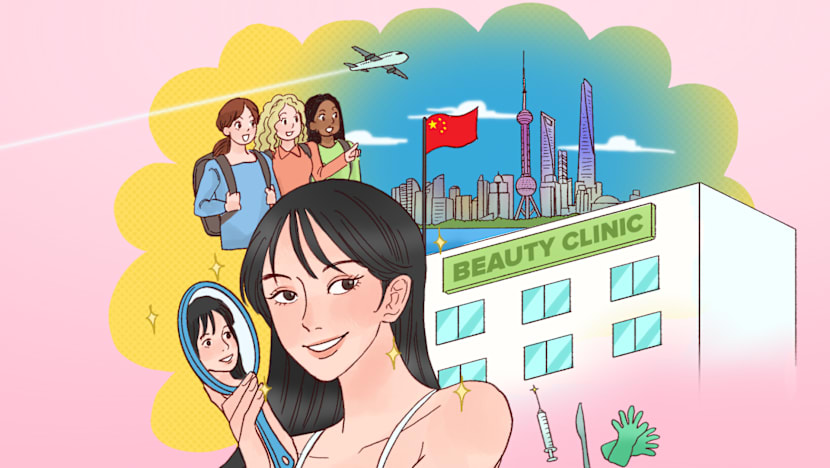
Beyond Seoul: Can China become Asia’s next medical aesthetics hub?
Key Points
Beyond Seoul: Can China become Asia’s next medical aesthetics hub? China is emerging as an alternative to South Korea for cosmetic procedures, with overseas patients drawn by natural-looking results, experienced doctors and competitive prices - though industry observers say it is still early days. SHANGHAI: Lee So-hee, 29, flew from Seoul to Hangzhou to have her nose done.
Beyond Seoul: Can China become Asia’s next medical aesthetics hub?
China is emerging as an alternative to South Korea for cosmetic procedures, with overseas patients drawn by natural-looking results, experienced doctors and competitive prices - though industry observers say it is still early days.
SHANGHAI: Lee So-hee, 29, flew from Seoul to Hangzhou to have her nose done.
Chinese women’s noses look “three-dimensional”, “refined” and “especially natural”, she said, adding that “a lot of South Korean girls lately” had been travelling to China for medical aesthetic procedures.
She made the trip in 2025 and was pleased with the results.
“I heard analyses that I never heard (before) in South Korea,” Lee said.
She had also considered facial contouring, a procedure that reshapes the face. But after examining her, her doctor advised against it, saying her cheekbones were already somewhat asymmetric. Instead, he recommended a less invasive, non-surgical facelift.
The advice “spoke right to my heart”, Lee said. “That’s why I decided to come to China.”
Seoul may be widely recognised as the world’s plastic surgery capital, but a growing number of foreigners are travelling to China for cosmetic procedures, drawn by what they say are more natural-looking results, experienced doctors and competitive prices.
China’s medical aesthetics industry was valued at 311.5 billion yuan (around US$46 billion) in 2023 and is projected to reach 1.3 trillion yuan by 2030, according to market research data.
“China’s natural aesthetic ideals are gaining new appeal among foreign clients,” said Linda Yu, general manager at China marketing agency Red Ant, adding that Chinese doctors are increasingly recognised for their “extensive clinical and professional expertise”.
During this year’s Spring Festival holiday, spending on medical aesthetics by inbound visitors using foreign-issued bank cards doubled from a year earlier, making it one of the fastest-growing categories, according to Tencent's WeChat team.
But the trend remains niche, Yu said, noting that South Korea “still leads globally” while countries like Thailand and Malaysia compete on cost.
Only a small number of foreigners travel to China to get medical aesthetic work done and many are first-time clients, said Lai Ming Yii, a strategy consultant at Shanghai-based market research firm Daxue Consulting.
“(The trend) is real - but early and small,” Lai added.
CHINA’S AESTHETIC PHILOSOPHY: LESS IS MORE
As more overseas patients turn to China for cosmetic procedures, they are embracing what experts describe as a distinctly Chinese beauty philosophy - enhancing rather than drastically changing one’s appearance.
Compared to cosmetic surgery trends in South Korea and Japan, where cosmetic outcomes are often more “refined and polished”, China “combines both approaches and places even greater emphasis on confidence and individuality”, said Red Ant’s Yu.
Consumers are increasingly rejecting “cookie-cutter ‘internet-famous faces’” in favour of aesthetic treatments that “optimise and enhance, while preserving” their distinctive features, she said.
A Meituan survey released last year found that 43 per cent of more than 1,000 people who had undergone cosmetic procedures wanted to preserve their natural facial features.
“At the very beginning, the medical aesthetics wave (in China) was probably limited to surgery - nose jobs, double-eyelid cuts or brow lifts. Then it gradually developed,” said Nie Jie, who heads the minimally invasive centre at Shanghai Huamei Medical Aesthetics Hospital in Pudong.
Today, clients are increasingly seeking “born-with-it” natural looks, Nie said.
The ideal result is one that is almost imperceptible.
“Chinese clients don’t like others being able to tell they've had injections,” said Nie’s assistant Li Chen.
“Colleagues might notice something different without knowing exactly what. They might say, ‘You look so refreshed lately’ or ‘You look younger’.”
“And the answer is, 'Nothing - I've just been sleeping well'.”
WHY FOREIGN PATIENTS ARE CHOOSING CHINA
Shanghai's medical aesthetics clinics, in particular, stand out for their emphasis on preserving “eastern charm” while aligning with international aesthetic standards, said Yu.
Procedures ranging from skin boosters and face-slimming injections to ultrasound skin-tightening and IPL lasers have been gaining popularity with international clients.
CNA visited seven clinics across Shanghai. Doctors, medical staff and patients consistently cited high clinical standards and experienced practitioners as key reasons why foreigners are increasingly choosing China.
Several clinics said overseas clientele, mainly from South Korea, Japan and Southeast Asia, had increased by around 10 to 20 per cent over the past two years - although Chinese clients still make up the vast majority.
“In China, it's still mostly Chinese,” said Nie from Shanghai Huamei Medical Aesthetics Hospital, adding that most of the hospital’s international clients came from Southeast Asian nations like Singapore and Malaysia, rather than South Korea or Japan.
“They come in regularly for injections, about once every six months,” she said.
Related:
Ong, a 35-year-old from Malaysia, travelled to Changsha in southern Hunan province earlier this year for injectable treatments to create a natural, “born-with-it” appearance while enhancing facial definition and depth.
She had consulted doctors and clinics in Vietnam, South Korea and Thailand before deciding on China.
“In the end I still chose to come here because I like this style (of medical aesthetics),” she said.
“Even though I’ve had (work) done, people still recognise me and see that it’s me,” she said.
“The look doesn't change much, it just becomes more refined.”
He, a 33-year-old finance professional from Shanghai who only gave her surname, has travelled to South Korea twice for cosmetic procedures.
But she has chosen to undergo most of her cosmetic treatments in China over the past decade, including skin boosters, face slimming injections and ultrasound skin-tightening.
She praised South Korean doctors and clinics for their attentive service but said China remained her preferred destination for less invasive procedures.
She also underwent a nose thread lift to elevate and refine her nose bridge and tip for a straighter side profile.
“For purely maintenance-type procedures, I’d still go with China,” she said.
BEYOND COSMETIC SURGERY
But medical aesthetics is not the only reason why foreign patients have been flocking to China.
Industry observers said many also come for general health scans and screenings, cancer diagnosis, dental care and even Traditional Chinese Medicine (TCM).
Kim Yoon-ah, 28, travelled from Seoul to Guangzhou in 2025 for injectable procedures including brow-ridge sculpting and nasal-base filler.
She was struck not only by the treatments, but also by the thoroughness of the consultation process.
“In China, even for a simple procedure, they test for all kinds of viruses,” she said.
“The blood tests surprised me.”
Lai from Daxue Consulting noted that procedures like CT scans, which involve long queues and waiting times, could be done quicker in China for lower costs.
Asia’s medical and wellness tourism sector is currently dominated by Thailand and South Korea, said Peter Semone, former chair of the Pacific Asia Travel Association.
South Korea is the “strongest cross-border brand for elective aesthetics” while Thailand is “the broadest and most mature full-service hub”, Sermone said.
China, by comparison, “is in the early stages of piloting medical tourism” in places like Hainan and Shanghai.
“(It has) a long way to go, if indeed this is a market that it decides to pursue through future policy orientation,” he told CNA.
TCM could be a “huge opportunity” for the country and its “strongest competitive advantage” against Thailand and South Korea, he added.
“This is where China's sweet spot lies,” Semone said.
“It represents an alternative way of preventing and curing disease through natural remedies and age-old traditions,” he said, adding that special TCM tours could be especially popular among travellers from the 700-million-strong Southeast Asian market.
“No need to compete with Thailand, Korea and others,” he added. “Better to focus on something that is unique to China.”
CAN CHINA CHALLENGE SOUTH KOREA?
While South Korea remains a leading global destination for cosmetic surgery, industry observers said China’s appeal is steadily growing as it develops its own identity in the market.
South Korea’s rise “was no accident, but rather a carefully planned national strategy”, said Lisa Wan, an associate professor in the School of Hotel and Tourism Management and Department of Marketing at the Chinese University of Hong Kong (CUHK) Business School.
The country integrated K-pop with “easy visa policies, instant tax refunds for cosmetic procedures, and translation services directly inside clinics”, Wan said.
China, however, has strengthened its own competitiveness in recent years - expanding visa-free entry to citizens of around 50 countries, while its growing domestic market has helped clinics build expertise at scale.
“China’s doctor base is big,” said Nie from Shanghai Huamei Medical Aesthetics Hospital.
“Our doctors gradually got trained up and techniques got better and better.”
Even so, industry observers said reputation remains China's biggest hurdle.
For patients, trust often matters more than price.
“Cosmetic work cannot be tried before it is bought,” Wan from CUHK said, explaining that patients often rely on a country's reputation as a shortcut when deciding where to undergo treatment.
“It is much easier for a consumer to trust Chinese technology in a car than it is to trust a Chinese needle in their face.”
Price alone is also unlikely to persuade cautious consumers.
“A treatment priced too low triggers alarm bells,” Wan said, raising concerns about counterfeit products, unsafe conditions or unlicensed practitioners.
Lower prices may appeal for simpler procedures such as basic lasers or injectables, where patients perceive the risks to be lower than major surgery, she added.
Unlicensed practices and unregulated pricing also “still exist” in the Chinese medical beauty market, noted Red Ant's Yu - which could result in “persistently low trust among both domestic and foreign consumers”.
China needs “clear, official safety certifications that foreign patients can easily verify”, said Wan from CUHK.
Tightly regulated zones like clinics and specialists operating in Shanghai’s Pudong district and the Boao Lecheng International Medical Tourism pilot zone in Hainan province, which has handled 410,000 medical tourist visits, function as “safe bubbles” that offer international travellers advanced treatments under strict government supervision, Wan added.
Policy measures such as visa rules and tax incentives may influence medical tourism in the short term, but lasting success depends on consistently delivering high-quality care, said Semone.
“Policy is less important than the actual experience,” he said.
[Image text:] BEAUTY CLINIC