
Technology
Commentary: Why the US is losing Chinese AI stars
Key Points
Commentary: Why the US is losing Chinese AI stars More entrepreneurs from China believe there are now greater opportunities at home than in Silicon Valley, says this Financial Times writer. In 2019, Moonshot AI’s founder Yang Zhilin completed his PhD at Carnegie Mellon University (CMU) in just four years - about two fewer than the standard. Google and Meta had already hosted him as an intern.
Commentary: Why the US is losing Chinese AI stars
More entrepreneurs from China believe there are now greater opportunities at home than in Silicon Valley, says this Financial Times writer.
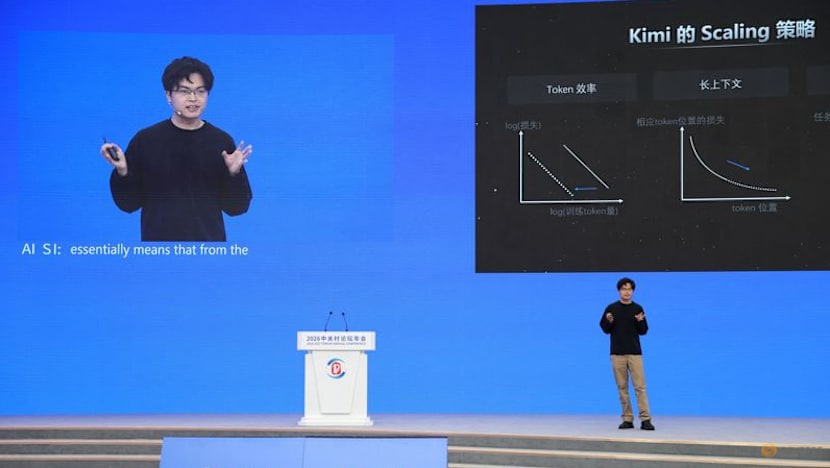
HONG KONG: In 2019, Moonshot AI’s founder Yang Zhilin completed his PhD at Carnegie Mellon University (CMU) in just four years - about two fewer than the standard. Apple wanted him. Google and Meta had already hosted him as an intern. Postdoctoral doors at Stanford and MIT stood open. He chose none of them. He returned to China.
His CMU supervisor, Russ Salakhutdinov, later recalled Yang’s reasoning: “If he didn’t at least try starting his own company, he would regret it for the rest of his life.”
That decision - which once seemed a contrarian bet - now looks like foresight. Beijing-based Moonshot last week released Kimi K3, a large language model that has been ranked alongside flagship offerings from OpenAI and Anthropic. Elon Musk called it “impressive work”.
Silicon Valley awoke to a question: why did America let him go? But one narrative, that Yang was pushed out by US immigration policy, is incomplete. Salakhutdinov has stressed he had multiple pathways to stay. An Apple executive even offered Yang a role in Apple’s Beijing office, accommodating his desire to be home. Yet Yang chose to build his own AI company, giving it a name taken from his favourite Pink Floyd album Dark Side of the Moon.
GROWING PULL OF CHINA'S AI ECOSYSTEM
The deeper explanation lies in a shifting calculus: the growing pull of China’s AI ecosystem.
Yang’s trajectory underscores that shift. A graduate of Tsinghua University, he co-authored leading papers such as Transformer-XL during his CMU years - work that shaped the transformer architecture underpinning today’s large language models. Within three years of starting Moonshot, his 300-person team has produced a model that competes with the world’s best.
Would he have been able to achieve the same had he founded Moonshot in the US? Maybe. But multiple Chinese founders with similar backgrounds have told me they found it easier to build a start-up in China. Partly this is due to their larger networks at home and a more familiar culture. Some founders also cite a unified regulatory framework as well as a much deeper and more productive talent pool.
Of course, there are lots of challenges to operating in China as an AI company: tight constraints on advanced computing power; the geopolitical risks of having your products banned overseas; the risk of political intervention and censorship; and a much shallower market for fundraising compared with the US.
But one Chinese entrepreneur told me that although his start-up could probably reach a valuation at least 10 times higher in the US, he had a much better chance in China of developing AI for tasks such as autonomous driving that would exceed human capacity in the next five years.
A LESS WELCOMING US
Most Chinese students in science, maths and technology have, historically, chosen to stay in the US after their PhDs but the number of returnees is reported to be increasing. Even for those who chose to stay, more have started to return mid-career.
One reason for some is the political and social environment. A Stanford survey of 1,304 US-based Chinese-descent scientists in 2024 revealed that 73 per cent of them felt unsafe as academic researchers, with 65 per cent pointing to fears around “anti-Asian hate and violence”.
The debate over Yang’s departure has become a proxy for broader US concern about AI talent retention. Some in Silicon Valley have called for green cards to be stapled to every AI PhD. But that misses a larger structural reality.
China is no longer merely a net importer of US-trained talent; it has built its own pipeline. Stanford’s Hoover Institution tracked 356 researchers behind DeepSeek’s core models and found that 53.5 per cent had never studied or worked outside China. Among those with US experience, 70 per cent ultimately returned to China.
Yang belongs to a vanguard for whom returning is not a fallback but a first choice. His decision was not driven by visa uncertainty but by entrepreneurial conviction. Yet the message America sends to the next Yang Zhilin matters. The US visa system is built around employment, not entrepreneurship. That works less well for founders.
For decades, America’s tech dominance rested on a simple formula: attract the world’s brightest minds and keep them. Yang Zhilin’s story suggests that approach is being tested - not just because the US has become less welcoming but because China has become more magnetic.
The question is not whether Yang made the right choice. It is how many more like him will make the same one - with a conviction that the future they want to build lies elsewhere.