
Technology
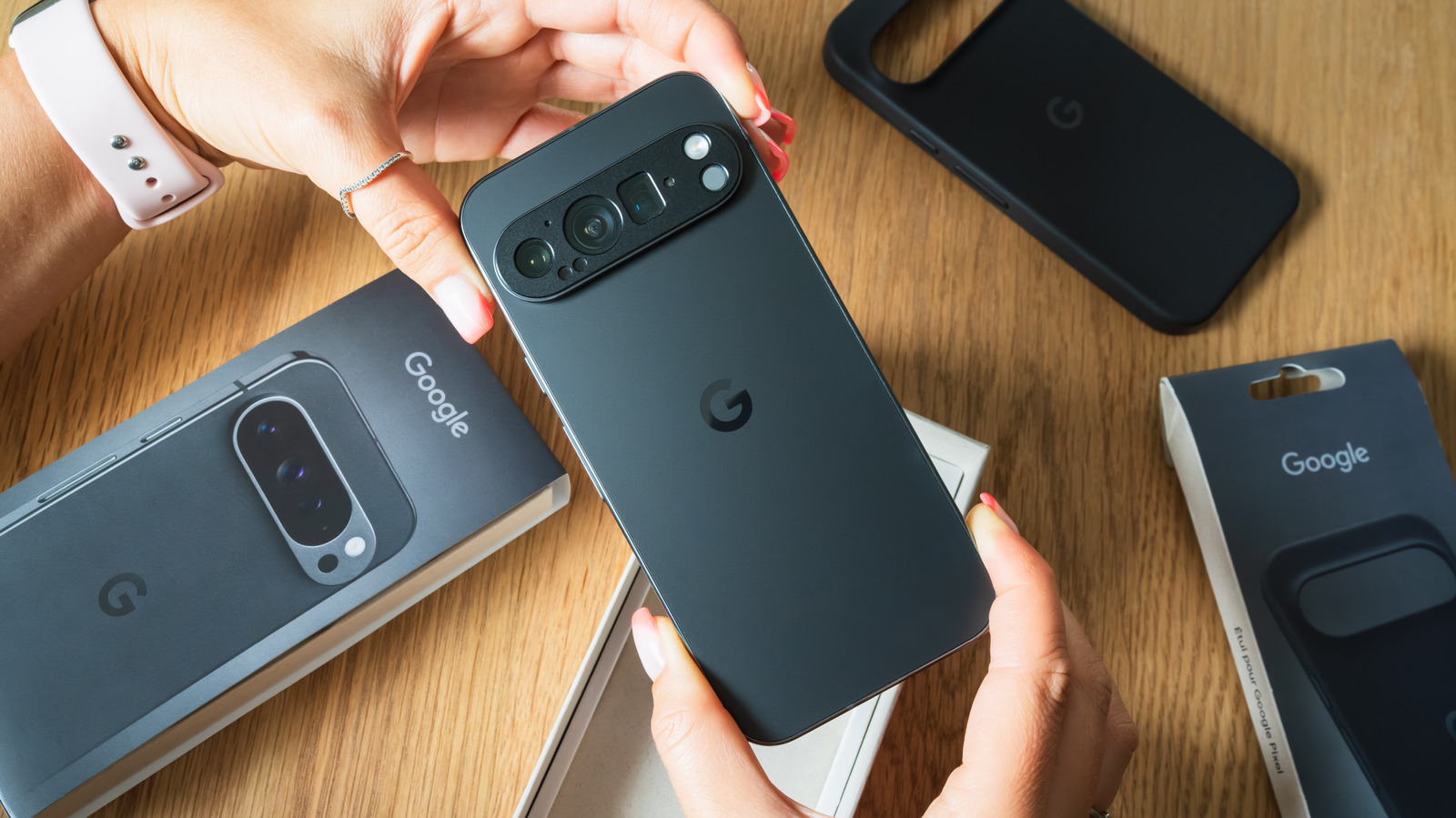
Your old Google Pixel smartphone could be repurposed in a data center
Key Points
Your old Google Pixel smartphone could be repurposed in a data center Keeping phones out of landfills and doing useful things is a good thing. Tech news has been getting progressively more gloomy of late. As RAMaggedon continues to break pricing on basically all gadgets (and many of us panic-buying PCs), it's refreshing when feel-good stories come along.
Your old Google Pixel smartphone could be repurposed in a data center
Keeping phones out of landfills and doing useful things is a good thing.
Tech news has been getting progressively more gloomy of late. As RAMaggedon continues to break pricing on basically all gadgets (and many of us panic-buying PCs), it's refreshing when feel-good stories come along. Enter a project designed to reduce e-waste caused by discarded phones. Researchers at the University of San Diego are trying to help out schools and students by investigating whether old Google Pixel phones can be reused as affordable computing clusters.
As outlined in a Google Research blog and first reported by Tom's Hardware, the researchers have teamed with Google to repurpose a bunch of discarded Pixel phones to reap their computing benefits. Despite the aging tech in these devices, their motherboards are still powerful enough to assist small scale data centers that could save schools significant money going forward.
How Google Pixel phones are being reused to help the environment
The project to reappropriate Google Pixel phones has been undertaken, in part, to reduce the carbon footprint left by discarded devices. Even after they're thrown away, many old phones still retain significant compute ability. That's why this project is exploring "phone cluster computing", as Google Research puts it. This process involves stripping old Pixels models of every component, save for the motherboard. Once the display, battery, casing and speakers have been discarded, the motherboard is put into a cluster, then repurposed as a "general-purpose computing platform", according to Google's blog post. Interestingly, a Pixel's motherboard is responsible for 50 percent of its carbon footprinting based on these Google Sustainability reports.
If you're a Google Pixel owner who's currently eyeing up that hot pink Pixel 11 leak and hoping it's real, you might take comfort in the fact your old phone could one day help students out. The researchers discovered a cluster of 20 Pixel motherboards can support education apps that could service a class of upwards of 75 students. The endgame of the project is way more ambitious, with a planned goal of providing a 2,000-strong phone computing cluster that could support a hundred similarly sized classes at once. The system is due to launch this fall. Should it prove a success, the researchers think that it could offer schools affordable access to computer resources that works out much cheaper than building new infrastructure.
Your Google Pixel is probably more powerful than you think
This Pixel repurposing project has also yielded some interesting info about the power of aging phones. While the researchers' main aim was to build a low-carbon cloud computing platform for schools, in the process they discovered semi-recent Pixel models could actually match modern servers. Take the Google Pixel Fold from 2023. Via SPEC benchmarks, the researchers claim the Fold's single-threaded performance often outguns a server like the ASUS RS720-E11. On a larger scope, Google Research claims the single-threaded performance of many modern smartphones is on par with modern multicore servers.
How phones cause e-waste
What these researchers are doing in San Diego is clearly an admirable achievement. It's also an important one. Discarded phones have a significant impact on global e-waste, and projects like the one undertaken in California can help to reduce their harmful carbon footprint. It may not be a matter that regularly crosses your mind, but if you regularly replace your smartphone, then fail to responsibly dispose of your old one, you're doing damage to the environment.
According to Google Research, the average smartphone user replaces their device every four years. This rapid upgrade cycle leads to millions of phones being thrown away each year. Discarded phones generate environmental waste when their valuable materials (such as copper and silver) aren't reused, forcing supplies to wastefully mine new ones.
Phones can also produce hazardous waste. The lithium-ion battery in your average Google Pixel can be harmful to the environment if it's not disposed of properly. If you want to give the planet a helping hand, hang onto your current phone for another couple of years if it's still going strong. And when it is time to replace it, try to either recycle your phone or see if you can sell/gift it back to the manufacturer.