
Education
The food date labels you can safely ignore — and the ones you can’t, according to experts
Key Points
The food date labels you can safely ignore — and the ones you can’t, according to experts Many people throw away food based on confusing expiration labels like “Best By” or “Sell By” - Bookmark Millions of Americans routinely discard perfectly edible food, mistakenly believing it has spoiled simply because a date on the packaging has passed. Experts confirm that much of this waste stems from a widespread misunderstanding of food labeling. The confusion is compounded by a lack of federal...
The food date labels you can safely ignore — and the ones you can’t, according to experts
Many people throw away food based on confusing expiration labels like “Best By” or “Sell By”
- Bookmark
Millions of Americans routinely discard perfectly edible food, mistakenly believing it has spoiled simply because a date on the packaging has passed. Experts confirm that much of this waste stems from a widespread misunderstanding of food labeling.
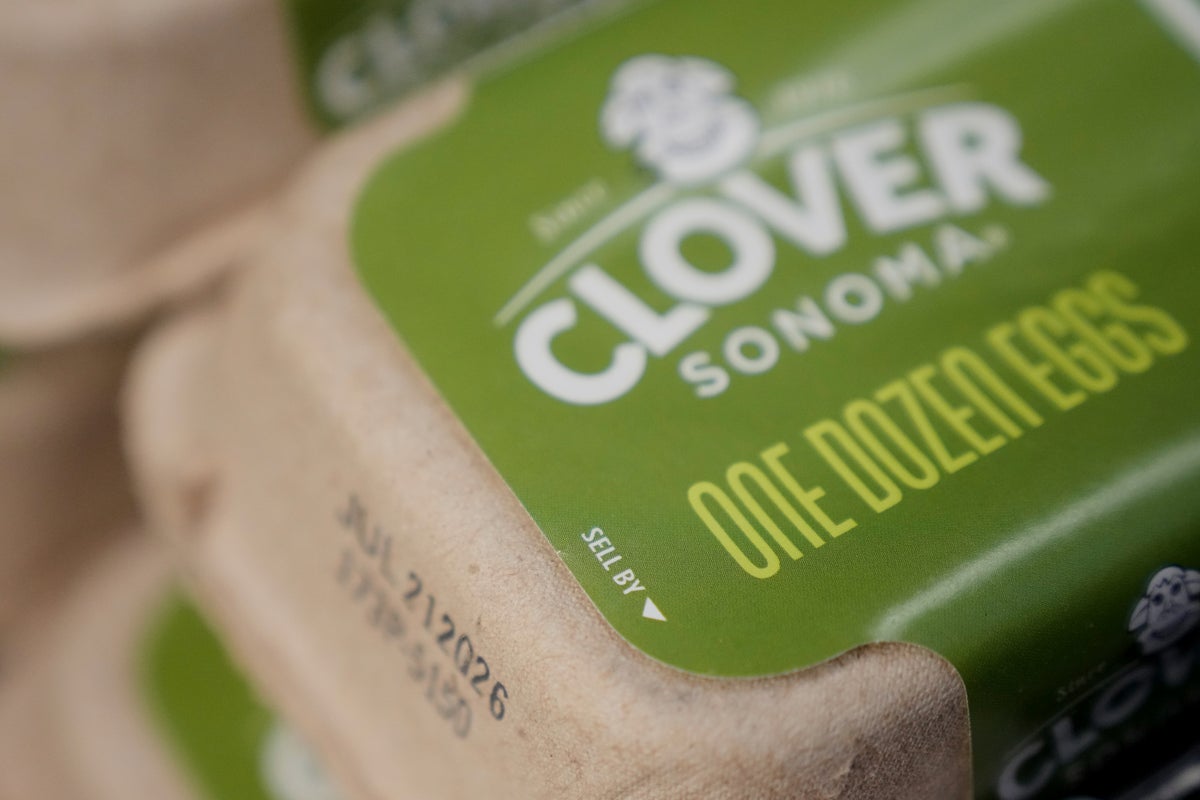
The confusion is compounded by a lack of federal standardization for food date labels, with the notable exception of baby formula. This regulatory gap leaves consumers grappling with a bewildering array of terms such as "Best Before," "Best By," "Best If Used By," "Enjoy By," and "Sell By." Crucially, these dates primarily indicate peak freshness or quality, rather than signaling when a product becomes unsafe for consumption.
In an effort to cut through this ambiguity, California has enacted a new law mandating food manufacturers to adopt just two distinct labels: one for quality and another for safety. Understanding these distinctions is vital for reducing food waste, regardless of where you live.
More than 50 different date labels are used in the US
In the United States, more than 80% of consumers discard food approaching the package date label at least occasionally, a 2019 study by the Johns Hopkins Bloomberg School of Public Health found.
“The date labels guarantee quality up until that point,” said Donald Schaffner, a food safety expert at Rutgers University. “They are not about the safety of a product.”
Food date labels vary state by state and are determined by the food manufacturer. Researchers from the University of Maryland found that more than 50 different date labels are used across the United States.
“They’re based on when the manufacturer thinks that product will taste its best, when its quality will be at its peak,” said Rachel Zemser, a San Francisco Bay Area food scientist who helps food companies design, launch and market new food products.
Food packaging helps determine how long food is safe to eat
Unopened canned food like beans, tomatoes, fruit, vegetables, and any shelf-stable food package in liquid, will last for years after the date stamped on its label. The same goes for boxes of soy milk or boxes of almond milk, or any food that’s been heat-treated and sealed to stay safe without refrigeration.
Dry goods, like cookies, crackers and cereal, also have a long shelf life because the low moisture in them doesn’t allow bacteria to grow.
“People can use their best judgment by smelling and tasting the product because dry crackers and cookies, and things of that nature, may be stale but they are not going to make you sick if you eat them,” Zemser said.
But extra precautions should be taken with beef, chicken or fish. They can go bad even if it’s in your refrigerator, but wrapping them tight in plastic and freezing it before the “best by” date on its packaging could help it last longer.
“Most bacteria needs moisture and air to grow and thrive, so very dry products will last, but I wouldn’t risk it with meat,” Zemser said.
The FoodKeeper, a website and free app developed by the Department of Agriculture, Cornell University, and the Food Marketing Institute, provides guidance on how long foods stay fresh and safe to eat.
California is trying to clarify label confusion
California became the first state in the U.S. to standardize food labels by banning “sell by” dates.
The law that went into effect July 1 requires manufacturers selling food in California to use two standardized labels: a “Best If Used By” label for peak quality and a “Use By” label for product safety. “Sell by” dates are used by stores to ensure products are being displayed for a reasonable amount of time before quality declines, said Nate Rose, a spokesperson for the California Grocers Association.
“Think of it like an internal referencing system for store managers and employees,” he said.
New York state lawmakers recently passed a similar measure for labels that is awaiting Gov. Kathy Hochul’s signature.
Most labels are about food quality, not safety
The only product legally required by the federal government to have an expiration date is infant formula. It should not be consumed past that date because its nutrients decline over time.
“Infant formula is the sole source of nutrition for the infant, and the concern is that the child could have a nutritional deficiency” if given expired formula, Schaffner said.
In general, people should use their own judgment and look for signs like mold, strange odors and unusual colors to decide whether or not to toss out food.
And follow your taste buds.
“Practice your own food stock rotation, buy appropriate amounts of food, don’t buy giant amounts that you won’t be able to eat,” Schaffner said. “Because who wants to eat poor quality food?”
[Image text:] SONOMA
ONEDOZENEGGS
SELEY
Americans (ORG)
California (LOCATION)
US (LOCATION)
the United States (LOCATION)
Johns Hopkins Bloomberg School of Public Health (ORG)
Donald Schaffner (PERSON)
Rutgers University (ORG)
the University of Maryland (ORG)
Rachel Zemser (PERSON)
San Francisco Bay Area (LOCATION)
Unopened (ORG)
Zemser (PERSON)