
Science
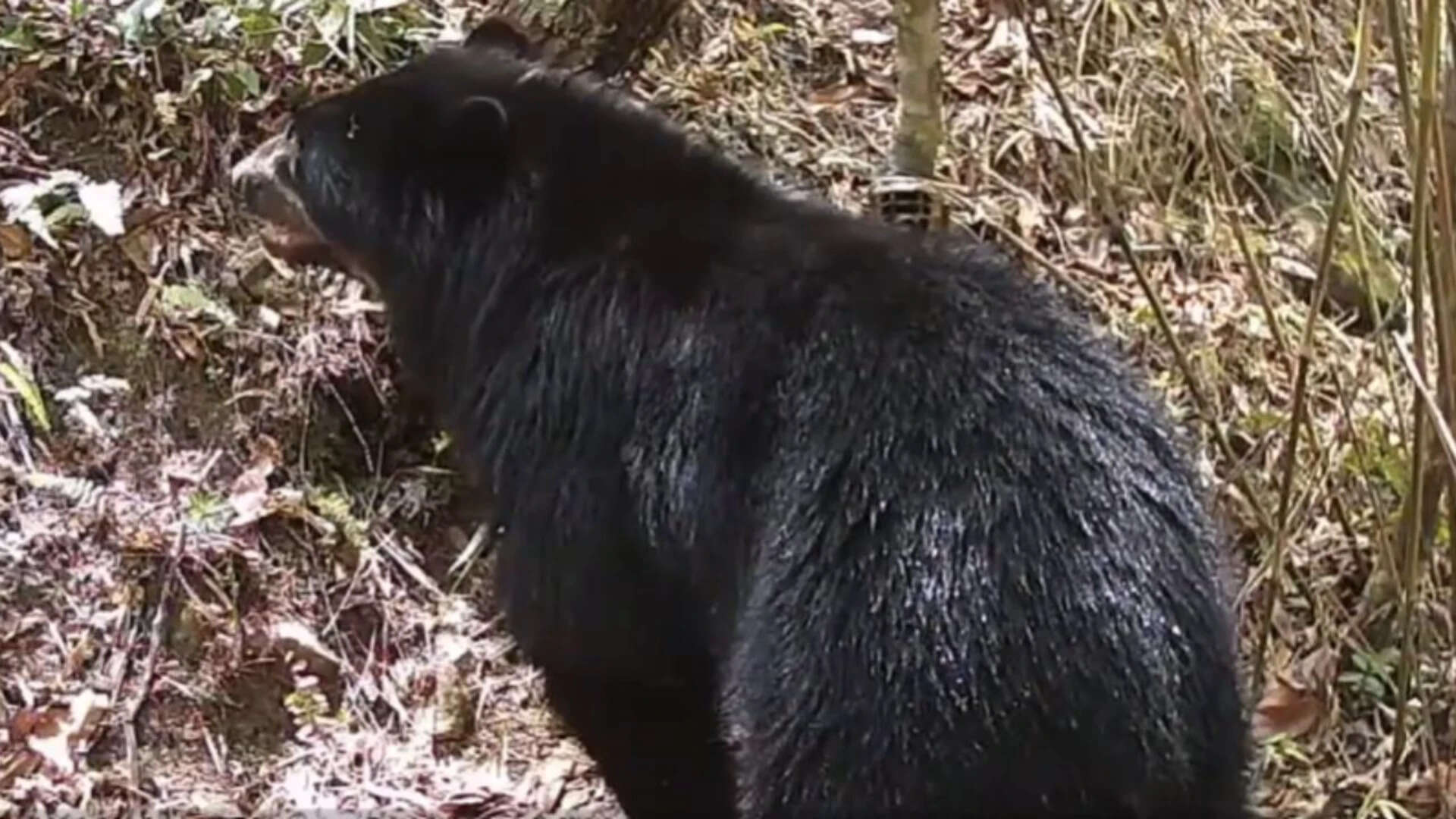
Rare video shows Andean bear entering river in Bolivia watershed
Key Points
The rare Andean bear, locally known as the jukumari, has been spotted again near the headwaters of Bolivia's Parapeti River. The sighting has given conservationists fresh hope because the species is rarely seen in the wild. Its presence suggests that an important part of the Chaco landscape is still providing suitable habitat.
The rare Andean bear, locally known as the jukumari, has been spotted again near the headwaters of Bolivia's Parapeti River. The sighting has given conservationists fresh hope because the species is rarely seen in the wild. Its presence suggests that an important part of the Chaco landscape is still providing suitable habitat.
The bear was recorded by a camera trap installed near the river. The footage shows the animal walking into the water, staying there for several minutes before quietly returning to the surrounding forest.
According to Fundacion Natura Bolivia, the recording is encouraging because it captures a vulnerable species moving through an area that remains relatively undisturbed, Ecoticias reported. The video itself lasts only a short time.
A rare visitor
The camera-trap footage shows the jukumari calmly making its way down to the river. It enters the water, appears to cool off for a few minutes and then walks back into the nearby forest. Fundacion Natura Bolivia said the bear moved through an area where forest cover and clean water remain closely connected.
For conservationists, the animal's calm behaviour is important. It suggests that the habitat has not been heavily disturbed, allowing wildlife to move naturally through the landscape.
However, researchers have also stressed that one video does not prove the local bear population is increasing. They say that the footage only confirms that one bear visited this location at that particular time, and does not reveal how many bears live in the region or whether they are breeding successfully.
Even so, the sighting fits into a broader pattern. Earlier monitoring in the same upper watershed recorded two Andean bears in 2022. The latest footage therefore adds another piece of evidence that the species continues to use this part of the Parapetí River basin.
Importance of Parapeti headwaters
The Parapeti River begins in the mountain forests of Bolivia's Chuquisaca region. From there, it flows through municipalities including Monteagudo, Huacareta, Villa Vaca Guzman and Camiri. It also crosses the Indigenous territory of Charagua Iyambae before reaching the Isoso wetlands in Santa Cruz.
Because rivers carry water over long distances, the condition of the upper watershed affects everything downstream. Healthy forests near the river's source help protect water quality, reduce soil erosion and support wildlife.
To help preserve these river sources, Bolivia established the Upper Parapeti River Basin protected area in 2017. The protected landscape covers around 292,600 acres and connects with the Serranía de los Milagros protected area.
This connection is important because many wild animals need large, continuous areas of forest rather than isolated patches. Connected forests allow animals to move safely in search of food, mates and suitable habitat.
South America's only native bear
The jukumari, also known as the Andean bear or spectacled bear, is the only living bear species native to South America. Many individuals have light-coloured markings around their eyes and muzzle, although no two bears have exactly the same pattern. These markings are one reason why the species is often called the spectacled bear.
Unlike many other bear species, the Andean bear eats mostly plant material. Fruits make up a large part of its diet, along with other vegetation found in mountain forests. Because it depends so heavily on healthy forests for food, the bear's survival is closely linked to the condition of its habitat.
The species is listed as Vulnerable by the International Union for Conservation of Nature (IUCN). It is also classified as vulnerable in Bolivia's 2026 Red Book of Vertebrates.
Habitat loss and habitat fragmentation remain among the biggest threats facing the species. Fragmentation happens when large forests are broken into smaller sections by roads, settlements or other human activities. This can make it harder for bears to travel, find food and reproduce. Other threats include hunting, illegal wildlife trade, climate change and conflicts between bears and people.
The jukumari is the only living bear species native to South America (iNaturalist photo)
One bear matters
Although the latest footage shows only one bear, the species plays an important role in maintaining healthy forests. Fundacion Natura Bolivia describes the jukumari as a guardian of the Parapeti headwaters and an umbrella species.
An umbrella species is an animal that needs a large and healthy habitat to survive. When that habitat is protected for the umbrella species, many other plants and animals living in the same area also benefit. In other words, protecting the bear helps protect an entire ecosystem. The Andean bear also contributes to forest regeneration because of the way it feeds.
Researchers have found that seeds from several plant species can pass through the bear's digestive system without being damaged. After the bear moves to another location, those seeds can be deposited in new areas where they may grow into plants.
This natural seed dispersal helps forests regenerate over time. Healthy forests, in turn, help stabilise soil, protect water sources and support many other species living in the same ecosystem.
Researchers say long-term monitoring, including repeated surveys and tracking signs left by bears, will be needed to better understand the species in the region. Also, protecting connected forests, reducing hunting and illegal wildlife trade will be important to ensure the jukumari remains part of Bolivia's Chaco landscape.
Andean (ORG)
Bolivia (LOCATION)
Parapeti River (LOCATION)
Chaco (LOCATION)
Fundacion Natura Bolivia (ORG)
Ecoticias (PERSON)
Parapetí River (LOCATION)
Parapeti (PERSON)
The Parapeti River (LOCATION)
Chuquisaca (LOCATION)
Monteagudo (PERSON)
Huacareta (PERSON)
Camiri (PERSON)
Indigenous (LOCATION)
Charagua Iyambae (PERSON)